Biography
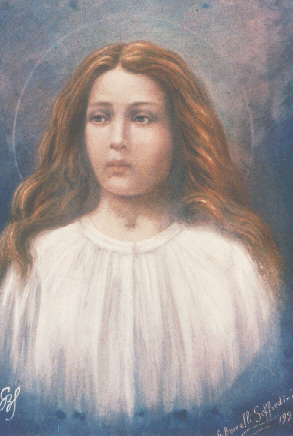
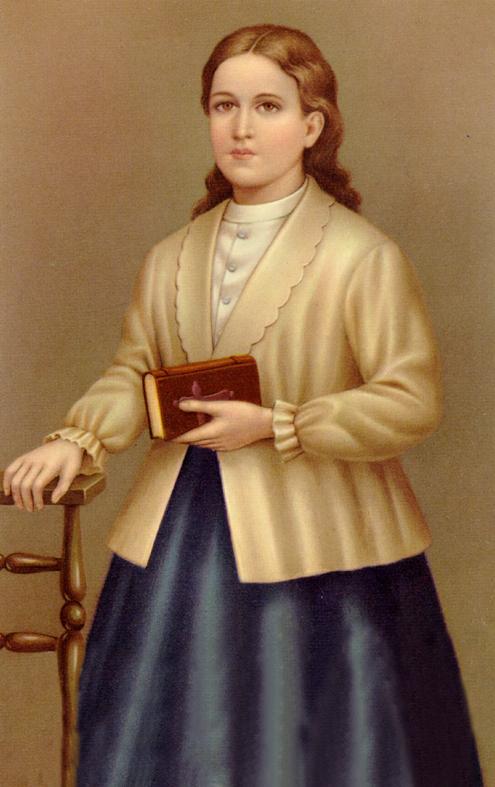
Saint Narcisa de Jesús Martillo Morán, known affectionately as "La Violeta de Nobol" (The Violet of Nobol), was born in 1832 in Nobol, Guayas, Ecuador, to a devout farming family. From a tender age, Narcisa displayed an extraordinary piety and a profound love for God. Orphaned at the age of seven, she was raised by an older sister, but her spiritual journey was largely self-directed. She spent countless hours in prayer, fasting, and reading the lives of the saints, particularly Saint Mariana de Jesús, the Lily of Quito, whom she greatly admired and emulated. Her childhood was marked by a quiet humility and an intense desire for spiritual perfection, often retreating to a small hut on her family's property to pray and meditate in solitude, cultivating a deep interior life that would define her existence.
As a young woman, Narcisa felt a strong call to dedicate her life entirely to God, though she never entered a religious order. Instead, she chose to live a life of extreme penance and asceticism as a laywoman, serving God through prayer, sacrifice, and humble service to others. She moved to Guayaquil, working as a seamstress and catechist, but her heart yearned for deeper spiritual growth. In 1868, she journeyed to Lima, Peru, seeking spiritual direction and a more secluded life of prayer. There, she lived with Dominican tertiaries, dedicating herself to intense prayer, rigorous fasting, and mortification of the flesh, offering all her sufferings for the conversion of sinners and the purification of the Church. Her days were filled with long hours of adoration before the Blessed Sacrament, and she was known for her profound spiritual insights and her unwavering trust in Divine Providence.
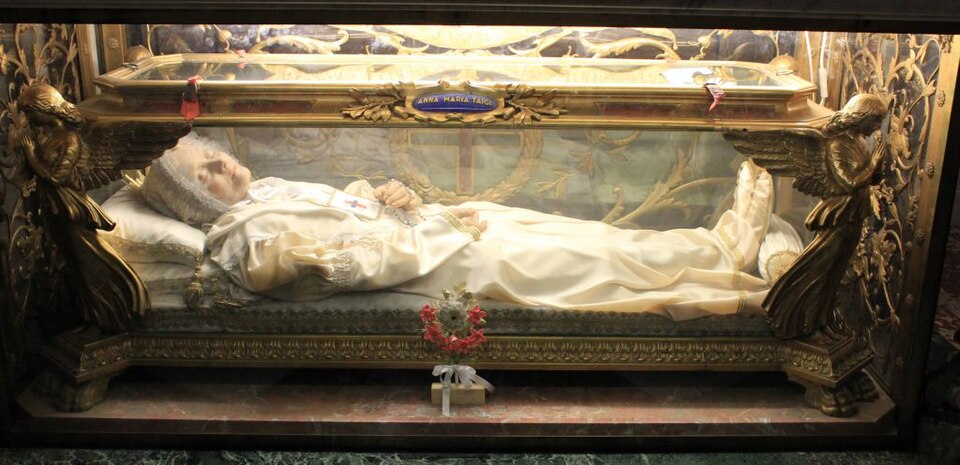
Saint Narcisa de Jesús passed away peacefully in Lima on December 8, 1869, at the age of 37, after a brief illness. Her death was met with a sense of profound loss by those who knew her. Nine years later, in 1878, her body was exhumed and found to be perfectly preserved, supple, and emitting a sweet fragrance, defying the natural laws of decomposition. This miraculous state of incorruption, a sign of God's favor, was a powerful testament to her sanctity. Her incorrupt body was later transferred to her hometown of Nobol, Ecuador, where it is now enshrined in the Sanctuary of Saint Narcisa de Jesús. Pilgrims today can visit her glass coffin, where her perfectly preserved remains are venerated, a silent yet eloquent witness to her holy life.
The lasting legacy of Saint Narcisa de Jesús is one of profound faith, unwavering devotion, and the power of a lay vocation lived in radical dedication to Christ. She was beatified by Pope John Paul II in 1999 and canonized by Pope Benedict XVI in 2008, becoming Ecuador's second saint. Her life continues to inspire countless faithful to embrace a life of prayer, penance, and humble service, demonstrating that sanctity is attainable in all walks of life. Pilgrims from across the globe travel to Nobol to seek her intercession, marvel at the miracle of her incorrupt body, and draw inspiration from her extraordinary example of love for God and neighbor. She remains a powerful intercessor and a beacon of hope, reminding us of the enduring beauty of a life consecrated to God.
Discovery
The extraordinary journey of Narcisa de Jesús Martillo Morán's earthly remains, a testament to her profound sanctity, began decades after her passing. She died in Lima, Peru, on December 8, 1869, and was initially interred in the cemetery of the Patrocinio convent, a place she had chosen for her spiritual growth. The first exhumation of her body occurred on September 22, 1955, a significant moment that brought to light the remarkable state of her preservation. This event was not a casual undertaking but a formal ecclesiastical process, initiated as part of the initial stages of her beatification cause. Present at this momentous occasion were ecclesiastical authorities, medical professionals, and witnesses, all eager to fulfill the requirements of canon law. As the coffin was opened, a collective gasp reportedly filled the air. Instead of the skeletal remains typically found after nearly a century of burial, Narcisa de Jesús lay as if merely asleep, her skin supple, her features recognizable, and her clothing remarkably intact. The immediate reaction was one of profound awe and reverence, a clear indication that a miracle had unfolded before their very eyes. This discovery quickly spread beyond the confines of the exhumation site, igniting fervent devotion among the faithful and strengthening the conviction that "La Violeta de Nobol" was indeed a special soul chosen by God.
Following this initial discovery, the body of Narcisa de Jesús underwent further scrutiny and transfer, underscoring the Church's careful approach to such phenomena. A second, more thorough examination took place on August 22, 1972, again in Lima. This exhumation was particularly significant as it preceded the official transfer of her remains back to her native Ecuador. Medical experts, including Dr. Luis Alayza y Paz Soldán, meticulously documented their findings, confirming the extraordinary state of preservation observed seventeen years prior. They noted the body's continued flexibility, the absence of any signs of decomposition, and the natural color of her skin, which had not darkened or deteriorated. The consistency of her incorruptibility across these examinations, despite the passage of over a century since her death, provided compelling evidence for her cause. On August 22, 1972, a solemn procession accompanied her body from Lima to Guayaquil, Ecuador, and then to her hometown of Nobol, where she was received with immense joy and devotion by thousands of faithful. This journey marked a new chapter in her veneration, bringing her physical presence closer to the people she had so deeply loved.
Today, the incorrupt body of Saint Narcisa de Jesús is reverently preserved and displayed for public veneration in the Sanctuary of Saint Narcisa de Jesús in Nobol, Ecuador. Her remains are encased within a magnificent glass-fronted casket, allowing pilgrims to gaze upon her remarkably preserved form. This casket is itself housed within a larger, ornate reliquary, designed to protect her body from environmental factors while also serving as a focal point for prayer and devotion. The display is meticulously maintained, ensuring that the conditions within the casket remain stable to prevent any deterioration. The sanctuary itself is a place of pilgrimage, drawing countless visitors who come to seek her intercession and marvel at the enduring sign of her sanctity. The careful preservation and prominent display reflect the Church's profound respect for her and the belief that her incorruptibility serves as a powerful reminder of the resurrection and the eternal life promised to the faithful.
Beyond the remarkable preservation itself, certain details surrounding Saint Narcisa de Jesús's incorrupt body have further deepened the mystery and reverence surrounding her. While not associated with the more dramatic phenomena sometimes attributed to other incorruptibles, such as bleeding or the exuding of oils, the consistent naturalness of her appearance has been a source of wonder. Witnesses to her exhumations have frequently remarked on the lifelike quality of her features, often describing her as appearing to be in a peaceful sleep rather than having passed away over a century ago. The flexibility of her limbs, noted by medical examiners during both exhumations, is another extraordinary detail, defying the natural rigidity that sets in after death. These subtle yet profound characteristics, coupled with the complete absence of putrefaction, distinguish her case as a truly remarkable instance of incorruptibility, inspiring faith and serving as a tangible link to the divine for those who come to venerate her.
Scientific Analysis
The phenomenon of incorruption, particularly as observed in the case of Saint Narcisa de Jesús, presents a compelling intersection for scientific and theological inquiry. Detailed medical and scientific examinations of her remains have been documented, offering insights into her unusual state of preservation. Following her death in 1869 in Lima, Peru, Narcisa de Jesús’s body was exhumed and transferred to Guayaquil, Ecuador, in 1955. During this transfer, her remains were reportedly found to be remarkably well-preserved. A more formal examination occurred in 1972 when her body was again exhumed for canonical recognition as part of her beatification process. This examination was conducted by a team of medical professionals, though specific names and institutional affiliations are not widely published in detailed scientific journals but are referenced in hagiographical accounts. Reports from this period consistently describe the body as flexible, with skin that retained its natural color and texture, and organs that appeared intact. Further examinations were carried out in 1992 during the process of her canonization, confirming the earlier observations of an unusual state of preservation. These examinations typically involved visual inspection, palpation, and sometimes photographic documentation, rather than invasive procedures such as tissue sampling or extensive internal examination, due to the sacred nature of the remains within the Catholic tradition. The consistent findings across multiple exhumations, spanning decades, underscore the sustained preservation of her remains.
The scientific mystery surrounding Saint Narcisa de Jesús’s incorruption lies in its defiance of typical post-mortem decomposition processes. After death, the human body undergoes a predictable series of changes, including autolysis (self-digestion by enzymes), putrefaction (bacterial decomposition), and eventual skeletonization. These processes are accelerated by warm, humid environments, which characterize the climate of coastal Ecuador where her body now rests, and to a lesser extent, Lima, Peru, where she died and was initially interred. The absence of significant decay, despite burial in what would typically be considered conducive conditions for decomposition, is what makes her case scientifically remarkable. There is no historical record or scientific evidence to suggest any deliberate embalming or preservation treatments were applied to her body at the time of her death or subsequent burials. Unlike ancient Egyptian mummification, which involved extensive chemical treatment and desiccation, or modern embalming, which uses formaldehyde-based solutions, no such interventions are documented for Saint Narcisa. The reported flexibility and natural appearance of the skin, as opposed to the hardened, desiccated state typical of natural mummification, further distinguishes this case. The environmental factors of burial – soil composition, moisture levels, and temperature – would ordinarily lead to rapid putrefaction and skeletonization within a few years, making her state of preservation after over a century particularly anomalous.
Natural explanations for body preservation, such as saponification (adipocere formation) or natural mummification, are often proposed for cases of unusual preservation. Adipocere formation occurs when fatty tissues convert into a waxy, soap-like substance in anaerobic, moist environments, typically resulting in a hardened, grayish appearance. While this process can preserve body contours, it does not account for the reported flexibility and lifelike appearance of Saint Narcisa’s remains. Natural mummification, conversely, occurs in extremely dry conditions, leading to desiccation and hardening of tissues, which is also inconsistent with the descriptions of her body. The climate of both Lima and Nobol, while varying, is not characterized by the extreme dryness typically required for natural mummification. Skeptics often point to the possibility of misinterpretation of visual cues, the subjective nature of observation, or the lack of rigorous, invasive scientific analysis as reasons for questioning the extent of "incorruption." They might argue that some degree of preservation, even if unusual, could be attributed to a unique combination of environmental factors that have not been fully understood or documented. However, the consistent reports from multiple, independent examinations by medical professionals over many decades, describing a state of preservation that goes beyond typical natural processes, leaves a significant unexplained gap for strictly naturalistic explanations.
From a modern scientific perspective, the case of Saint Narcisa de Jesús, like other reported cases of incorruption, highlights the limitations of current scientific understanding regarding post-mortem preservation under certain rare circumstances. While traditional examinations have relied heavily on visual and tactile assessment, modern scientific techniques could offer far more detailed insights. Non-invasive methods such as computed tomography (CT) scans could provide a detailed internal view of the skeletal structure and organ integrity without disturbing the remains. Carbon dating could precisely confirm the age of the tissues, and advanced tissue analysis, if permitted, could identify specific biochemical markers indicating the extent of cellular and molecular preservation, or the presence of unusual microbial activity or chemical alterations. The application of forensic taphonomy, the study of decomposition, could help model the expected decomposition rates under the specific historical and environmental conditions of her burials, further emphasizing any deviations. The unanswered questions largely revolve around the precise biochemical mechanisms that have inhibited decomposition, whether intrinsic to the individual’s physiology or related to unknown environmental factors. Such studies, if ever undertaken with appropriate reverence and scientific rigor, could contribute significantly to the broader scientific understanding of human decomposition and preservation, potentially revealing novel biological or chemical processes that currently remain outside the scope of known science.
Spiritual Significance
The phenomenon of incorruption, as exemplified by Saint Narcisa de Jesús, stands as a profound theological signpost within Catholic tradition, offering a tangible glimpse into the eschatological hope of the Church. This miraculous preservation of the body, defying natural processes of decay, speaks directly to the doctrine of the body as a temple of the Holy Spirit, as articulated in 1 Corinthians 6:19. It underscores the inherent dignity and sacredness of the human form, not merely as a temporary vessel, but as an integral part of the person destined for eternal glory. For Saint Narcisa, whose life was a testament to profound interior purity and devotion, her incorruption serves as a divine affirmation of her sanctity, a visible sign that her earthly body, dedicated entirely to God, was indeed a dwelling place for the divine. Furthermore, it powerfully prefigures the resurrection of the body, a core tenet of Christian faith, reminding believers that death is not the final word, and that one day, all who die in Christ will experience the glorification of their physical selves. The Church interprets such incorruptibility not as a mere curiosity, but as a divine seal, a testament to the power of God to transcend natural laws and to honor those who have lived lives of exceptional holiness, thereby strengthening the communion of saints by offering a physical link to those who now dwell with God.
Saint Narcisa de Jesús, affectionately known as "La Violeta de Nobol," embodied a unique charism centered on profound humility and an intense, almost mystical, interior life. Her spiritual gift was an extraordinary capacity for contemplative prayer and self-denial, cultivated from a tender age. Orphaned early, she found solace and instruction not in formal institutions, but in the lives of the saints, particularly Saint Mariana de Jesús, whose example of asceticism and fervent love for Christ she diligently emulated. Her heroic virtues were manifest in her unwavering commitment to solitude, often retreating to a small hut for extended periods of prayer and meditation, demonstrating a profound detachment from worldly comforts and a singular focus on God. This deep interiority fostered a remarkable purity of heart and an unshakeable faith, allowing her to navigate life's challenges with serene resignation to divine will. She practiced poverty not out of necessity, but as a deliberate spiritual discipline, embracing simplicity in all aspects of her life. Her life, though outwardly unassuming, was a powerful testament to the transformative power of grace, showcasing a path to holiness accessible through fervent prayer, self-sacrifice, and an unyielding love for God, contributing to the rich tradition of lay sanctity within the Church.
The devotion to Saint Narcisa de Jesús has blossomed remarkably since her passing, evolving from local veneration in Ecuador to a global recognition of her sanctity. Her patronage is sought by those suffering from illness, particularly children, and by individuals seeking guidance in their spiritual lives, reflecting her own life of quiet suffering and profound prayer. Pilgrims today flock to the Sanctuary of Saint Narcisa de Jesús in Nobol, Ecuador, drawn by the tangible presence of her incorrupt body. The experience of visiting her shrine is deeply moving; to stand before her perfectly preserved remains is to encounter a visible bridge between heaven and earth, inspiring awe and profound reflection on the mysteries of faith. Novenas and feast day traditions, particularly on her feast day of December 8th, are observed with fervent prayer and communal celebration, reinforcing her role as a powerful intercessor. The faithful often bring petitions and thanksgiving, leaving behind tokens of their devotion, demonstrating a living, dynamic relationship with this saint who continues to inspire and comfort countless souls through her enduring spiritual presence.
Miracles attributed to Saint Narcisa de Jesús's intercession are numerous and well-documented, encompassing a wide range of healings, conversions, and answered prayers that attest to her powerful advocacy in heaven. Stories abound of the sick being cured, the despairing finding hope, and those lost in sin returning to God, all through her prayers. These documented miracles, often meticulously investigated by the Church, served as crucial evidence in her beatification and canonization processes, solidifying her reputation as a potent intercessor. Beyond specific miraculous interventions, the incorrupt body itself has been a continuous source of spiritual consolation for the faithful. Its very existence is perceived as a miracle, a constant reminder of God's power and love, and a testament to the sanctity of a life lived entirely for Him. Pilgrims often report a profound sense of peace, spiritual renewal, and a strengthened faith upon encountering her preserved remains, experiencing a tangible connection to the divine through this extraordinary physical sign. The incorruption thus functions not merely as a historical relic, but as a living channel of grace, drawing countless individuals closer to God.
Saint Narcisa de Jesús offers an enduring and profoundly relevant message for contemporary Catholics and seekers alike, challenging the pervasive materialism and secularism of our age. Her life, characterized by profound interiority and detachment from worldly possessions, stands in stark contrast to a culture obsessed with external achievements and fleeting pleasures. She reminds us that true fulfillment is found not in accumulation, but in surrender to God's will and in cultivating a rich spiritual life. In a world often characterized by noise and distraction, her example of silent prayer and solitude calls us to reclaim moments of quiet contemplation, to seek God in the depths of our hearts rather than in the clamor of the external world. Her incorruption serves as a tangible bridge between the visible and invisible worlds, a physical manifestation of divine grace that transcends scientific explanation, inviting us to look beyond the purely empirical and embrace the mysteries of faith. Her legacy encourages us to pursue holiness in our own lives, reminding us that sanctity is not reserved for a select few, but is a call extended to all, offering a powerful antidote to cynicism and a renewed hope in the transformative power of God's love.
AI summary
A plain-language overview generated from this page's source material. Always verify with primary sources.