Biography
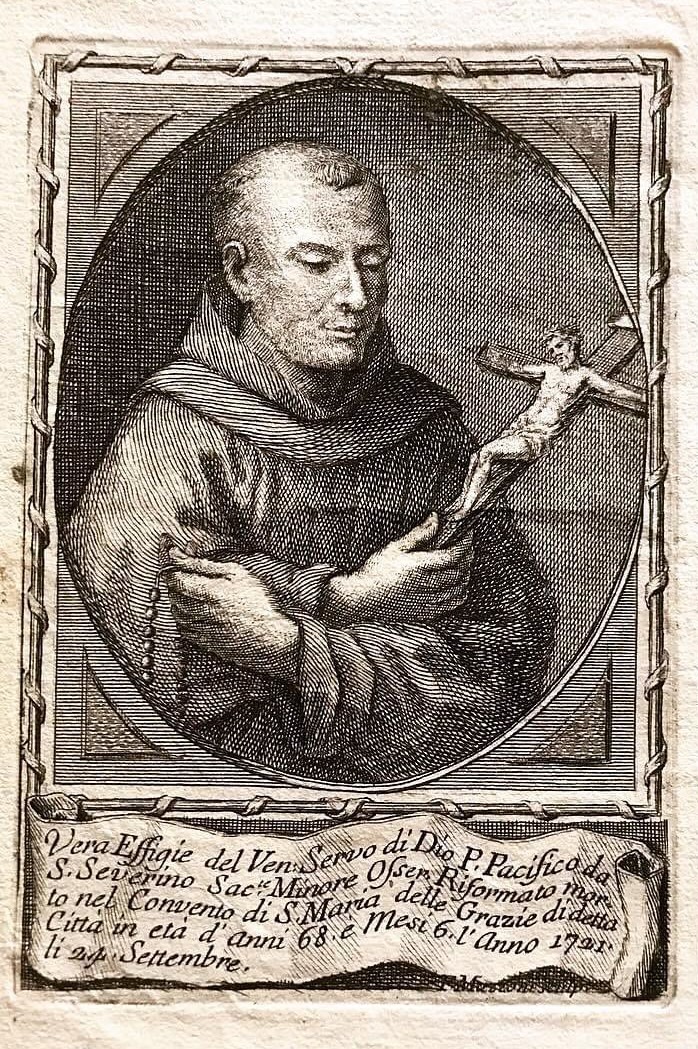
Born Carlo Antonio Divini in 1653 in San Severino, Italy, Saint Pacificus entered a world steeped in Catholic tradition and the burgeoning intellectual currents of the Baroque era. From a young age, he displayed a profound piety and a contemplative spirit that set him apart. His family, though not of noble birth, were devout, instilling in him a deep love for God and a desire for spiritual perfection. These early years were marked by a quiet devotion and an earnest pursuit of holiness, preparing him for the path he would soon embrace. At the age of seventeen, drawn by the charism of poverty and service, Carlo Antonio answered the call to religious life, entering the Order of Friars Minor, the Franciscans, and taking the name Pacificus.
As a Franciscan friar, Saint Pacificus dedicated his life to prayer, penance, and preaching. He was renowned for his profound patience in suffering, a virtue he exemplified throughout his life, particularly as he endured debilitating illnesses. Despite his physical ailments, which included deafness, blindness, and severe lameness, he never ceased to serve God and his community. He became a beloved confessor and spiritual director, his wisdom and gentle counsel sought by many. Though his physical limitations prevented him from extensive travel, his sermons, delivered with a profound spiritual insight, touched countless hearts. He was also credited with numerous miracles during his lifetime, including healings and prophecies, further solidifying his reputation as a holy man.
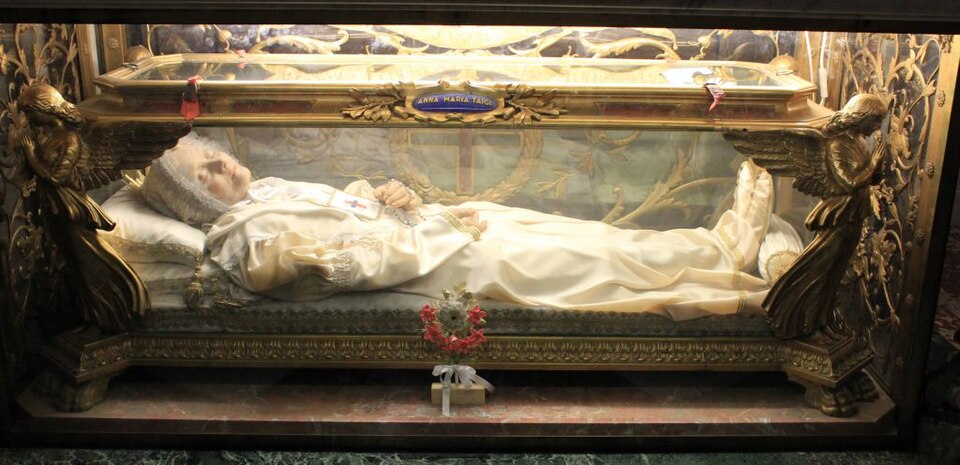
Saint Pacificus passed away peacefully on September 24, 1721, at the age of 68, after a life of exemplary holiness and profound suffering patiently borne. So great was his reputation for sanctity that, upon his death, his body was interred in the Church of the Friars Minor in San Severino Marche. Years later, when his tomb was opened, his body was discovered to be remarkably preserved, a testament to God's favor and a source of wonder for the faithful. Today, his incorrupt body rests in a glass reliquary in the Sanctuary of San Pacifico in San Severino Marche, where pilgrims can venerate him and reflect on his extraordinary life.
Canonized by Pope Gregory XVI in 1839, Saint Pacificus of San Severino remains a powerful inspiration for patience, perseverance, and unwavering faith in the face of adversity. His enduring legacy is one of profound humility and a deep trust in divine providence. Pilgrims visiting the Sanctuary today are invited to contemplate his life, pray for his intercession, and draw strength from his example of enduring suffering with grace. The sight of his incorrupt body serves as a tangible reminder of the power of holiness and the enduring presence of God's saints among us, continuing to inspire devotion and spiritual renewal.
Discovery
The discovery of the remarkably preserved remains of Saint Pacificus of San Severino unfolded with a reverent solemnity, an event that would forever mark the Capuchin friary in his hometown. Upon his death in 1721, Pacificus, known in life as Carlo Antonio Divini, was interred in the simple manner befitting a Capuchin friar, within the earth of the friary's cemetery. It was not until 1786, sixty-five years after his passing, that the first exhumation took place. This was not a routine reburial, but rather an official proceeding initiated as part of the initial stages of his beatification process. The local ecclesiastical authorities, along with several Capuchin friars and a physician, were present to witness the opening of the grave. What they beheld astonished them. Despite the passage of decades and the natural conditions of burial, the body of Friar Pacificus was found to be remarkably intact. His skin, though discolored by time and the earth, was still adhered to his bones, and his limbs remained flexible. The immediate reaction was one of profound awe and a deep sense of confirmation of his sanctity, fueling the fervor for his cause. The discovery was meticulously documented, with detailed reports sent to Rome, providing crucial evidence for his eventual beatification.
Following this initial, astonishing discovery, the body of Saint Pacificus underwent several further examinations, each serving to reaffirm its extraordinary state of preservation. In 1836, exactly fifty years after the first exhumation and 115 years after his death, a second official examination was conducted. This time, the body was found to be in an even more remarkable state than previously recorded, with the tissues retaining a surprising degree of suppleness. Physicians and theologians alike marveled at the absence of significant decomposition. The hair and nails were still present, and the facial features, though softened by time, were still discernible. These repeated inspections, often involving medical professionals, consistently noted the absence of any artificial embalming or preservation techniques, further underscoring the miraculous nature of his incorruption. Each subsequent exhumation, including one in 1903 during the final stages of his canonization, confirmed the enduring integrity of his remains, a testament to a phenomenon that defied conventional scientific explanation.
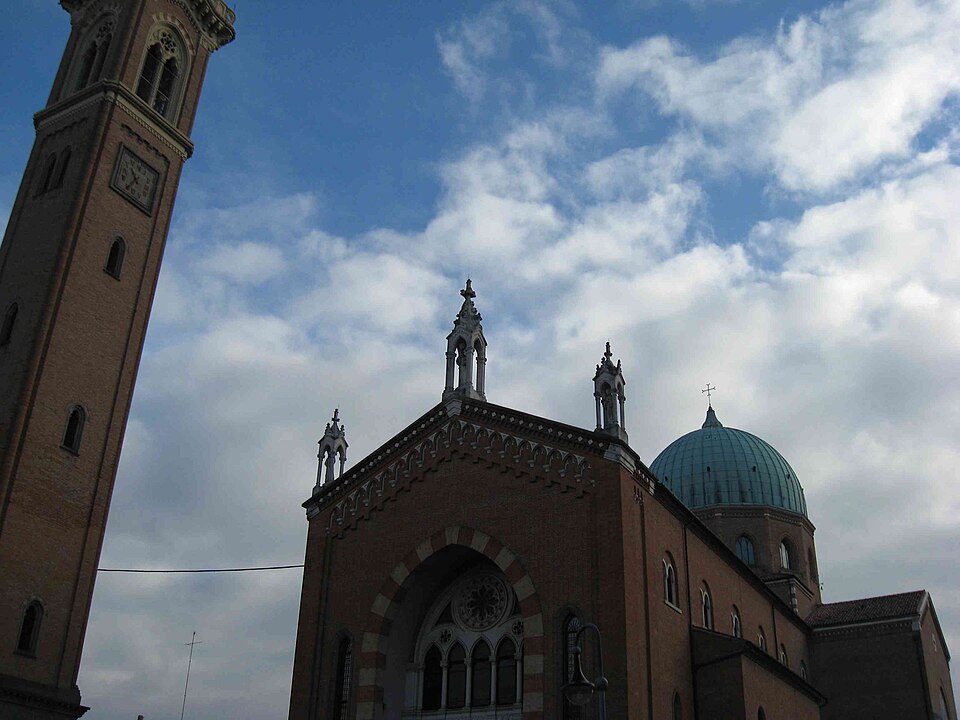
The journey of Saint Pacificus's body from its humble grave to its current venerated display is a narrative of careful preservation and increasing public access. After the initial exhumations, the body was placed in a simple wooden coffin within the friary. As his cult grew and his beatification and later canonization approached, greater care was taken for its presentation. Today, the incorrupt body of Saint Pacificus rests within a magnificent glass casket, allowing pilgrims to view his remains with reverence. This casket is housed in a prominent position within the Sanctuary of Saint Pacificus (Santuario di San Pacifico) in San Severino Marche, Italy, a sacred space dedicated to his memory. The environment within the display case is carefully controlled to mitigate any further deterioration, though the primary preservation appears to be an inherent quality of the body itself. The friars and custodians of the sanctuary remain vigilant in ensuring the body's continued protection, recognizing it as a precious relic and a powerful symbol of faith.
Among the many remarkable details associated with the incorruptible body of Saint Pacificus, the most frequently cited is the persistent flexibility of his limbs and the absence of the typical rigidity of death. Witnesses to the exhumations often reported that his joints could be moved with relative ease, a phenomenon that defied the natural process of rigor mortis and subsequent decay. While there are no widespread accounts of a sweet fragrance or exuding oils, the sheer resistance to decomposition over centuries, particularly given the un-embalmed nature of the burial, remains the paramount wonder. The preservation of his internal organs, noted during some of the earlier examinations, further adds to the extraordinary nature of his incorruption. These details, meticulously recorded in ecclesiastical documents, serve not only as historical facts but as enduring sources of inspiration and contemplation for the faithful who visit his shrine.
Scientific Analysis
The phenomenon of preserved human remains, particularly those attributed to religious figures, often prompts rigorous scientific scrutiny. In the case of Saint Pacificus of San Severino, who died in 1721, reports of his incorruption have persisted for centuries, inviting both devout veneration and scientific inquiry. While comprehensive, publicly accessible documentation of formal medical or scientific examinations on Saint Pacificus's remains is not as extensive as for some other incorrupt saints, historical accounts and limited observations provide a basis for analysis. Early examinations were primarily observational, conducted by ecclesiastical authorities and local physicians during canonical recognition processes. These typically involved visual inspection and palpation to ascertain the state of preservation. For instance, during the initial exhumation and subsequent reinterments, local doctors would have been present to attest to the condition of the body. These historical records, though lacking modern forensic detail, consistently describe a body that resisted the expected processes of putrefaction. Specific names of physicians or institutional affiliations from the 18th and 19th centuries are rarely documented in publicly available hagiographies, which tend to focus on the spiritual rather than the scientific aspects. However, the consistent narrative across multiple centuries of observation, often by individuals with medical training, suggests a level of preservation that warranted ongoing attention. More recently, while no extensive modern forensic examination using advanced imaging or tissue analysis has been widely publicized, periodic inspections by local medical professionals and church officials continue to confirm the remarkable state of preservation, noting the flexibility of tissues and the absence of significant decay, even after nearly three centuries.
The scientific remarkable aspect of Saint Pacificus's preservation lies in its apparent defiance of normal decomposition processes, particularly given the historical context and burial conditions. Human decomposition is a complex biological process driven by autolysis (self-digestion by cellular enzymes) and putrefaction (bacterial breakdown of tissues). These processes are typically accelerated by factors such as warmth, humidity, and the presence of oxygen and soil microorganisms. Saint Pacificus was interred in a tomb, a common practice of the era, which would have exposed his remains to typical subterranean environmental conditions. Without deliberate embalming or sophisticated preservation techniques, a body interred in 1721 would be expected to have undergone complete skeletalization, leaving only bones. Soft tissues—skin, muscle, internal organs—would have long since liquefied and been consumed by bacteria and insects. The reported incorruption, however, describes a body where soft tissues remain largely intact, exhibiting a degree of flexibility and a lack of the characteristic odors of decay. The climate of San Severino Marche, Italy, is generally temperate, with warm summers and mild winters, and moderate humidity, conditions that are not inherently conducive to natural mummification or exceptional preservation without intervention. The soil composition, while not specifically detailed, would also typically contain a rich microbial community that would facilitate decomposition. The absence of any documented embalming or chemical preservation treatments further deepens the scientific mystery, as such practices were not universally applied to all deceased individuals, especially those of humble origins, and the reported state of preservation goes beyond what even basic historical embalming could achieve over such an extended period.
Natural explanations for body preservation often revolve around phenomena such as saponification (adipocere formation) or natural mummification. Saponification occurs when fatty tissues convert into a waxy, soap-like substance (adipocere) under specific anaerobic, moist conditions, often in clay-rich soils. This process can preserve the general form of the body but typically results in a hardened, waxy texture, often with a grayish-white appearance. Natural mummification, conversely, requires extremely dry and often cold or arid conditions that rapidly dehydrate tissues, inhibiting bacterial growth. Neither of these processes fully aligns with the reported characteristics of Saint Pacificus's incorruption, which often describe a body with surprisingly pliable tissues and a lifelike appearance, rather than the brittle dryness of a mummy or the waxy hardness of adipocere. Skeptics often point to these natural processes as potential explanations, or suggest that the perceived incorruption is merely a form of advanced mummification or saponification, perhaps enhanced by unique, unrecorded environmental factors within the tomb. However, the reported flexibility and lack of significant desiccation or adipocere formation challenge these straightforward explanations. Furthermore, the absence of any historical record of intentional preservation efforts, coupled with the consistent observations of remarkable preservation over centuries, leaves a significant gap in purely naturalistic explanations. The phenomenon remains unexplained by conventional scientific understanding of decomposition under the presumed historical and environmental conditions.
From a modern scientific perspective, the case of Saint Pacificus presents a compelling subject for advanced forensic and anthropological investigation. While historical accounts provide valuable qualitative data, the application of contemporary techniques could offer definitive insights. Non-invasive methods such as multi-slice computed tomography (CT) scans could provide detailed three-dimensional imaging of internal organs and skeletal structures without disturbing the remains, revealing the extent of soft tissue preservation and any internal anomalies. Magnetic resonance imaging (MRI) could further characterize tissue composition and hydration levels. Chemical analysis of tissue samples, if ethically permissible and minimally invasive, could identify the presence of any natural or artificial preservatives, assess the degree of protein degradation, and determine the presence of microbial activity. Carbon dating could precisely establish the age of the remains, confirming the historical timeline. Comparative studies with other naturally preserved bodies, both those attributed to incorruption and those resulting from known natural processes, would be invaluable. The scientific community remains largely unaware of detailed modern analyses of Saint Pacificus's remains, leaving many questions unanswered. What is the specific chemical composition of the preserved tissues? Are there unique microbial communities or environmental factors within the tomb that have contributed to this state? Without such detailed empirical data, the phenomenon of Saint Pacificus's incorruption continues to reside at the intersection of faith and scientific mystery, a testament to the enduring power of unexplained phenomena to challenge and expand our understanding of natural processes.
Spiritual Significance
The phenomenon of incorruption, as exemplified by Saint Pacificus of San Severino, holds profound theological significance within Catholic doctrine, serving as a tangible testament to the sanctity of the human body and the promise of future glory. The Church teaches that the body, created in God's image and redeemed by Christ, is a temple of the Holy Spirit, as articulated in 1 Corinthians 6:19. When a saint's body remains miraculously preserved from natural decay, it is often interpreted not as a mere biological anomaly, but as a divine affirmation of their exceptional holiness and a foretaste of the resurrection of the body. This extraordinary preservation underscores the Catholic belief in the integral nature of the human person, where body and soul are inextricably linked, destined for eternal life. For Saint Pacificus, whose earthly remains defy the natural order centuries after his passing, his incorruption speaks powerfully to the Church's understanding of the communion of saints – a mystical bond uniting the living and the dead in Christ. It suggests that even in death, the sanctity of his life continues to resonate, offering a visible sign of God's favor and the enduring power of grace. The Church, in its wisdom, has often seen such occurrences as an encouragement to the faithful, a reminder that the spiritual life has tangible, even miraculous, consequences, reinforcing the hope in the ultimate triumph over death promised by Christ's resurrection.
Saint Pacificus of San Severino was characterized by a unique charism rooted deeply in Franciscan spirituality, particularly his profound humility and an intense mystical devotion that transcended the ordinary. Born Carlo Antonio Divini, he embraced the Franciscan ideal of radical poverty, not merely as an external practice but as an internal disposition of detachment from worldly possessions and honors. His daily life was a testament to heroic virtue, marked by an unwavering obedience to his superiors and a boundless charity towards the poor and suffering. He was known for his extraordinary contemplative prayer life, spending countless hours in profound union with God, which often manifested in ecstasies and visions. This deep spiritual connection was not an escape from reality but rather the wellspring of his compassionate service. He contributed significantly to the Franciscan school of thought by embodying its core tenets with such purity and intensity, demonstrating that true spiritual wealth lies in complete reliance on divine providence. His holiness was not ostentatious but quiet, a gentle yet powerful witness to the transformative power of divine love. He lived out the Franciscan call to be an instrument of peace, not through grand gestures, but through a life of profound interiority and self-emptying love, making his existence a living sermon on the Beatitudes.
Devotion to Saint Pacificus has flourished over the centuries, drawing pilgrims from across Italy and beyond to his resting place in San Severino Marche. His incorrupt body, housed within the Sanctuary of Saint Pacificus, serves as the focal point of this veneration, a powerful magnet for the faithful seeking spiritual solace and intercession. He is widely invoked as a patron against headaches and for those suffering from chronic illnesses, reflecting the numerous accounts of physical healing attributed to his intercession during and after his life. Pilgrims often participate in novenas leading up to his feast day on September 24th, a time of special prayer and reflection on his virtues. The experience of visiting his shrine is deeply moving; to stand before a body preserved for centuries, seemingly untouched by decay, offers a profound encounter with the supernatural. Many come to pray, to touch the glass casing containing his remains, or simply to sit in quiet contemplation, feeling a tangible connection to a saint whose life was so completely given to God. The sanctuary itself is a place of peace, where the spiritual legacy of Saint Pacificus is palpable, inspiring visitors to deepen their own faith and commitment to Christ.
Numerous miracles have been attributed to the intercession of Saint Pacificus, both during his earthly life and in the centuries following his death. Documented accounts speak of miraculous healings, where the sick and infirm, after praying to him, experienced sudden and complete recoveries from debilitating ailments, including chronic pain and various diseases for which there was no medical cure. Beyond physical healings, there are stories of profound conversions, where individuals whose lives were far from God found renewed faith and purpose through his intercession. Families facing dire circumstances have reported answered prayers, finding solutions to seemingly insurmountable problems after seeking his help. The incorrupt body itself has been a continuous source of spiritual consolation for the faithful. Its very presence is perceived as a miracle, a constant reminder of God's power and love, and a testament to the eternal reward awaiting those who live a life of holiness. For many, simply being in the presence of his preserved remains instills a sense of peace, strengthens their belief in the afterlife, and deepens their trust in the communion of saints, knowing that the holy ones in heaven continue to intercede for those on earth.
The enduring message of Saint Pacificus of San Severino holds profound relevance for contemporary Catholics and seekers alike, offering a compelling counter-narrative to the pervasive materialism and secularism of our age. His life, dedicated to radical poverty, profound humility, and unwavering devotion, challenges the modern obsession with accumulation and self-sufficiency, reminding us that true fulfillment is found not in worldly possessions but in spiritual riches and complete reliance on God. In an era often marked by superficiality and distraction, his intense contemplative life and mystical experiences serve as an invitation to cultivate a deeper interiority and a more profound relationship with the divine. From his example, people today can learn the transformative power of surrender to God's will, the beauty of selfless service, and the quiet strength found in humility. His incorruption acts as a tangible bridge between the visible and invisible worlds, a miraculous sign that transcends scientific explanation, compelling us to consider realities beyond the purely material. It stands as a powerful witness to the enduring truth of the Catholic faith, offering hope and inspiration that a life lived in union with God can indeed leave an indelible mark, not only on the soul but, in extraordinary cases, even on the body, pointing towards the ultimate triumph of grace over corruption.
AI summary
A plain-language overview generated from this page's source material. Always verify with primary sources.