Biography
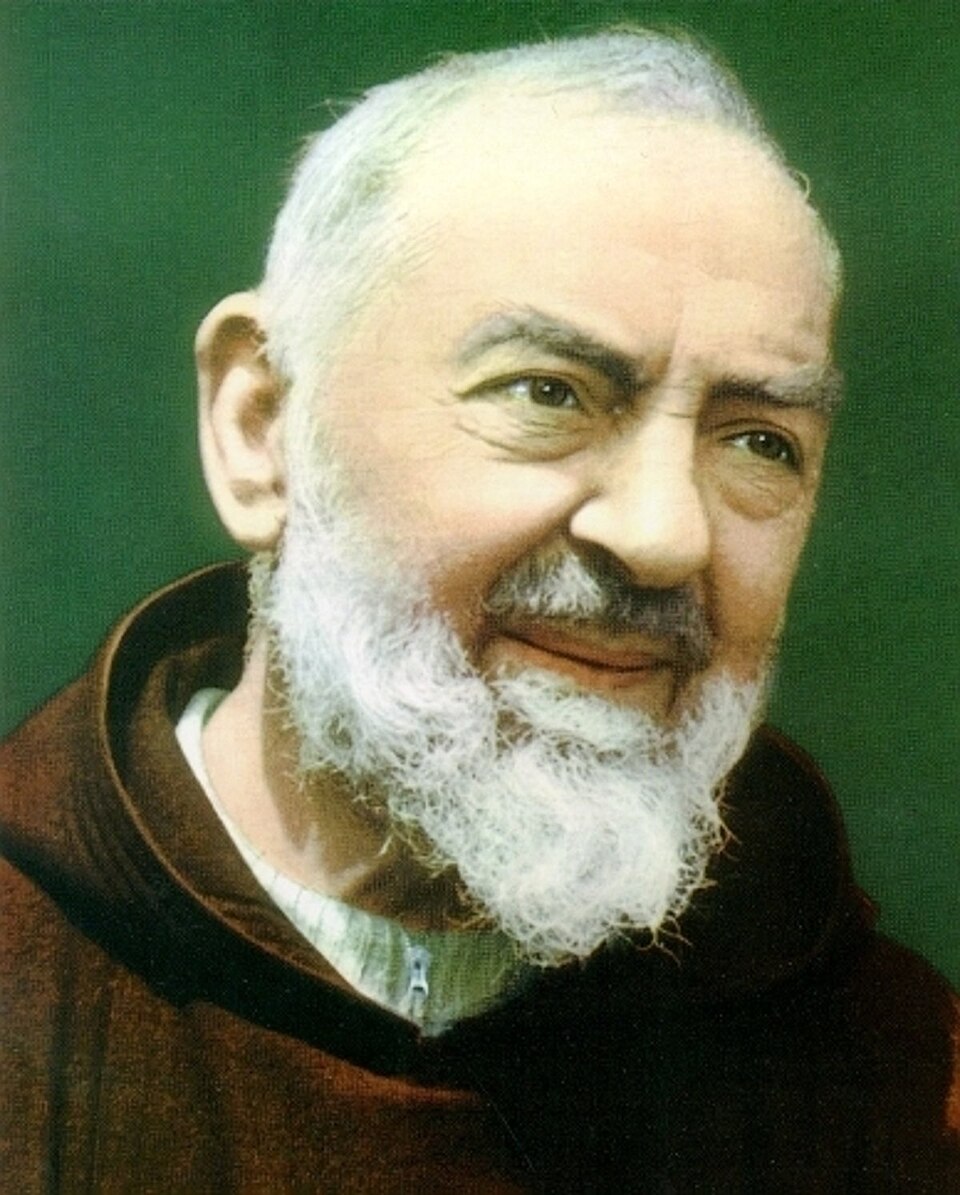
Francesco Forgione, who would later be known to the world as Padre Pio, was born in 1887 into a devout farming family in the small, picturesque village of Pietrelcina, Italy. From a tender age, young Francesco displayed an extraordinary piety and a profound sensitivity to the spiritual realm, experiencing visions and ecstasies that set him apart. His family, though humble, fostered his burgeoning faith, and at the age of 15, he entered the Capuchin novitiate, drawn to a life of poverty, prayer, and service. It was here, in the austere confines of the friary, that he began his arduous journey towards sainthood, marked by intense spiritual struggles and an ever-deepening union with Christ.
Ordained a priest in 1910, Padre Pio's ministry truly began to blossom when he was sent to the friary of San Giovanni Rotondo in 1916, where he would remain for the rest of his life. It was here, in 1918, that he received the visible stigmata – the wounds of Christ's Passion – on his hands, feet, and side, a phenomenon that would define his spiritual life for fifty years. Despite the intense pain and scrutiny that accompanied these mystical wounds, Padre Pio embraced them as a gift, offering his suffering for the salvation of souls. He became renowned for his extraordinary spiritual gifts: bilocation, healing the sick, prophecy, and the profound ability to read souls during confession, guiding countless penitents to repentance and conversion. His boundless compassion also led him to establish the "Casa Sollievo della Sofferenza" (Home for the Relief of Suffering), a state-of-the-art hospital that remains a testament to his unwavering commitment to alleviating human suffering, both spiritual and physical.
Padre Pio passed into eternal life on September 23, 1968, at the venerable age of 81. Forty years later, in 2008, his tomb was opened in preparation for his canonization, revealing a remarkable state of preservation. Despite having been laid in a simple wooden coffin without any embalming, his body, particularly his hands, chin, and other soft tissues, was found to be exceptionally well-preserved. While the stigmata wounds, as Padre Pio himself had prophesied, were no longer visible, the integrity of his flesh was a profound sign to the faithful. To allow pilgrims to venerate him, his face was reverently reconstructed with a silicone mask, and his body was placed on public display. Over 800,000 pilgrims flocked to San Giovanni Rotondo in the initial months to witness this extraordinary sight.
Today, Saint Padre Pio remains one of the most beloved and revered saints of the modern era, a powerful intercessor and a beacon of God's mercy. His canonization in 2002 by Pope John Paul II solidified his place in the Church's calendar, and his feast day on September 23 is observed with great devotion. Millions of pilgrims journey annually to San Giovanni Rotondo, not only to venerate his partially incorrupt body, now housed in a magnificent shrine, but also to seek his spiritual guidance and experience the profound peace that emanates from this sacred place. His life, marked by profound suffering and extraordinary grace, continues to inspire countless souls to a deeper faith and a more fervent love for Christ.
Discovery
The exhumation of Padre Pio’s remains, a moment long anticipated by the faithful and meticulously planned by Church authorities, took place on March 3, 2008, forty years after his passing into eternal life. The event unfolded in the crypt of the Church of Our Lady of Grace in San Giovanni Rotondo, a sacred space where the Capuchin friar had spent much of his earthly ministry. Present at this profoundly significant occasion were Archbishop Domenico D'Ambrosio, the Papal Delegate for the Sanctuary of Padre Pio, along with a team of medical professionals, forensic experts, and ecclesiastical officials, all bearing witness to the solemn proceedings. As the concrete slab covering his tomb was carefully lifted, and the coffin, made of chestnut wood and zinc, was opened, a collective gasp of awe and reverence rippled through those assembled. Despite the passage of four decades, the body of Padre Pio was found to be remarkably preserved. His hands, still bearing the stigmata, though faded, were clearly discernible, as was his chin and parts of his torso. The immediate reaction was one of profound wonder and gratitude, a tangible sign, many believed, of God's favor upon His humble servant. The air was thick with a sense of the miraculous, confirming for many the sanctity that had been so evident in his life.
Following this initial discovery, a more thorough examination was conducted by a team of specialists, including Professor Orazio Pennelli, a forensic pathologist, and Professor Giorgio Fanti, an expert in bioengineering. Their findings corroborated the initial observations: while not entirely incorrupt in the classical sense, the body exhibited an extraordinary degree of preservation, particularly considering the natural processes of decay. The skin on his face, though somewhat deteriorated, still retained its contours, and his beard remained largely intact. His nails were also present. It was determined that while certain areas, such as the nose, had suffered some degradation, the overall integrity of the body was exceptional. To prepare the revered remains for public veneration, a delicate and respectful process of restoration was undertaken. This involved treating the body to ensure its long-term stability and, most notably, the creation of a lifelike silicone mask. This mask, meticulously crafted to replicate Padre Pio's facial features as they were in life, was placed over his face to present a more complete and recognizable image to the millions of pilgrims who would undoubtedly come to pay their respects.
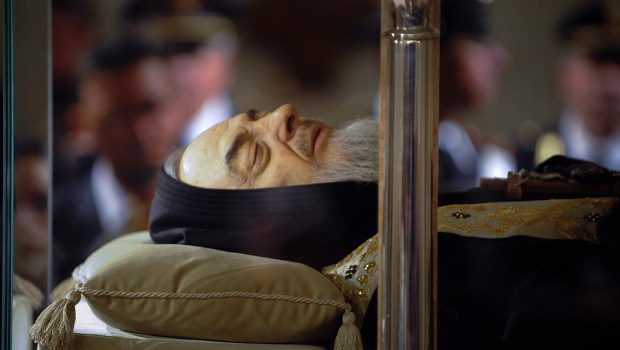
The journey of Padre Pio's preserved body into public veneration has been a carefully managed process, reflecting both profound reverence and practical considerations for its long-term display. After the initial exhumation and restoration, the body was placed in a crystal coffin, designed to allow pilgrims an unobstructed view of the beloved saint. This coffin was then moved to the lower church of the Sanctuary of San Pio in San Giovanni Rotondo, a magnificent modern basilica built to accommodate the ever-increasing numbers of faithful drawn to Padre Pio's spiritual legacy. Here, within a specially constructed crypt, the crystal coffin rests, encased within a larger, climate-controlled reliquary. This sophisticated display system ensures the body's continued preservation by regulating temperature and humidity, mitigating the effects of environmental factors. The body is dressed in the Capuchin habit, a poignant reminder of his lifelong dedication to his order and his spiritual mission. The decision to display the body in this manner was made with the understanding that it would serve as a powerful focal point for devotion, allowing pilgrims to connect tangibly with the saint they so deeply revere.
While Padre Pio's body does not exhibit the more dramatic phenomena sometimes associated with incorrupt saints, such as bleeding or exuding oils, its remarkable state of preservation after four decades is itself considered a profound sign. The absence of significant putrefaction, particularly in the internal organs, which are often the first to decompose, is a testament to an unusual resistance to decay. The sheer volume of pilgrims who flocked to San Giovanni Rotondo in the months following the exposition of his body – over 800,000 in the first few months alone – speaks to the enduring spiritual power and influence of Padre Pio. This immense outpouring of devotion, coupled with the extraordinary condition of his remains, reinforces the belief among the faithful that Padre Pio’s sanctity transcended even death, offering a tangible link to the divine for those who seek his intercession. The quiet dignity of his resting place, and the reverent gaze of countless pilgrims, underscore the profound spiritual significance of this partially incorrupt saint.
Preservation
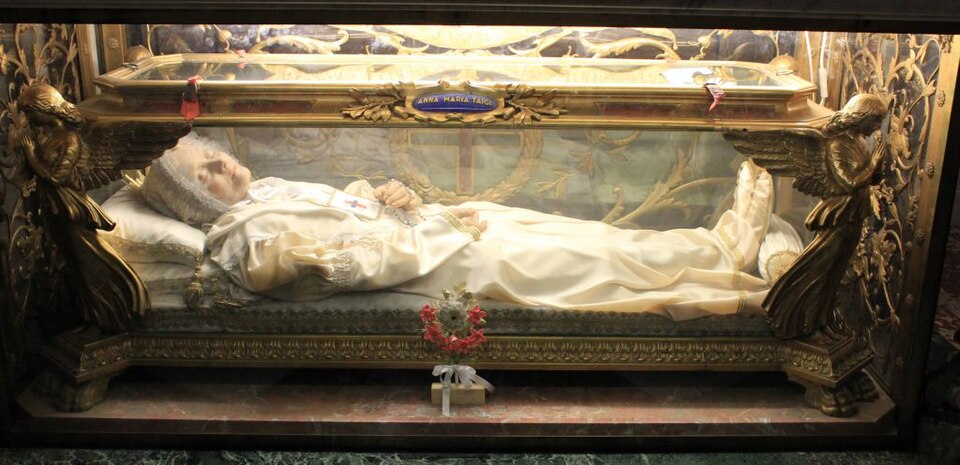
Body displayed in a crystal coffin in the lower church of San Pio, San Giovanni Rotondo.
Scientific Analysis
The preservation of the remains of Padre Pio, particularly in the context of his reported incorruption, has attracted considerable scientific and medical scrutiny. Following his death on September 23, 1968, his body was not subjected to any embalming procedures, a fact confirmed by medical personnel present at the time. Despite this absence of artificial preservation, initial observations upon exhumation in 2008 revealed a remarkable degree of integrity. Dr. Orazio Pennelli, a forensic pathologist, led the medical examination team. His findings, along with those of other specialists, documented the preservation of significant soft tissue, including muscles, skin, and internal organs, contrary to expectations for a body interred for nearly 40 years without embalming. While the face showed signs of decomposition and required a silicone mask for public veneration, the hands and feet, notably the areas where the stigmata were historically present, exhibited a striking level of preservation. The stigmata wounds themselves were no longer visible, aligning with Padre Pio's own prophecy that they would disappear after his death. The medical team meticulously documented the condition of the skeletal structure, which was found to be intact, and noted the absence of significant putrefaction or liquefaction of tissues that typically characterize advanced decomposition. These initial assessments, conducted by a team of medical professionals, formed the primary scientific record of the body's state upon exhumation.
The scientific enigma surrounding Padre Pio's preservation lies in the apparent defiance of conventional post-mortem decomposition processes. The body was interred in a simple wooden coffin within a crypt in the Sanctuary of San Pio in San Giovanni Rotondo, Italy. This environment, while offering some protection from direct external elements, does not inherently possess properties known to halt or significantly retard decomposition over several decades without intervention. Typical decomposition involves autolysis (self-digestion by cellular enzymes) and putrefaction (bacterial breakdown), leading to liquefaction of soft tissues, skeletonization, and ultimately, disintegration. Factors such as temperature, humidity, oxygen availability, and microbial activity in the burial environment are critical determinants of decomposition rates. San Giovanni Rotondo's climate, characterized by warm summers, would generally accelerate decomposition. The absence of embalming, a process that introduces chemical fixatives to denature proteins and inhibit microbial growth, makes the observed preservation particularly anomalous. While some degree of natural mummification or adipocere formation (saponification of fatty tissues into a waxy substance) can occur in specific environmental conditions, these processes usually result in a hardened, desiccated, or waxy appearance, often with significant shrinkage and discoloration. The reported preservation of soft tissue integrity, as noted by the medical examiners, suggests a more complex phenomenon than typical natural mummification or adipocere formation alone.
Several natural explanations have been proposed to account for instances of unusual body preservation, including adipocere formation and natural mummification due to extreme dryness or cold. However, in Padre Pio's case, the specific environmental conditions of his crypt burial do not perfectly align with the optimal parameters for these processes to occur to the extent observed. Adipocere formation typically requires a moist, anaerobic environment, while natural mummification necessitates extreme dryness or cold. The reported state of preservation, particularly the maintenance of soft tissue structure, does not fully conform to the typical outcomes of either process. Skeptics often point to the possibility of a combination of subtle environmental factors, such as specific soil chemistry, air circulation within the crypt, or even the type of wood used for the coffin, contributing to a slowed decomposition. However, without detailed environmental monitoring data from the crypt over the decades of interment, these remain largely speculative. The scientific community generally requires robust empirical evidence to attribute such phenomena to natural causes, and in cases like Padre Pio's, the precise combination of factors that would lead to such preservation without embalming remains largely unexplained by current forensic science models.
From a modern scientific perspective, the case of Padre Pio's preservation offers a unique opportunity for interdisciplinary study into the complex processes of post-mortem decay and natural preservation. While initial examinations provided valuable macroscopic observations, the application of advanced forensic techniques could yield deeper insights. For instance, detailed histological analysis of tissue samples could reveal the microscopic state of cellular structures and the extent of protein degradation, potentially identifying specific biochemical pathways that were inhibited. CT scans or MRI could provide non-invasive, three-dimensional imaging of internal organs and skeletal structures, offering a more comprehensive understanding of their integrity. Carbon dating of tissue samples could confirm the age of the remains and rule out any inadvertent contamination. Furthermore, microbial analysis of the surrounding environment and the remains themselves could identify specific bacterial or fungal populations that may have played a role in either inhibiting or facilitating decomposition. While the decision to apply such invasive techniques is often balanced against religious and ethical considerations, a comprehensive scientific investigation utilizing these tools could significantly advance our understanding of exceptional body preservation, potentially revealing novel mechanisms or environmental factors that contribute to such phenomena, thereby bridging the gap between empirical inquiry and the enduring mystery of cases like Padre Pio's.
Spiritual Significance
The phenomenon of incorruption, particularly as exemplified by figures like Saint Padre Pio, holds profound theological significance within the Catholic tradition, serving as a tangible testament to core doctrines. The Church views the human body not merely as a vessel for the soul, but as a temple of the Holy Spirit, destined for resurrection and eternal glory, as articulated in 1 Corinthians 6:19. When a saint's body resists the natural process of decay, even partially, it is interpreted not as a defiance of biology, but as a divine affirmation of this sacred dignity and a foretaste of the resurrection of the body. For Padre Pio, whose life was so intimately intertwined with the suffering and resurrection of Christ through his stigmata, the preservation of his earthly remains reinforces the belief that his entire being was consecrated to God, even unto death. It speaks to the communion of saints, bridging the visible and invisible Church, reminding us that those who have gone before us in faith remain connected to us, their bodies awaiting the final glorification. The Church, in acknowledging Padre Pio's partial incorruption, implicitly recognizes a special divine favor, a sign meant to inspire faith and underscore the transformative power of God's grace in a life lived in heroic virtue.
Padre Pio's unique charism was undeniably his profound identification with the crucified Christ, manifested most dramatically through the stigmata, the visible wounds of Christ on his own body. This extraordinary gift, which he bore for fifty years, was not merely a physical phenomenon but a deep spiritual reality that shaped his entire ministry. His heroic virtues were manifold, encompassing an unwavering humility that recoiled from public attention despite the constant scrutiny, an immense charity that embraced countless souls in the confessional and through spiritual direction, and an absolute obedience to his superiors, even when faced with restrictive measures. His mysticism was not an escape from reality but a deep immersion in it, drawing strength from constant prayer and contemplation to serve others. He lived a life of profound poverty, both personally and within his Capuchin order, emphasizing detachment from worldly possessions. His spiritual tradition was rooted firmly in Franciscan spirituality, characterized by evangelical poverty, fraternal love, and a deep devotion to the Passion of Christ, which he uniquely embodied, offering a powerful example of how suffering can be redemptive when united with Christ's.
Devotion to Padre Pio has exploded in the modern era, making him one of the most beloved and widely venerated saints of the 20th century. His patronage extends to civil defense volunteers, adolescents, and those suffering from stress, among others, reflecting the diverse needs of those who seek his intercession. The development of his devotion began even during his lifetime, as pilgrims flocked to San Giovanni Rotondo to witness his stigmata, seek his counsel in confession, and experience his spiritual guidance. Today, his feast day on September 23rd is celebrated globally, and countless novenas and prayers are offered in his name. Pilgrims interact with his partially incorrupt body, now encased in a crystal coffin within the Sanctuary of San Pio, with a profound sense of awe and reverence. The experience of visiting his shrine is often described as deeply spiritual, a pilgrimage that transcends mere tourism, offering a tangible connection to a life lived in extraordinary union with God. The meticulously preserved environment, the reverence of the friars, and the palpable faith of fellow pilgrims create an atmosphere conducive to prayer, reflection, and a renewed commitment to one's own spiritual journey.
Miracles attributed to Padre Pio's intercession are legion, forming a significant part of his enduring legacy and contributing to his rapid canonization. Documented healings of physical ailments, often deemed medically inexplicable, abound, ranging from blindness and paralysis to various forms of cancer. Beyond physical cures, countless conversions and profound spiritual transformations have been attributed to his prayers, particularly through the sacrament of confession, where he possessed an uncanny ability to discern the state of souls. The incorrupt body itself has become a source of immense spiritual consolation for the faithful. For many, seeing his preserved form, even with the silicone mask that covers the more deteriorated facial features, offers a powerful visual reminder of the sanctity he achieved and the reality of eternal life. It serves as a tangible link to a saint who walked among us, suffered with us, and continues to intercede for us, reinforcing faith in the power of prayer and the communion of saints.
Padre Pio's enduring message for contemporary Catholics and seekers is one of profound hope, unwavering faith, and the transformative power of suffering united with Christ. In an age often characterized by materialism, secularism, and a pervasive sense of spiritual emptiness, his life challenges modern sensibilities by demonstrating that true fulfillment lies not in worldly pursuits but in radical surrender to God's will. He teaches us the profound value of prayer, the necessity of the sacraments, especially confession and the Eucharist, and the redemptive potential of embracing our own crosses. For those grappling with doubt or seeking meaning, his example offers a powerful counter-narrative to the prevailing skepticism, reminding us that the miraculous is not confined to ancient texts but can manifest in the lives of ordinary people who open themselves fully to divine grace. His partial incorruption serves as a tangible bridge between the visible and invisible worlds, a physical reminder that death is not the end, and that the spiritual realities we profess are deeply intertwined with our physical existence, offering a beacon of hope and a call to deeper faith for all who encounter his story.
AI summary
A plain-language overview generated from this page's source material. Always verify with primary sources.