Biography
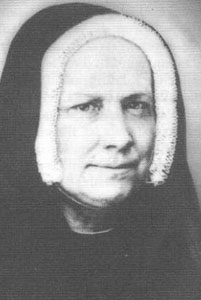
Saint Peregrine Laziosi, born in 1260 in Forlì, Italy, entered a world rife with political and social unrest. His early life was marked by fervent anti-papal sentiment, as he initially belonged to a Ghibelline faction that opposed the Pope's temporal authority. During a period of civil strife, Peregrine, then a young man, was involved in an incident where he struck Saint Philip Benizi, a Servite friar sent by the Pope to mediate peace. Instead of retaliation, Philip offered Peregrine forgiveness and a prayer for his conversion, an act of profound charity that deeply moved the fiery youth. This encounter proved to be a pivotal turning point, leading Peregrine to a profound spiritual awakening and a complete transformation of heart. He soon renounced his former life and, at the age of 30, sought admission into the Order of the Servants of Mary, known as the Servites, in Siena, dedicating himself to a life of prayer, penance, and service.
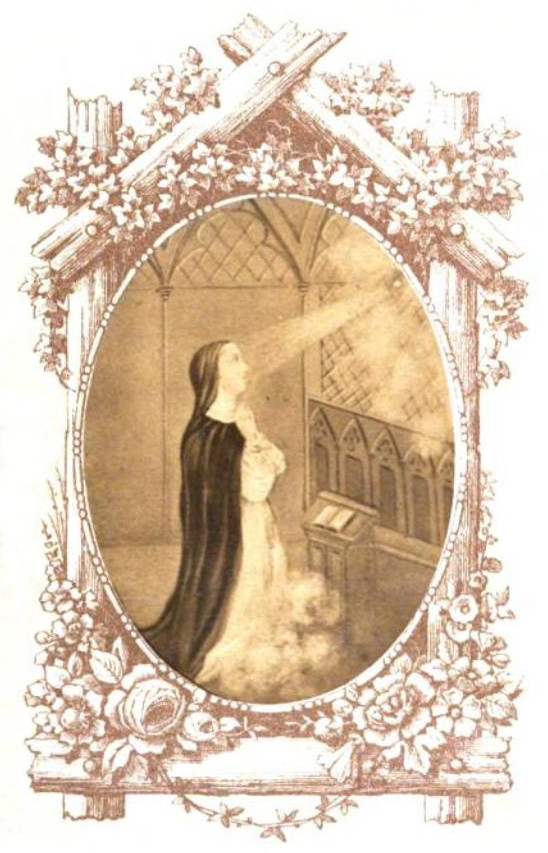
Within the Servite Order, Saint Peregrine embraced a life of rigorous austerity and profound humility. He was known for his extraordinary devotion to the Blessed Mother and his tireless work among the poor and the sick, often spending long hours in prayer and contemplation. His ministry was characterized by a deep compassion for those suffering, and he became renowned for his counsel and spiritual guidance. A particularly arduous penance he undertook was to stand for long periods, which eventually led to a severe affliction: a cancerous tumor on his right leg. The doctors determined that amputation was the only course of action to save his life. The night before the scheduled surgery, Peregrine, in immense pain, dragged himself before a fresco of the Crucified Christ in the Servite chapter house, fervently praying for healing. As he prayed, he fell into a deep sleep, and upon waking, discovered his leg was completely healed, without any trace of the tumor. This miraculous cure, witnessed by many, solidified his reputation as a man of profound faith and divine favor.
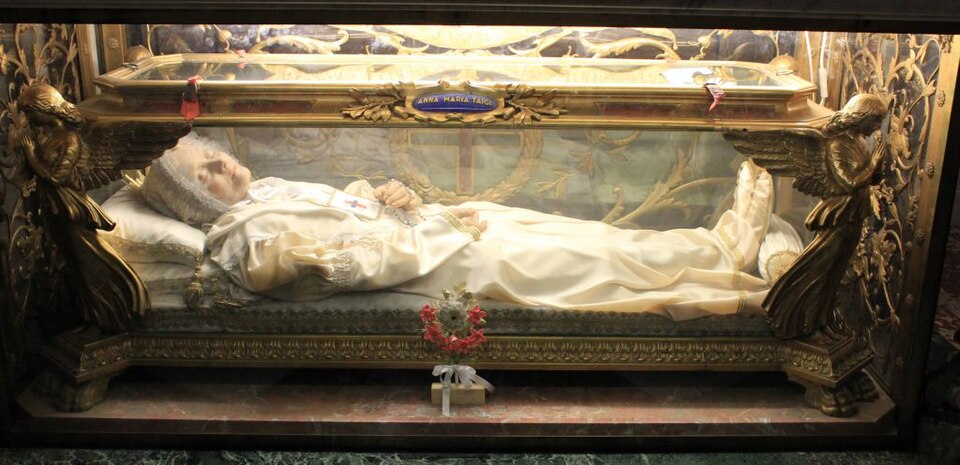
Saint Peregrine lived to the remarkable age of 85, passing away peacefully in 1345 in Forlì. His sanctity was widely recognized during his lifetime, and after his death, devotion to him grew steadily. When his body was exhumed, it was discovered to be incorrupt, a testament to his extraordinary holiness and a source of wonder for the faithful. The preservation of his earthly remains, defying natural decay, has been documented throughout the centuries, though no scientific explanation has ever fully accounted for this phenomenon. Today, his incorrupt body rests in the Basilica of San Pellegrino Laziosi in Forlì, Italy, where it continues to be venerated by countless pilgrims.
The legacy of Saint Peregrine Laziosi is deeply intertwined with his miraculous healing and the enduring witness of his incorrupt body. Canonized by Pope Benedict XIII in 1726, he is universally invoked as the patron saint of cancer patients and those suffering from chronic illnesses. His feast day is celebrated on May 1st, a day when many seek his powerful intercession for healing and strength in the face of suffering. Pilgrims from around the world visit his shrine in Forlì, drawn by the spiritual significance of his incorruption and the hope he offers to those afflicted with disease. His life stands as a powerful testament to the transformative power of divine grace, the efficacy of prayer, and the enduring mercy of God, reminding us that even in the darkest hours of illness, there is always hope and the promise of heavenly aid.
Discovery
The remarkable story of Saint Peregrine Laziosi's incorruptibility begins decades after his peaceful passing in 1345. It was during the process of his beatification, a significant step towards canonization, that the first extraordinary discovery was made. In the year 1391, a mere forty-six years after his death, the Servite friars of Forlì undertook the solemn task of exhuming his remains. This was not an uncommon practice for individuals being considered for sainthood, as it allowed for the collection of relics and the verification of their holy life. However, what awaited them beneath the earth of the Servite convent was far from ordinary. As the earth was carefully removed from his grave, a gasp rippled through the assembled friars and local dignitaries. There, resting in the soil, was not a skeleton, but the remarkably preserved body of Peregrine. His skin, though discolored by the passage of time, remained intact, clinging to his bones. His features, though somewhat sunken, were still discernible, and his limbs retained a degree of flexibility. The most striking detail, however, was the complete absence of the putrefaction that typically consumes human remains. This unexpected sight immediately fueled devotion and solidified the belief in his sanctity among the people of Forlì. The initial reaction was one of profound awe and reverence, with many attributing the miraculous preservation to his unwavering faith and the suffering he endured for Christ.
Following this initial discovery, the body of Saint Peregrine was carefully reinterred, though its incorrupt state was now a matter of public record and veneration. Over the centuries, as his cult grew and the process for his canonization progressed, further examinations were conducted. While precise dates for every subsequent exhumation are not always meticulously documented in every historical account, it is understood that the body was periodically observed and its condition noted. Each time, the consistent report was that the body remained largely unchanged, defying the natural laws of decay. While it is important to note that the body is not described as being in a state of perfect, lifelike preservation, such as some other incorruptibles, its enduring integrity, particularly the retention of soft tissues, has always been the subject of profound wonder. There are no historical accounts of the body exhibiting phenomena such as bleeding or exuding oil, nor is there mention of a sweet fragrance. Rather, the miracle lies in its sustained resistance to complete decomposition, a testament to its singular nature.
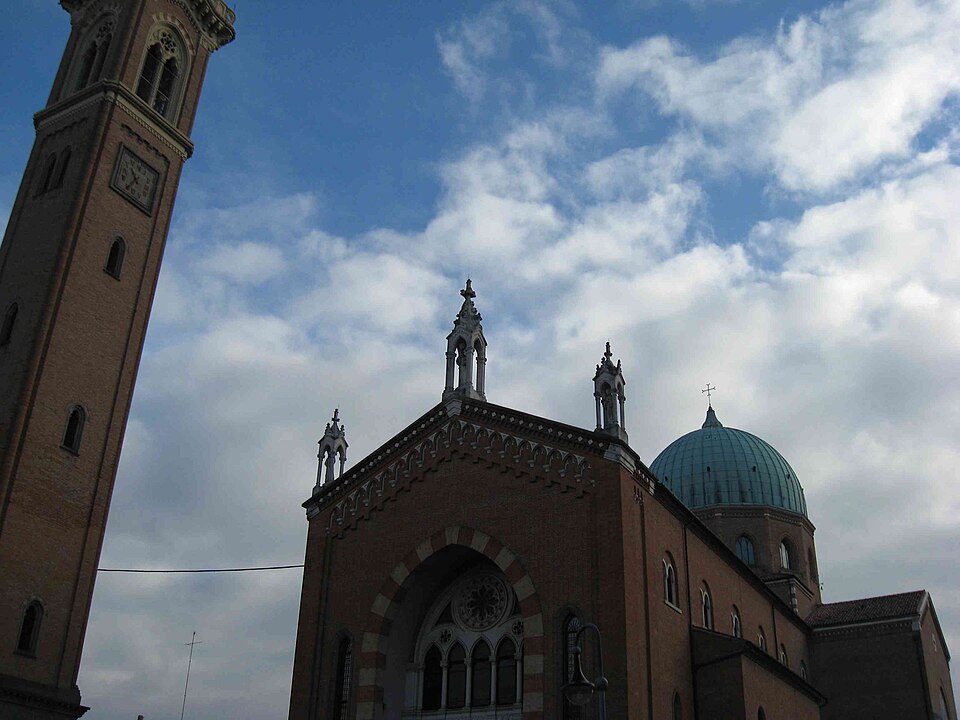
Today, the venerated remains of Saint Peregrine Laziosi are housed in the Basilica of San Pellegrino in Forlì, Italy, a sacred site that has become a pilgrimage destination for countless faithful, particularly those afflicted with cancer, for whom he is the patron saint. The body is carefully preserved within a magnificent glass casket, allowing pilgrims to view his earthly form. This casket is itself enclosed within a larger, ornate reliquary, often adorned with precious metals and intricate carvings, reflecting the profound reverence accorded to him. The display is designed to protect the body from environmental degradation while simultaneously facilitating public veneration. The basilica itself is a testament to his enduring legacy, with frescoes and artworks depicting scenes from his life and miracles. The careful placement within the glass casket ensures that the body remains untouched, yet visible, a powerful visual reminder of his sanctity and the enduring mystery of incorruption within the Catholic tradition. The preservation measures are primarily focused on maintaining a stable environment within the casket, protecting the delicate remains from humidity, temperature fluctuations, and airborne contaminants, thus ensuring that this remarkable relic continues to inspire faith for generations to come.
Preservation
Body preserved in the Basilica of San Pellegrino, Forlì.
Scientific Analysis
The phenomenon of human body preservation beyond typical decomposition, particularly in cases attributed to incorruption within religious traditions, presents a compelling intersection for scientific inquiry. One such instance is that of Saint Peregrine Laziosi, whose remains are traditionally held to be incorrupt. Despite numerous historical accounts of his preservation, comprehensive, modern scientific examinations of Saint Peregrine's body are remarkably scarce in publicly accessible scientific literature. While anecdotal reports and ecclesiastical records frequently mention the body's state, detailed forensic or medical analyses, performed by independent scientific bodies with modern instrumentation, appear to be largely absent or not widely disseminated. Historical accounts suggest various inspections by religious authorities over centuries, often noting the body's flexibility, lack of odor, and preserved tissues. However, these historical observations, while significant within their context, lack the rigorous methodology and detailed documentation expected from contemporary scientific investigation. For instance, specific dates of examination, the names and affiliations of medical professionals involved, and the precise methodologies employed are not readily available in published scientific journals. The absence of such detailed records makes a definitive scientific assessment challenging, relying instead on historical descriptions that, while sincere, do not meet current forensic standards for objective analysis.
The scientific mystery surrounding Saint Peregrine's alleged incorruption lies in its defiance of conventional post-mortem decomposition processes. Under typical conditions, after death, the human body undergoes a predictable sequence of changes: autolysis (self-digestion by enzymes), putrefaction (bacterial decomposition), and eventual skeletonization. Factors such as temperature, humidity, oxygen availability, and the presence of microorganisms significantly influence the rate and extent of decay. For a body interred in a basilica in Forlì, Italy, a region with a temperate climate, the normal expectation would be complete skeletonization within a few decades, if not sooner, particularly without deliberate embalming or preservation treatments. Historical records do not indicate any embalming procedures or sophisticated preservation techniques being applied to Saint Peregrine's body at the time of his death in 1345. The reported preservation of soft tissues, flexibility, and lack of putrefactive odor, if accurately described over centuries, would represent a significant departure from expected taphonomic processes. The specific environmental conditions within the Basilica of San Pellegrino, such as temperature fluctuations, humidity levels, and air circulation, would be critical factors in understanding any natural preservation. Without precise data on these microclimates over time, it is difficult to assess their potential role in any observed preservation.
Various natural explanations for body preservation, such as saponification (adipocere formation) or mummification, are often considered in cases of alleged incorruption. Adipocere, a waxy, soap-like substance formed from body fats in anaerobic, moist environments, can preserve body contours and some soft tissues, but it typically results in a brittle, grayish material, not the flexible, lifelike appearance sometimes attributed to incorrupt bodies. Natural mummification, occurring in extremely dry or cold conditions, desiccates tissues, leading to a leathery, shrunken appearance. Neither of these processes fully aligns with the descriptions often associated with Saint Peregrine's incorruption, which frequently emphasize a remarkable degree of naturalness and flexibility. Skeptics often point to these natural processes as potential, albeit imperfect, explanations, or suggest that historical accounts may be embellished or refer to partial preservation rather than complete incorruption. The lack of detailed, modern scientific examination makes it difficult to definitively confirm or refute these hypotheses. The core of the unexplained phenomenon remains the reported preservation of soft tissues over many centuries in an environment not typically conducive to such extensive natural preservation without intervention.
From a modern scientific perspective, the case of Saint Peregrine Laziosi, like other alleged incorrupt bodies, presents an opportunity for rigorous interdisciplinary study. Techniques such as computed tomography (CT) scans could non-invasively map the internal structure of the body, identifying preserved organs, skeletal integrity, and any foreign materials. Carbon dating of tissue samples could confirm the age of the remains, while histological analysis could determine the cellular structure and degree of degradation of preserved tissues. Microbiological studies could identify any unique microbial communities that might have contributed to or inhibited decomposition. The application of these advanced forensic and biological techniques, while requiring careful ethical and religious considerations, could provide invaluable data to either support natural explanations or highlight truly anomalous preservation. Without such comprehensive scientific investigation, the phenomenon of Saint Peregrine's incorruption remains primarily within the realm of faith and historical tradition, a compelling narrative that, while deeply meaningful to believers, continues to pose unanswered questions for empirical inquiry.
Spiritual Significance
The phenomenon of incorruption, as exemplified by Saint Peregrine Laziosi, stands as a profound theological statement within Catholic tradition, offering a tangible testament to the sanctity of the human body and the ultimate hope of resurrection. Within Catholic theology, the body is understood not merely as a vessel for the soul, but as a temple of the Holy Spirit, as articulated in 1 Corinthians 6:19. Saint Peregrine's preserved remains, defying the natural laws of decay, serve as a visible sign of this indwelling grace, suggesting a profound spiritual purity that permeated his physical being even in death. This miraculous preservation is often interpreted by the Church as a foreshadowing of the resurrection of the body, a core tenet of Christian faith, where the physical form will be reunited with the soul in glorified perfection. It underscores the belief that God honors those who have faithfully served Him, even in their corporeal existence, and offers a glimpse into the transformative power of divine grace. Furthermore, Peregrine's incorruption reinforces the doctrine of the communion of saints, demonstrating a continuing, vibrant connection between the Church militant on earth and the Church triumphant in heaven, where the saints intercede for us and their physical relics become focal points for prayer and spiritual encounter. The Church, in recognizing and venerating such incorrupt bodies, invites the faithful to contemplate the profound mystery of God's power over death and decay, and to deepen their understanding of the ultimate destiny of the redeemed body.
Saint Peregrine Laziosi’s spiritual journey was marked by a unique charism of profound penance and unwavering trust in divine providence, particularly in the face of immense physical suffering. His initial conversion, sparked by the extraordinary charity of Saint Philip Benizi, set him on a path of radical self-abnegation and dedication to God. He embraced the Servite Order, known for its devotion to the Sorrowful Mother, and lived a life characterized by heroic virtues: profound humility in accepting his past transgressions and embracing a new life, unwavering charity towards the poor and sick, and an exceptional spirit of obedience to his superiors and to God’s will. His specific way of holiness manifested in a life of rigorous prayer, fasting, and a deep commitment to serving those afflicted by illness, particularly cancer, from which he himself suffered. This personal experience of suffering, coupled with his deep faith, cultivated a particular mysticism that allowed him to transcend physical pain and find solace and strength in God. His life was a living testament to the transformative power of grace, demonstrating how a fiery, rebellious youth could be molded into a gentle, compassionate servant of God, embodying the very essence of Christian conversion and perseverance in faith. His contribution to Christian spirituality lies in his powerful example of how suffering, when united with Christ’s passion, can become a pathway to profound sanctity and a source of immense spiritual fruitfulness.
Devotion to Saint Peregrine has flourished over the centuries, particularly among those afflicted with cancer and other serious illnesses, solidifying his patronage as the patron saint of cancer patients. His feast day, May 1st, is observed with special Masses and prayers, often including a blessing of the sick. Numerous prayers and novenas have been composed in his honor, seeking his powerful intercession for healing and strength in times of suffering. Pilgrims from across the globe journey to the Basilica of San Pellegrino in Forlì, Italy, where his incorrupt body rests, to venerate his relics and seek his prayers. The experience of visiting his shrine is often described as profoundly moving and spiritually uplifting. To stand before the preserved remains of a saint who endured such suffering and yet remained steadfast in faith offers a tangible connection to the communion of saints. Many report a palpable sense of peace and hope in his presence, finding solace in the knowledge that a fellow human being, now glorified in heaven, understands their pain and intercedes on their behalf. The reverence shown to his incorrupt body is not idolatry, but rather a profound respect for a life lived heroically in Christ, and a recognition of God’s power working through His saints.
The spiritual significance of Saint Peregrine is profoundly amplified by the numerous miracles attributed to his intercession, particularly those involving miraculous healings. Documented accounts, both historical and contemporary, speak of individuals suffering from incurable cancers and other debilitating diseases who have experienced complete and inexplicable recoveries after seeking his prayers. These healings are often seen as direct evidence of his powerful intercessory role in heaven, demonstrating God’s compassionate response to the prayers offered through His saints. Beyond physical cures, countless conversions have been attributed to his influence, as individuals, witnessing the profound faith and hope he inspires, turn their hearts towards God. The incorrupt body itself has been a source of immense spiritual consolation for the faithful, serving as a constant reminder of God’s power over death and disease, and offering a tangible sign of hope in the face of despair. For those grappling with the terrifying reality of illness, the knowledge that a saint who himself suffered from cancer now stands as a powerful advocate provides immeasurable comfort and strengthens their own faith, fostering a deeper trust in God’s loving providence even amidst profound suffering.
Saint Peregrine Laziosi’s enduring message for contemporary Catholics and seekers resonates deeply in a world often challenged by materialism and secularism. His life, marked by a radical conversion from worldly pursuits to complete dedication to God, stands as a powerful counter-narrative to the prevailing ethos of self-gratification and fleeting pleasures. He challenges modern individuals to seek true fulfillment not in material possessions or temporal power, but in a profound relationship with God and selfless service to others. His example of enduring suffering with grace and faith offers a beacon of hope in an age that often shies away from pain, reminding us that even in our darkest moments, God’s presence and grace are available. For those grappling with illness, his patronage offers not just intercession, but a model of how to embrace suffering as a path to spiritual growth and deeper union with Christ. His incorruption serves as a tangible bridge between the visible and invisible worlds, a concrete reminder that there is more to existence than what can be perceived by the senses, and that the spiritual realm holds profound power and promise. He invites us to look beyond the immediate and the temporal, to embrace a life of faith, hope, and charity, and to trust in the ultimate triumph of God’s love over all adversity, including death itself.
AI summary
A plain-language overview generated from this page's source material. Always verify with primary sources.