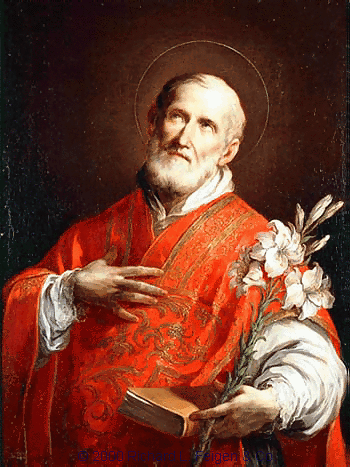
Biography
Saint Philip Neri, born in Florence in 1515, emerged from a devout and respectable family, though not one of great wealth or noble lineage. His early life was marked by a profound piety and a cheerful disposition that would become his hallmark. As a young man, he was sent to live with a wealthy uncle in San Germano, with the expectation that he would inherit the family business. However, a powerful spiritual experience, often referred to as his "conversion," led him to abandon worldly prospects and dedicate himself entirely to God. He moved to Rome, where he lived a life of austerity and prayer, often spending nights in the catacombs, seeking solitude and communion with the divine. This period of intense spiritual formation laid the groundwork for his future ministry, imbuing him with a deep love for Christ and a fervent desire to serve others.
Philip's vocation blossomed in Rome, a city then grappling with the spiritual challenges of the Reformation. He became a priest in 1551, and his ministry quickly distinguished itself through its unconventional yet highly effective approach. Rather than formal sermons, Philip engaged people in informal conversations, often in the streets or in his room, drawing them into spiritual discussions with his characteristic wit and profound wisdom. He founded the Congregation of the Oratory, a community of secular priests and lay brothers dedicated to prayer, preaching, and charitable works, emphasizing joy, music, and intellectual discourse. His influence on the Counter-Reformation was immense, as he revitalized the spiritual life of Rome, earning him the affectionate title "Apostle of Rome." He was known for his prophetic insights, his ability to read hearts, and numerous miracles, including healings and conversions, all performed with a humility that belied their extraordinary nature.
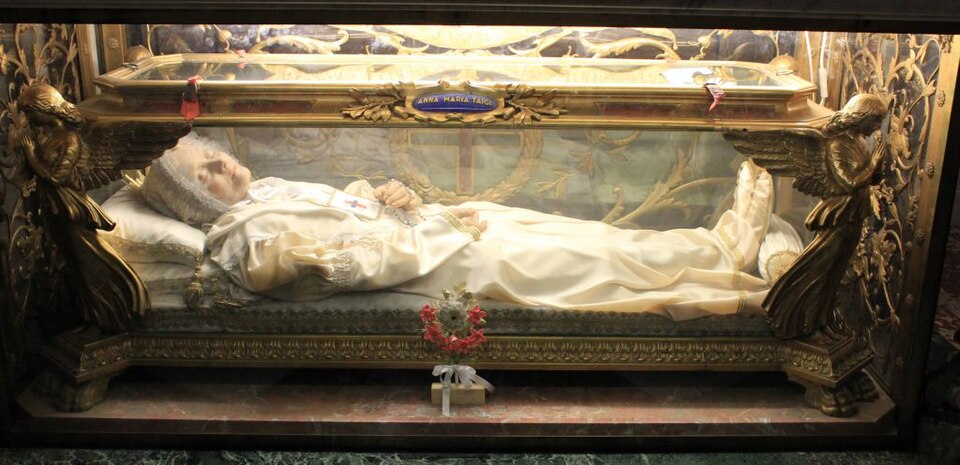
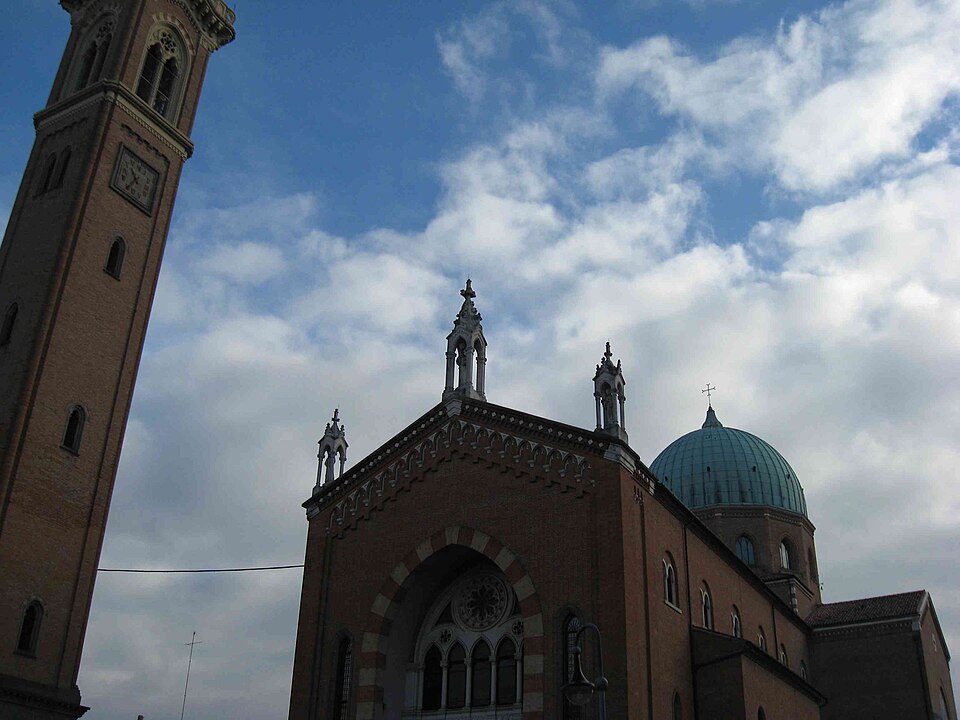
Saint Philip Neri passed away peacefully in 1595, at the venerable age of 80. Upon his death, his body was laid to rest, and when it was exhumed some years later, it was discovered to be remarkably preserved, a testament to his extraordinary holiness. This incorrupt body, a phenomenon confirmed by medical examinations as being preserved without artificial means, is now venerated in the Chiesa Nuova (Santa Maria in Vallicella) in Rome, the very church he helped to build and where he spent much of his priestly life. Pilgrims and the faithful can visit his tomb, where his preserved remains are encased, offering a tangible link to this beloved saint.
The lasting legacy of Saint Philip Neri is profound and enduring. Canonized in 1622, he remains an inspiration for his joyful spirituality, his innovative approach to evangelization, and his unwavering commitment to the salvation of souls. His incorruption is seen not merely as a physical marvel, but as a spiritual sign, reflecting the extraordinary joy and holiness that radiated from him and transformed the spiritual landscape of Rome. Today, the Oratory continues his work, and his spirit of mirth, charity, and deep devotion continues to touch hearts, reminding us that holiness can be found in the most cheerful and unassuming of souls.
Discovery
The discovery of Saint Philip Neri's incorrupt body is a testament to the enduring mystery of divine preservation, a phenomenon that has captivated the faithful for centuries. Following his death on May 26, 1595, the "Apostle of Rome" was initially interred in the crypt of the Chiesa Nuova, the church he had so profoundly influenced. It was during the preparations for his beatification in 1602, a mere seven years after his passing, that the first exhumation took place. This was a standard procedure for examining the remains of potential saints, but what transpired was anything but ordinary. Witnesses present, including ecclesiastical officials and members of the Oratory he founded, were astounded to find his body remarkably preserved. Accounts from the period describe his flesh as supple, his features recognizable, and his limbs flexible, as if he had only recently fallen asleep. This unexpected state of incorruption immediately fueled the fervor for his cause, seen as a clear sign of God's favor. The immediate reaction was one of profound awe and reverence, solidifying the belief in his sanctity and setting the stage for his eventual canonization.
Subsequent examinations further solidified the miraculous nature of his preservation. In 1639, decades after his initial exhumation and following his canonization in 1622, another inspection was conducted. By this time, the body had naturally undergone some changes, yet it remained remarkably intact. While the skin had darkened and become more leathery, the overall structure of his body, including his internal organs, was still discernible. The flexibility noted during the first exhumation had diminished, but the absence of putrefaction and the persistence of his recognizable form continued to astonish observers. These later examinations, often conducted by medical professionals and religious authorities, consistently affirmed the extraordinary state of his remains, defying the natural processes of decay. Each inspection served to reinforce the belief in his incorruption, providing ongoing evidence for the faithful and contributing to the rich tradition surrounding this beloved saint.
The journey of Saint Philip Neri's preservation and display has been meticulously managed to ensure both reverence and accessibility. Following the initial discovery of his incorruption, his body was carefully prepared for veneration. It was clothed in pontifical vestments, reflecting his priestly dignity, and placed within a magnificent crystal and silver casket. This elaborate reliquary, designed to allow pilgrims to view his remains, became the focal point of a side chapel within the Chiesa Nuova, also known as Santa Maria in Vallicella. Over the centuries, the casket has been periodically opened for cleaning and minor restoration work, always under strict ecclesiastical supervision. While the body's condition has naturally evolved over time, requiring some interventions to maintain its integrity, the fundamental state of incorruption has been consistently upheld. Today, pilgrims can still visit the Chiesa Nuova in Rome and behold the venerable body of Saint Philip Neri, displayed prominently in its ornate casket, a silent testament to his enduring spiritual presence and the miraculous nature of his preservation.
Beyond the remarkable physical preservation, various accounts speak to other extraordinary phenomena associated with Saint Philip Neri's remains. While not as widely documented as some other incorruptibles, there have been whispers of a sweet, faint fragrance emanating from his tomb, particularly during periods of intense veneration. Though not a consistent or universally reported occurrence, such anecdotal accounts contribute to the mystique surrounding his incorruption. More significantly, the very resistance to decay in a period before modern embalming techniques, and within the humid environment of a crypt, was itself considered a profound miracle. The absence of liquefaction, skeletal disarticulation, and the persistence of soft tissues for such an extended period defied all natural expectations. These remarkable details, alongside the consistent historical record of his body's state, underscore why Saint Philip Neri is revered as one of the most compelling examples of incorruption within the Catholic tradition.
Preservation
Body displayed in the Chiesa Nuova, Rome.
Scientific Analysis
The phenomenon of apparent incorruption, as observed in the remains attributed to Saint Philip Neri, presents a compelling case study for both historical and scientific inquiry. While specific, detailed records of formal medical examinations from the 16th or 17th centuries are often sparse by modern standards, historical accounts and subsequent observations provide a basis for analysis. Following his death in 1595, and particularly leading up to his canonization in 1622, the state of his remains was a subject of considerable interest. Early inspections, likely conducted by ecclesiastical authorities and perhaps local physicians, noted an unusual degree of preservation. These early assessments, though lacking the rigorous methodology of contemporary forensic science, consistently reported the absence of typical putrefaction and the retention of some soft tissue characteristics. Later, more formalized examinations occurred, particularly during exhumations for reinterment or veneration. For instance, in 1602, seven years after his death, his body was exhumed and reportedly found to be largely intact. Further examinations were conducted in 1637 and then again in 1718. During the 1718 exhumation, the body was reportedly observed by several witnesses, including medical professionals of the time, who noted the flexibility of the limbs and the preservation of certain internal organs, though specific names of these medical professionals and their institutional affiliations are not widely documented in readily accessible historical records. These early observations, while qualitative, formed the basis for the declaration of incorruption. The most recent significant examination occurred in 1947, when the body was again exhumed for scientific assessment and conservation. During this examination, conducted by a team of Italian medical experts and anthropologists, the body was found to be largely skeletal, but with significant portions of mummified soft tissue, particularly on the face and hands. The 1947 report, while acknowledging the advanced state of mummification, confirmed the absence of any obvious signs of artificial embalming or chemical preservation techniques that would have been available or commonly practiced in the 16th century for such long-term preservation. The findings indicated a natural mummification process, albeit one that occurred under unusual circumstances given the typical burial environment.
The scientific mystery surrounding Saint Philip Neri's preservation lies in its defiance of conventional decomposition processes, particularly given the typical burial conditions of the era. Normal decomposition, driven by autolysis and microbial activity, typically leads to the rapid disintegration of soft tissues within months, especially in a humid, temperate climate like Rome. Factors such as temperature, humidity, soil composition, and the presence of insects and microorganisms usually accelerate decay. Saint Philip Neri was interred in a tomb within the Chiesa Nuova (Santa Maria in Vallicella), a church in Rome. Such an environment, while offering some protection from external elements, would not typically provide the extreme desiccation or anaerobic conditions necessary for natural mummification without significant intervention. The absence of evidence for embalming or other artificial preservation methods, as noted by the 1947 examination, makes the extent of soft tissue preservation remarkable. While processes like saponification (the conversion of fatty tissues into adipocere, a waxy, soap-like substance) can preserve body contours, it typically requires specific conditions of moisture and alkalinity not universally present in church crypts. The reported flexibility of limbs in earlier centuries, if accurate, would be particularly challenging to explain through simple mummification or adipocere formation, which tend to result in rigid tissues. The lack of significant insect damage or extensive microbial degradation further adds to the scientific enigma, suggesting an environment or intrinsic factors that inhibited these common agents of decay.
Various natural explanations have been proposed for cases of apparent incorruption, including spontaneous mummification, adipocere formation, and unique environmental conditions. Spontaneous mummification occurs when a body is exposed to extremely dry conditions, either hot or cold, that rapidly dehydrate tissues, preventing bacterial growth. While Rome can experience dry periods, the conditions within a church crypt are generally not conducive to such rapid and thorough desiccation without air circulation or specific desiccants. Adipocere formation, or "grave wax," is another possibility, where anaerobic bacteria convert body fats into a stable, waxy substance. This can preserve the general shape of the body, but it typically does not retain fine details or the reported flexibility. Skeptics often attribute such cases to natural mummification, saponification, or even unrecorded embalming practices, suggesting that the "miraculous" aspect is an interpretation rather than a scientific anomaly. However, in the case of Saint Philip Neri, the consistent reports of soft tissue preservation, even if mummified, and the absence of clear evidence for deliberate embalming, challenge these straightforward natural explanations. The precise combination of environmental factors that could have led to this specific outcome without human intervention remains largely unexplained by current scientific understanding of decomposition in similar contexts. The historical accounts, while potentially embellished, consistently point to a state of preservation that exceeds typical expectations for the period and burial environment.
From a modern scientific perspective, the case of Saint Philip Neri offers a unique opportunity for advanced forensic and anthropological study. While the 1947 examination provided valuable insights, contemporary techniques could offer far more detailed answers. Non-invasive methods such as computed tomography (CT) scans could provide a comprehensive internal view of the remains, revealing the state of internal organs, bone structure, and any subtle signs of artificial preservation or trauma without disturbing the body. Carbon dating could precisely determine the age of the remains, confirming their attribution. Furthermore, advanced tissue analysis, including histological examination and molecular analysis (e.g., DNA analysis, proteomics), could identify the specific types of tissues preserved, the presence of any microbial communities, and potentially even chemical residues that might indicate natural or artificial preservation agents. For instance, analysis of fatty acids could confirm or rule out adipocere formation, and the presence of specific proteins could indicate the degree of tissue degradation. Such studies could shed light on the exact mechanisms of preservation in this specific case, potentially identifying unique environmental microclimates within the tomb or intrinsic factors within the body itself that inhibited decomposition. The unanswered questions revolve around the precise environmental conditions within the tomb over centuries, the specific biochemical processes that led to the observed mummification, and whether any previously unrecorded or unrecognized natural preservative agents were at play. A comprehensive modern scientific investigation, combining historical data with cutting-edge analytical techniques, could significantly advance our understanding of exceptional body preservation phenomena, irrespective of their religious interpretation.
Spiritual Significance
The enduring phenomenon of incorruption, particularly as exemplified by Saint Philip Neri, offers a profound theological reflection on the sanctity of the human body and its ultimate destiny within Catholic doctrine. Far from being a mere biological anomaly, the preservation of his earthly remains speaks to a deeper spiritual reality: that the body, consecrated by baptism and made a temple of the Holy Spirit, holds an intrinsic dignity that transcends death. This miraculous state foreshadows the glorious resurrection of the body, a cornerstone of Christian belief, where the physical form will be reunited with the soul in an imperishable state. For Saint Philip, whose life was a vibrant testament to the indwelling Spirit, his incorruption serves as a tangible sign of God's favor and a powerful affirmation of the Church's teaching on the communion of saints. It reminds us that even in death, the bonds of grace uniting the living and the departed remain unbroken, and that those who lived lives of extraordinary holiness can offer us a glimpse into the eschatological hope of eternal life, where corruption gives way to incorruption, and mortality is swallowed up in victory. The Church interprets this phenomenon not as a guarantee of salvation for the individual, but as a divine affirmation of their heroic virtue and a call for the faithful to emulate their path to holiness.
Saint Philip Neri, often hailed as the "Apostle of Rome," possessed a unique charism of joyful evangelization and an unparalleled capacity for spiritual direction. His heroic virtues were manifold, but perhaps most prominent was his profound humility, which allowed him to connect with people from all walks of life, from cardinals to street urchins, without pretense or judgment. He practiced a radical charity, opening his heart and his home to those in need, fostering a spirit of familial warmth and genuine companionship. His obedience to the Church, even when it meant personal sacrifice, was unwavering, yet it was always tempered with a playful wit that disarmed rigidity and invited true conversion. Philip's mysticism was not one of austere solitude, but rather an active contemplation woven into the fabric of daily life, transforming ordinary encounters into opportunities for divine encounter. He eschewed the formal structures of monastic life, instead founding the Oratory, a spiritual tradition centered on prayer, scripture reading, and informal discussion, fostering a vibrant and accessible path to holiness for laypeople and clergy alike. His daily life was a living sermon, characterized by an infectious cheerfulness, a profound love for God, and an extraordinary ability to draw souls closer to Christ through genuine affection and spiritual wisdom.
Devotion to Saint Philip Neri has flourished since his canonization in 1622, growing organically from the profound impact he had on the city of Rome during his lifetime. He is widely venerated as the patron saint of joy, humor, and Rome itself, and is often invoked by those seeking guidance, spiritual renewal, or a renewed sense of purpose. Numerous prayers and novenas dedicated to him emphasize his cheerful spirit and his intercessory power in matters of spiritual growth and perseverance. His feast day on May 26th is celebrated with particular joy, often featuring processions and special Masses that reflect his vibrant personality. For pilgrims, a visit to the Chiesa Nuova (Santa Maria in Vallicella) in Rome, where his incorrupt body rests, is a deeply moving experience. To stand before his preserved remains is to encounter a tangible link to a saint whose life radiated with divine love. The atmosphere within the church is one of reverence and peace, yet also imbued with a sense of the joyful spirit that defined Philip. Many pilgrims report a profound sense of spiritual consolation and renewed hope, feeling a personal connection to the saint who so masterfully blended profound holiness with an approachable, human touch.
Miracles attributed to Saint Philip Neri's intercession are numerous and span centuries, encompassing a wide range of divine interventions. Documented healings, both physical and spiritual, have been reported by those who sought his aid, demonstrating his powerful intercessory role in the heavenly court. Stories abound of individuals experiencing profound conversions, turning away from lives of sin and embracing a deeper faith, often after invoking Philip's name. His reputation for answering prayers, particularly those related to spiritual growth, overcoming temptations, and fostering a joyful disposition, has only deepened over time. Beyond these specific interventions, the incorrupt body of Saint Philip Neri itself has been a continuous source of spiritual consolation for the faithful. Its very existence is seen as a miracle, a testament to God's power and a reminder of the ultimate triumph of grace over the decay of the flesh. For many, gazing upon his preserved form instills a sense of awe and wonder, reinforcing their belief in the supernatural and offering a tangible connection to the communion of saints, providing comfort and strength in times of doubt or suffering.
The enduring message of Saint Philip Neri holds profound relevance for contemporary Catholics and seekers navigating the complexities of the modern world. In an age often characterized by anxiety, cynicism, and a relentless pursuit of material possessions, Philip's life stands as a powerful counter-narrative, challenging modern materialism and secularism with his radical joy, profound humility, and unwavering focus on spiritual realities. He teaches us that true happiness is not found in external achievements or fleeting pleasures, but in a deep and abiding relationship with God and a genuine love for our neighbor. From his example, people today can learn the transformative power of cheerfulness, the importance of authentic human connection, and the profound impact of living a life centered on Christ, even amidst the ordinary routines of daily existence. His incorruption serves as a tangible bridge between the visible and invisible worlds, a concrete reminder that spiritual realities are not abstract concepts but living truths that can manifest in extraordinary ways. It invites us to look beyond the superficial, to embrace the supernatural, and to find inspiration in the lives of those who have truly lived for God, offering a beacon of hope and a path to genuine fulfillment in a world often starved for meaning.
AI summary
A plain-language overview generated from this page's source material. Always verify with primary sources.