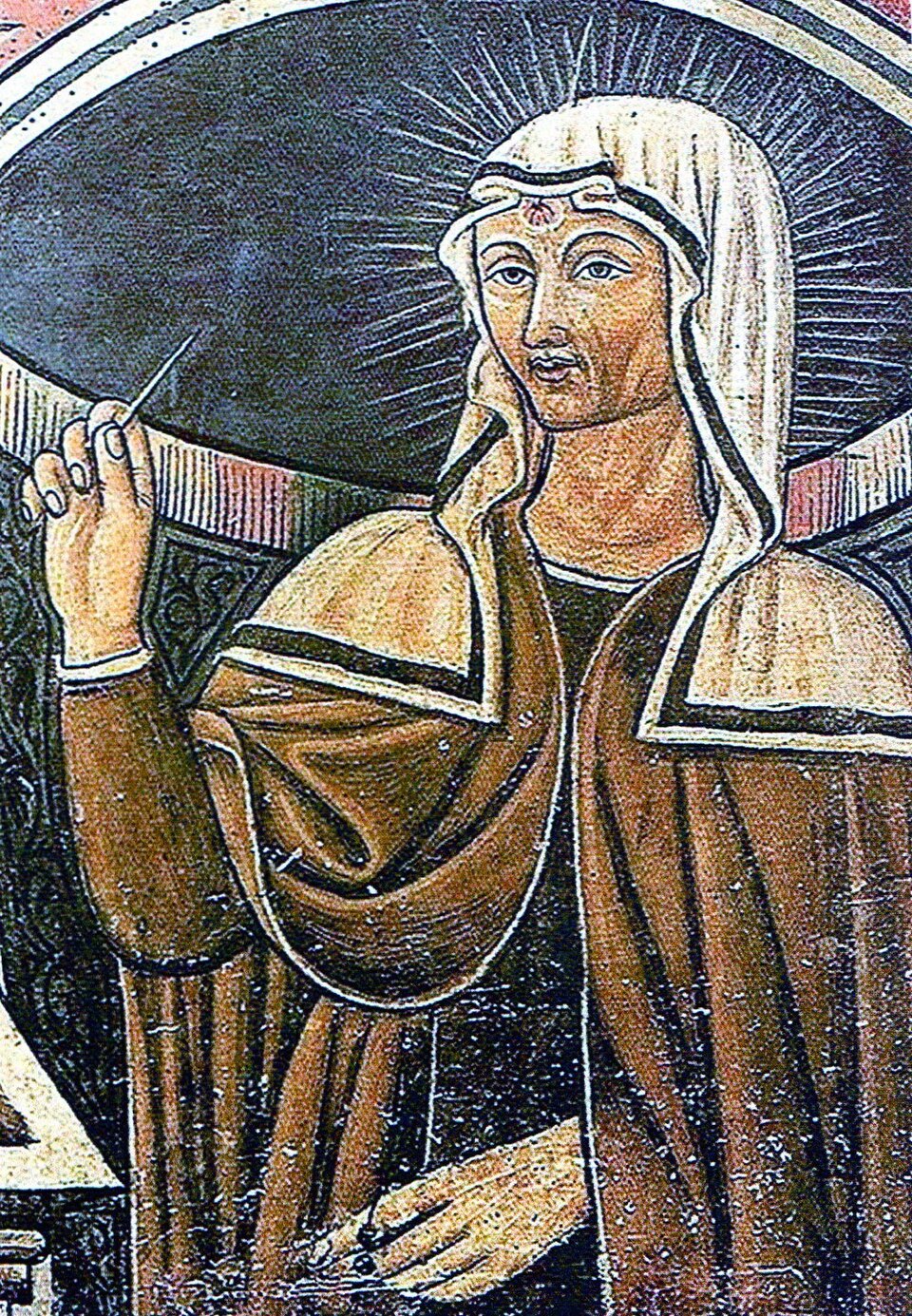
Biography
Saint Rita of Cascia, born Margherita Lotti in 1381 in the humble village of Roccaporena, Italy, was a woman whose life was marked by profound suffering and extraordinary grace. From a young age, Rita desired to consecrate herself to God in religious life, but her devout parents, in keeping with the customs of the time, arranged her marriage to Paolo Mancini, a man known for his volatile temper and abusive nature. For eighteen long years, Rita endured this difficult union with remarkable patience, prayer, and unwavering faith, striving to convert her husband through her gentle example. Though she bore him two sons, Giangiacomo and Paolo, her marital life was a continuous testament to her spiritual fortitude. Her formative experiences were thus steeped in the crucible of domestic hardship, preparing her for the profound sanctity she would later achieve.
After her husband was tragically murdered in a local feud, Rita faced further heartbreak as her two sons, consumed by a desire for vengeance, also died shortly thereafter, likely from the plague. Free from her family obligations, Rita finally pursued her lifelong dream of entering religious life. Despite initial resistance from the Augustinian nuns of Santa Maria Maddalena in Cascia, who were hesitant due to her past marital status and the violent circumstances surrounding her family, Rita persevered through prayer and divine intervention, eventually gaining admission. Within the convent walls, she embraced a life of rigorous penance, contemplation, and service. Her most profound mystical experience occurred when she received a visible wound on her forehead, a thorn from Christ's crown, which remained with her until her death, serving as a constant reminder of her participation in His Passion.
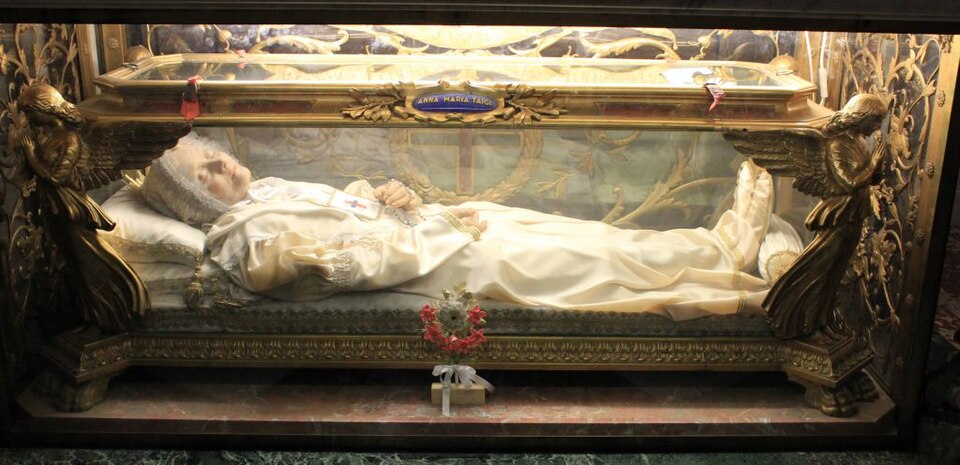
Saint Rita died in 1457, and it was immediately apparent that she was no ordinary soul. After her passing, her body was discovered to be miraculously incorrupt, emitting a sweet, heavenly fragrance, a stark contrast to the malodorous wound she bore in life, which now also exuded a sweet perfume. Her body has remained remarkably preserved for over 560 years, defying the natural processes of decomposition, though it has darkened with age. Numerous examinations, including a formal medical assessment in 1892, have confirmed its extraordinary state, noting the visible wound on her forehead and the absence of any embalming. Her incorrupt body rests today in a glass reliquary in the Basilica of Saint Rita in Cascia, Italy, a powerful testament to her sanctity.
Saint Rita's lasting legacy is immense, earning her the beloved title of "Patroness of Impossible Causes." Her canonization in 1900 by Pope Leo XIII cemented her place among the Church's most revered saints. Pilgrims from around the world flock to Cascia to venerate her incorrupt body and seek her intercession, particularly those facing seemingly insurmountable challenges, abused wives, and those struggling in difficult marriages. Her life story, marked by profound suffering patiently endured and transformed by faith, continues to inspire countless individuals to trust in God's providence and the power of prayer, reminding us that even in the darkest of circumstances, hope and holiness can flourish.
Discovery
The extraordinary preservation of this remarkable woman's remains began to unfold almost immediately after her death in 1457. Upon her passing, the sisters of the Augustinian convent in Cascia prepared her for burial. It was then that they made a startling discovery: her body, rather than exhibiting the stiffness and pallor of death, remained supple and natural. More astonishingly, a sweet, ethereal fragrance, described by witnesses as akin to roses and spices, emanated from her, filling the convent chapel. This was particularly significant given the open wound on her forehead, a partial stigmata she had received years prior, which had been malodorous during her life. Now, even this wound exhaled the same miraculous perfume. The local community, already revering Rita for her piety and miracles during life, quickly recognized this as a sign of divine favor. Initially, her body was not interred in the ground but placed in a simple wooden coffin within the convent chapel, accessible to the faithful who flocked to venerate her. The immediate reaction was one of awe and renewed devotion, solidifying her reputation as a saint long before her official canonization.
Over the centuries, the body of Saint Rita has undergone several examinations and translations, each revealing its continued, inexplicable state of preservation. One of the earliest recorded inspections occurred in 1595, when her original wooden coffin, having deteriorated over time, was replaced with a more elaborate one. During this process, her remains were carefully observed and found to be remarkably intact, confirming the accounts from the time of her death. Later, in 1628, following a devastating fire that swept through the convent, her body was again examined. Despite the intense heat and destruction, her remains were miraculously untouched, a testament to their enduring incorruptibility. Perhaps the most significant examination took place in 1900, the very year of her canonization. A team of medical professionals and ecclesiastical authorities conducted a thorough inspection, documenting in detail the state of her body. They noted the darkened skin, a natural consequence of age and exposure, but marveled at the preservation of her internal organs and the flexibility of her limbs. The stigmatic wound on her forehead remained clearly visible, a poignant reminder of her spiritual trials. These repeated examinations consistently affirmed the miraculous nature of her preservation, dispelling any doubts about its authenticity.
The journey of Saint Rita's remains from a simple wooden coffin to their current magnificent display reflects the enduring veneration she commands. For centuries, her body rested within the Augustinian convent, initially in the chapel and later in a more secure location within the convent walls. As her cult grew, particularly after her beatification in 1628, a more fitting resting place was deemed necessary. In 1745, her body was translated to a new, more ornate sarcophagus within the newly constructed Basilica of Saint Rita in Cascia, where it has remained ever since. Today, her incorrupt body is enshrined in a glass reliquary, allowing pilgrims from around the world to view her with reverence. This transparent casket is hermetically sealed to protect the remains from environmental degradation, ensuring their continued preservation. The body lies peacefully, dressed in the habit of the Augustinian Order, with a rosary often placed in her hands. The stigmatic wound on her forehead, though darkened, is still clearly discernible, a powerful visual testament to her profound spiritual journey.
Beyond the remarkable physical preservation, several extraordinary phenomena have been associated with Saint Rita's body throughout history. The initial sweet fragrance that emanated from her upon death has been reported intermittently over the centuries, particularly during moments of intense prayer or significant events related to her veneration. Accounts from various periods describe pilgrims witnessing her eyes seemingly open and close, or her body subtly shifting position within its casket. While these phenomena are not consistently observed, they form part of the rich tradition surrounding her incorruptibility. Perhaps the most enduring and frequently referenced detail is the continued presence of the sweet perfume, a stark contrast to the natural processes of decay. This persistent, inexplicable fragrance, along with the remarkable preservation of her form, continues to inspire awe and reinforce the belief in her powerful intercession, solidifying her status as a patron of impossible causes.
Preservation
Body displayed in a glass case in the Basilica of Saint Rita. The stigmatic wound on her forehead remains visible.
Scientific Analysis
The phenomenon of human body preservation beyond typical decomposition rates, particularly in cases attributed to religious significance, presents a compelling intersection for scientific inquiry. The remains of Saint Rita of Cascia, housed in the Basilica of Saint Rita in Cascia, Italy, offer a notable example of such a phenomenon, having undergone various examinations over centuries. One of the most significant formal medical examinations occurred in 1892, as noted in historical records. This examination, conducted by medical professionals of the time, confirmed the remarkable state of preservation of the body, particularly highlighting the visible wound on her forehead, a stigmatic mark traditionally associated with her devotion. While specific names of the examining physicians and their institutional affiliations from this 1892 assessment are not widely documented in readily accessible scientific literature, the consensus from historical accounts points to a thorough medical inspection that attested to the body's integrity. Subsequent, less formal observations and assessments have continued throughout the 20th century, often coinciding with relocations or re-enshrinements of the relic, consistently reporting a stable, albeit darkened, state of preservation. It is crucial to emphasize that historical records and scientific analyses consistently state that no embalming procedures were performed on Saint Rita's body after her death in 1457, making its current condition particularly intriguing from a forensic perspective.
The scientific remarkable aspect of Saint Rita's preservation lies in its defiance of conventional decomposition processes. Under normal circumstances, the human body undergoes a complex series of changes post-mortem, driven by autolysis (self-digestion by cellular enzymes) and putrefaction (bacterial activity). Environmental factors such as temperature, humidity, and the presence of oxygen significantly accelerate or retard these processes. Cascia, situated in a mountainous region of Umbria, Italy, does not present environmental conditions inherently conducive to natural mummification or long-term preservation without intervention. The burial conditions following her death in 1457 would have typically involved interment in a grave or crypt, environments that, without specific desiccating or anaerobic properties, would lead to complete skeletalization within decades. The absence of embalming, a technique known since antiquity to preserve bodies, further underscores the unusual nature of this case. While some natural processes like saponification (adipocere formation) can preserve soft tissues, this typically occurs in specific, moist, anaerobic environments, transforming fatty tissues into a waxy, soap-like substance. However, the description of Saint Rita's body as "darkened" and retaining significant anatomical detail, including the facial wound, suggests a different form of preservation than typical adipocere, which often distorts features. The preservation extends beyond mere skeletalization, encompassing soft tissues to a degree that defies the expected timeline for decomposition in a non-embalmed body in a temperate climate.
Various natural explanations have been proposed for cases of exceptional body preservation, including adipocere formation, natural mummification due to extreme desiccation, or preservation in anaerobic environments. In Saint Rita's case, none of these fully or satisfactorily explain the reported state of preservation. Adipocere, while preserving form, fundamentally alters tissue composition and appearance, often resulting in a pale, waxy texture, which does not align with the description of a "darkened" body retaining distinct features. Natural mummification typically requires extremely dry conditions, such as those found in arid deserts or high-altitude, low-humidity environments, which are not characteristic of Cascia. Anaerobic conditions, such as submersion in peat bogs, can also preserve bodies, but again, the environment of her interment does not align with such conditions. Skeptics often point to the possibility of undocumented medieval preservation techniques, or the gradual desiccation over centuries within a relatively dry tomb environment, even if not initially arid. However, the consistent reporting of a well-preserved, rather than merely desiccated or skeletalized, body over such an extended period, particularly without any known artificial intervention, remains a significant challenge to purely naturalistic explanations. The persistence of the facial wound, a delicate feature, further complicates simple explanations of desiccation.
From a modern scientific perspective, the case of Saint Rita of Cascia represents a fascinating subject for advanced forensic and anthropological investigation. While historical examinations provided valuable qualitative data, contemporary techniques offer the potential for unprecedented insights. Non-invasive methods such as multi-slice CT scans could provide detailed three-dimensional imaging of internal structures, assessing the extent of soft tissue preservation, bone integrity, and identifying any anomalies or hidden interventions. Carbon dating of tissue samples, if ethically and permissibly obtained, could definitively confirm the age of the remains. Furthermore, advanced tissue analysis, including histological and biochemical examinations, could shed light on the specific mechanisms of preservation at a cellular and molecular level, potentially identifying unique proteins or lipids that have resisted degradation. Such analyses could differentiate between various forms of natural preservation and potentially reveal unknown biological or chemical processes. The application of these modern techniques, while respecting the religious significance of the relic, could significantly contribute to the broader scientific understanding of human decomposition and preservation. Many questions remain unanswered, particularly regarding the precise chemical and physical processes that have maintained the integrity of her body for over six centuries without known artificial intervention, making her case a continuing subject of scientific and historical curiosity.
Spiritual Significance
The phenomenon of incorruption, particularly as exemplified by Saint Rita of Cascia, stands as a profound testament within Catholic theology to the sanctity of the human body and the enduring power of divine grace. For centuries, the Church has regarded the preservation of a saint’s earthly remains from natural decay as a miraculous sign, a visible affirmation of their extraordinary holiness and a prefigurement of the resurrection of the body. This belief is deeply rooted in the understanding that the body, as articulated in 1 Corinthians 6:19, is a temple of the Holy Spirit, consecrated through baptism and sanctified through a life lived in union with Christ. Incorruptibility, therefore, is not merely a biological anomaly but a theological statement: it suggests that the Holy Spirit so permeated the saint's being during their earthly pilgrimage that even after death, the body resists the ordinary processes of corruption, hinting at the glorious transformation awaiting all the faithful at the Last Day. For Saint Rita, whose life was a crucible of suffering and faith, her incorruption serves as a powerful symbol of God's vindication of her patient endurance and unwavering trust, a tangible link between her earthly struggles and her heavenly reward, reinforcing the doctrine of the communion of saints by demonstrating a continued, albeit mysterious, connection between the glorified body in heaven and its earthly remnant.
Saint Rita's unique charism was undeniably her heroic perseverance in the face of immense suffering, coupled with an unwavering commitment to prayer and forgiveness. Her life, marked by a forced marriage to an abusive husband and the subsequent loss of her children, became a living testament to the virtues of patience, humility, and profound charity. Rather than succumbing to despair or resentment, Rita embraced her trials as opportunities for spiritual growth, transforming her domestic purgatory into a path to sanctity. Her particular way of holiness manifested in her gentle yet firm resolve to convert her husband through prayer and example, demonstrating a radical understanding of Christian love that seeks the good of the other even in the most challenging circumstances. Later, as an Augustinian nun, she embodied a deep mysticism, particularly through her identification with Christ's suffering, famously receiving a thorn from His crown on her forehead. She contributed significantly to the Augustinian spiritual tradition, not through written works, but through her lived example of profound interior peace cultivated amidst external turmoil, offering a powerful model of how to find God's grace in the midst of life's most "impossible" situations.
Devotion to Saint Rita has flourished across centuries, making her one of the most beloved and widely venerated saints in the Catholic Church, particularly as the patron of impossible causes, abused wives, and difficult marriages. Her story resonates deeply with those who face seemingly insurmountable challenges, offering hope and solace. The development of her veneration is marked by countless testimonies of her powerful intercession, leading to the establishment of numerous shrines and churches dedicated to her worldwide. Pilgrims today flock to the Basilica of Saint Rita in Cascia, Italy, where her incorrupt, though darkened, body rests in a glass reliquary. The experience of visiting her shrine is deeply moving; the faithful approach her remains with reverence, offering prayers, lighting candles, and leaving petitions, seeking her powerful intercession for their own "impossible" situations. Novenas and special prayers to Saint Rita are widely practiced, especially leading up to her feast day on May 22nd, a day marked by special Masses, processions, and the blessing of roses, symbolizing her miraculous rose in winter. This tangible connection to her physical presence, even in death, fosters a profound sense of communion and hope among her devotees.
Countless miracles have been attributed to Saint Rita's intercession, solidifying her reputation as the "Saint of the Impossible." Documented healings from severe illnesses, miraculous conversions of hardened hearts, and countless answered prayers for seemingly hopeless situations form a rich tapestry of her spiritual legacy. Beyond the physical healings, her intercession is frequently sought for reconciliation in troubled marriages, for strength in enduring abuse, and for guidance when facing overwhelming despair. The incorrupt body itself has often been a source of spiritual consolation, inspiring awe and reinforcing belief in the supernatural. Accounts exist of the body emitting a sweet fragrance, of her eyes opening and closing, and of other subtle movements, though these are often interpreted as signs of her continued spiritual vitality rather than purely biological phenomena. These manifestations, whether observed or recounted through tradition, serve to deepen the faithful's conviction in her powerful intercession and her continued presence within the communion of saints, offering a tangible bridge between the earthly and the heavenly realms.
Saint Rita's enduring message for contemporary Catholics and seekers is one of unwavering hope, radical forgiveness, and the transformative power of divine love in the face of suffering. In a world often characterized by materialism, instant gratification, and a pervasive sense of hopelessness, Rita's life challenges us to embrace adversity with faith, to seek spiritual riches over worldly comforts, and to believe in the possibility of redemption even in the darkest circumstances. Her example teaches us that true strength lies not in avoiding pain, but in offering it to God, allowing Him to work miracles through our endurance. For modern believers, she serves as a powerful reminder that sanctity is attainable not through extraordinary feats, but through extraordinary fidelity in ordinary life. Her incorruption, a visible sign of her triumph over the decay of both body and spirit, acts as a tangible bridge between the visible and invisible worlds, reminding us that our earthly struggles are temporary, and that a glorious, eternal reality awaits those who persevere in faith. She inspires us to trust in God's providence, to forgive those who wrong us, and to never give up hope, for with God, truly nothing is impossible.
AI summary
A plain-language overview generated from this page's source material. Always verify with primary sources.