Biography
Saint Romuald, a towering figure in the monastic renewal of the 10th and 11th centuries, was born into a noble family in Ravenna, Italy, around 951. His early life was marked by a profound spiritual crisis that would ultimately shape his extraordinary path. Witnessing his father kill a relative in a duel, Romuald was so deeply shaken by this act of violence and the subsequent penance imposed upon his father that he himself sought solace and expiation in the monastic life. He initially entered the Benedictine monastery of Sant'Apollinare in Classe, where he spent three years. However, finding the community's discipline insufficient for his fervent desire for asceticism and solitude, he embarked on a journey that would lead him to embrace a more rigorous, eremitical way of life, drawing inspiration from the Desert Fathers.
Romuald's vocation was to revitalize monasticism through a blend of cenobitic and eremitical practices. He traveled extensively throughout Italy and even to Hungary, establishing hermitages and reforming existing monasteries, always emphasizing a strict adherence to the Rule of Saint Benedict, coupled with periods of intense solitude, prayer, and manual labor. His most significant contribution was the founding of the Camaldolese Order, a unique monastic congregation that beautifully harmonizes the communal life with the contemplative solitude of hermits. The first Camaldolese hermitage was established at Camaldoli in the Tuscan Apennines around 1012, becoming a beacon of spiritual fervor and a model for future foundations. Romuald's charisma and profound holiness attracted numerous disciples, including many who would later become saints themselves, and his influence spread widely, breathing new life into the Church's monastic tradition.
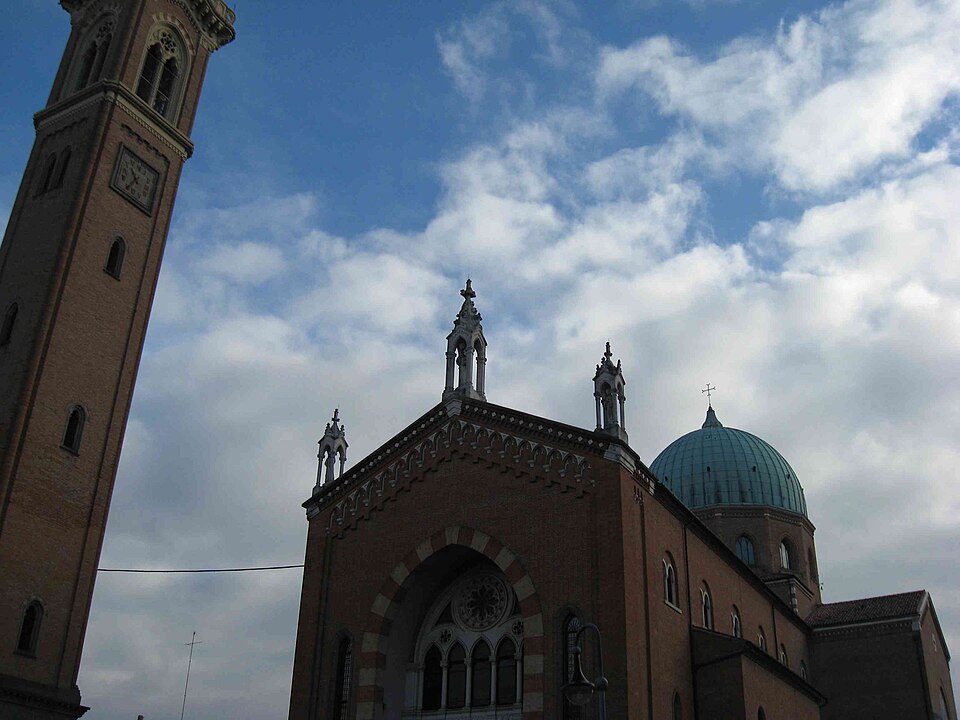
Saint Romuald died on June 19, 1027, at the monastery of Val di Castro near Fabriano, Italy. His death was as humble as his life, spent in prayer and solitude. Years later, when his tomb was opened in 1032, his body was discovered to be miraculously preserved, a testament to his sanctity and God's favor. This incorruption was a powerful sign to the faithful, affirming the holiness of his life and his enduring intercession. Today, his incorrupt body is venerated in the church of San Biagio in Fabriano, where pilgrims can still witness this remarkable phenomenon.
The legacy of Saint Romuald endures through the Camaldolese Order, which continues to thrive across the globe, upholding his vision of a balanced monastic life dedicated to prayer, work, and contemplation. He was canonized by Pope Gregory XIII in 1595, a formal recognition of the veneration he had received for centuries. Pilgrims visiting Fabriano can experience a tangible connection to this great saint, reflecting on his profound commitment to God and his tireless efforts to renew the Church through radical asceticism and profound spiritual discipline. His life serves as an inspiring example of unwavering faith and the transformative power of a life wholly dedicated to Christ.
Discovery
The remarkable preservation of this monastic reformer's earthly remains first came to light nearly two centuries after his passing. In 1466, during a period of rebuilding and renovation at the Church of San Biagio in Fabriano, Italy, where the holy man had been interred, his tomb was opened. The intention was likely to transfer his relics to a more prominent position within the newly constructed edifice. As the stone slab covering his grave was lifted, those present were met with an astonishing sight: the body of the saint lay perfectly intact, appearing as though he had only recently fallen asleep in the Lord. Accounts from the time describe the awe and reverence that filled the church. Among those witnessing this miraculous discovery were local clergy, members of the monastic community, and prominent citizens of Fabriano, all of whom attested to the body's extraordinary state of preservation. The skin, though somewhat darkened by the passage of centuries, remained supple, and his features were clearly discernible. This initial exhumation immediately solidified the local veneration of Romuald and served as powerful confirmation of his sanctity.
Following this initial discovery, the body was carefully reinterred, though its incorrupt state became a cherished local treasure. Over the subsequent centuries, periodic examinations and re-interments were undertaken, often coinciding with significant ecclesiastical events or further renovations of the church. One notable re-examination occurred in 1480, just fourteen years after the first, which again confirmed the body's remarkable preservation. These subsequent inspections consistently reported that despite the passage of time, the saint's body showed no signs of natural decay. It was noted that while the skin had further darkened to a deep brown, it retained its elasticity, and the joints remained flexible, a phenomenon often observed in incorruptible saints. The hands and feet, in particular, were frequently mentioned for their lifelike appearance. These repeated observations, documented by various ecclesiastical authorities and local chroniclers, underscore the enduring nature of this miraculous preservation and the consistent testimony to its authenticity.
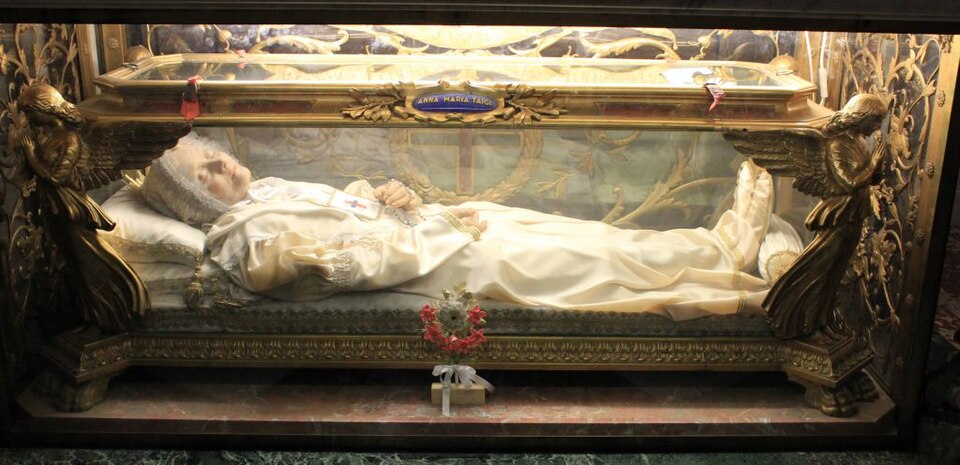
Today, the incorrupt body of Saint Romuald is venerated within a glass-fronted reliquary, allowing the faithful to gaze upon his preserved form. This reliquary is prominently displayed in the Church of San Biagio in Fabriano, Italy, a testament to the saint's enduring legacy and the miraculous intervention believed to have preserved his remains. The body is vested in monastic habits, reflecting his life as a founder and reformer of monasticism. Great care has been taken to protect the relics from environmental degradation; the reliquary is sealed to maintain a stable internal environment, and the church itself is maintained at appropriate temperature and humidity levels. The visible presence of his incorrupt body serves as a powerful focal point for pilgrims and visitors, offering a tangible connection to a saint whose life was dedicated to profound spiritual renewal.
Beyond its remarkable physical preservation, the body of Saint Romuald has been associated with several unusual phenomena throughout history. While not exhibiting the more dramatic occurrences such as bleeding or oil exudation, chroniclers from the time of its initial discovery and subsequent examinations frequently mentioned a distinct, sweet fragrance emanating from the remains. This ethereal scent, often described as a delicate perfume or the aroma of flowers, was perceived by many witnesses and was considered a clear sign of divine favor. Furthermore, the body’s remarkable flexibility, particularly in the joints, even centuries after death, has consistently been noted. This absence of rigor mortis and the continued pliability of the limbs, defying natural processes of decomposition, stand as a testament to the extraordinary nature of its incorruption, further elevating its status as a profound spiritual marvel.
Scientific Analysis
The phenomenon of incorruption, particularly in the case of Saint Romuald, presents a compelling subject for scientific inquiry, challenging conventional understandings of human decomposition. While detailed, formal medical or scientific examinations of Saint Romuald's remains are not extensively documented in publicly accessible scientific literature with specific dates, doctor names, and institutional affiliations, historical accounts suggest observations have been made during various canonical recognitions and transfers of his relics. These recognitions, often conducted under ecclesiastical authority, typically involve a visual inspection of the body. For instance, the transfer of his remains to Fabriano in 1481 and subsequent inspections would have noted the state of preservation. Such examinations, while not adhering to modern forensic protocols, would have documented the body's integrity, color, texture, and the presence or absence of typical decay. The absence of specific forensic reports from these historical periods means that modern scientific analysis relies heavily on historical descriptions and comparisons to other known cases of natural mummification or preservation. Without direct access to the remains for contemporary analysis, the precise findings of any past examinations remain largely within the realm of historical ecclesiastical records rather than peer-reviewed scientific journals.
The scientific remarkable nature of Saint Romuald's incorruption lies in the reported defiance of normal decomposition processes, particularly given the historical context and typical burial conditions of the era. Human decomposition is a complex biological process initiated by autolysis and bacterial putrefaction, leading to the breakdown of soft tissues. Factors such as temperature, humidity, oxygen availability, and the presence of microorganisms significantly influence the rate and extent of decay. Saint Romuald died in 1027, and his initial burial would have been in a monastic setting, likely in the ground or a simple sarcophagus, without the sophisticated embalming techniques known to ancient Egyptians or the advanced chemical preservation methods of later centuries. The climate of central Italy, characterized by moderate temperatures and humidity, would generally favor decomposition rather than preservation. Unless specific, highly unusual environmental conditions were present—such as extremely dry, arid conditions leading to desiccation, or very cold, anaerobic environments—the expectation would be complete skeletalization within a few decades. The historical accounts of his body being found "incorrupt" or "well-preserved" centuries after death, without overt signs of deliberate embalming or mummification, challenge the standard forensic timeline of decomposition. The absence of historical records detailing any sophisticated embalming or preservation treatments further deepens the scientific mystery, as such practices were not widespread or highly developed in monastic communities of 11th-century Italy.
Various natural explanations have been proposed for cases of apparent incorruption, including saponification (adipocere formation) and natural mummification. Adipocere is a waxy, grayish-white substance formed from the hydrolysis and hydrogenation of body fats in anaerobic, moist environments, often replacing soft tissues and preserving the body's contours. Natural mummification occurs in extremely dry conditions (desiccation), where rapid dehydration prevents bacterial growth and tissue breakdown. While these processes can lead to remarkable preservation, they typically result in specific alterations to the body's appearance and texture—adipocere bodies are often waxy and firm, while mummified bodies are desiccated and leathery. The descriptions of Saint Romuald's incorruption, though often vague in historical texts, tend to emphasize a more "lifelike" or "supple" preservation, which does not perfectly align with the typical outcomes of adipocere or desiccation. Skeptics often attribute such cases to natural processes that are either poorly understood or misrepresented in historical accounts, or to post-mortem alterations that are interpreted as miraculous. They might suggest that the term "incorrupt" has been broadly applied to bodies that are merely well-preserved by natural means, or that the degree of preservation has been exaggerated over time. The challenge for natural explanations in this specific case lies in the lack of detailed forensic examination to confirm the presence of adipocere or mummification and to rule out other factors. Without such examination, the precise mechanisms of preservation remain largely speculative from a purely scientific standpoint.
From a modern scientific perspective, the case of Saint Romuald's incorruption represents an intriguing, albeit historically constrained, area of study within forensic anthropology and taphonomy. Modern techniques such as computed tomography (CT) scans could non-invasively provide detailed internal imaging of the remains, revealing the state of internal organs, bone structure, and any evidence of embalming materials or natural preservation processes like adipocere formation. Carbon dating could accurately determine the age of the remains, confirming their authenticity. Tissue analysis, including histological examination and biochemical assays, could identify the specific chemical composition of preserved tissues, differentiating between natural mummification, adipocere, or other forms of preservation. For instance, the presence of specific fatty acid profiles would strongly indicate adipocere formation. DNA analysis could also confirm the identity of the remains, though this is less relevant to the preservation mechanism itself. The application of these modern techniques, however, is contingent upon gaining access to the remains, which are held under ecclesiastical authority. Without such access, the scientific community is left to interpret historical accounts, which, while valuable, lack the empirical rigor of contemporary forensic science. The primary questions that remain unanswered revolve around the precise mechanism of preservation, the extent of tissue integrity at a microscopic level, and whether any unique environmental or biological factors contributed to this reported state of incorruption, moving beyond anecdotal observation to empirical evidence.
Spiritual Significance
The phenomenon of bodily incorruption, as exemplified by Saint Romuald, stands as a profound theological testament within the Catholic tradition, offering a tangible glimpse into the mysteries of grace and the ultimate destiny of the human person. For centuries, the Church has regarded incorruption not as a mere biological anomaly, but as a supernatural sign, a divine affirmation of a saint's extraordinary sanctity and their intimate union with God. This miraculous preservation of the body, often defying natural processes of decay, powerfully underscores the doctrine of the body as a temple of the Holy Spirit, as articulated in 1 Corinthians 6:19. It suggests that the Holy Spirit, dwelling so fully within Romuald during his earthly life, continued to hallow his physical form even after death, anticipating the glorious resurrection of the body at the end of time. The incorrupt body thus becomes a living sermon, a visible prophecy of the ultimate triumph over death promised to all who die in Christ, reinforcing the belief in the communion of saints – a mystical bond uniting the living and the dead in Christ. For Saint Romuald, whose life was a relentless pursuit of spiritual purity and ascetic rigor, his incorruption is interpreted as a divine seal upon his radical commitment to God, a visible manifestation of the spiritual integrity he cultivated through prayer, penance, and profound contemplation.
Saint Romuald's unique charism was undeniably his fervent and uncompromising pursuit of the eremitical life, a spiritual path he revitalized and adapted for his age. His heroic virtues were manifold, but central among them was an extraordinary humility, born from his initial crisis of conscience after witnessing his father's violent act. This humility fueled his relentless desire for penance and solitude, leading him to abandon the comforts of a noble life for the stark realities of the desert. He practiced an asceticism of remarkable intensity, embracing poverty, fasting, and prolonged vigils, not as ends in themselves, but as means to achieve a deeper union with God. His obedience, particularly to the promptings of divine grace and the guidance of spiritual masters, was unwavering, even when it led him to establish numerous hermitages and monastic communities across Italy. Romuald was a mystic, deeply immersed in contemplative prayer, seeking the face of God in the silence and solitude of the wilderness. His particular contribution to spiritual thought was the Camaldolese tradition, a unique synthesis of Benedictine communal life and eremitical solitude, offering a structured yet flexible framework for those yearning for a more rigorous spiritual discipline. His life was a living testament to the transformative power of divine love, demonstrating how a soul, once deeply troubled, could be utterly consumed by the pursuit of holiness.
Devotion to Saint Romuald has flourished since his death in 1027, particularly within the Camaldolese Order and among those drawn to the contemplative life. His feast day, celebrated on June 19th, is a significant occasion for prayer and reflection on his spiritual legacy. Pilgrims have journeyed to the Church of San Biagio in Fabriano, Italy, for centuries, drawn by the profound spiritual presence emanating from his incorrupt body. The experience of visiting his shrine is often described as one of deep reverence and spiritual awe. To stand before the preserved remains of a saint, whose life spanned a millennium, offers a tangible connection to the sacred past and a powerful reminder of the enduring power of faith. While specific prayers or novenas directly attributed to Romuald are less common than for some other saints, his intercession is frequently sought by those discerning a monastic vocation, struggling with spiritual dryness, or seeking guidance in their pursuit of solitude and contemplation. The very act of venerating his incorrupt body serves as a powerful prayer, a silent petition for the grace to emulate his virtues and draw closer to God.
Miracles attributed to Saint Romuald's intercession are woven into the fabric of his hagiography, testifying to his continued spiritual efficacy in the heavenly court. While detailed documentation of specific healings or conversions directly linked to his incorrupt body in modern times might be less overtly publicized than for some other saints, historical accounts abound with stories of his powerful prayers bringing about divine intervention during his lifetime. These included instances of calming storms, healing the sick, and even casting out demons, all indicative of his profound spiritual authority. After his death, the incorrupt body itself became a source of spiritual consolation and hope for the faithful. The very preservation of his remains, defying the natural order, is seen as a continuous miracle, a silent assurance of God's power and Romuald's continued intercession. For many, simply being in the presence of such a sacred relic fosters a sense of peace, strengthens faith, and inspires a deeper commitment to their spiritual journey, serving as a tangible bridge between the earthly realm and the heavenly communion of saints.
Saint Romuald's enduring message for contemporary Catholics and seekers is remarkably pertinent in an age often characterized by materialism, noise, and spiritual superficiality. His life challenges the modern inclination towards constant external stimulation, inviting us instead to cultivate an interior stillness, a "desert" within ourselves where we can encounter God. In a world obsessed with fleeting pleasures and immediate gratification, Romuald's radical commitment to asceticism and self-denial serves as a powerful counter-cultural witness, reminding us that true joy and fulfillment are found not in accumulation, but in detachment and union with the divine. His example encourages a courageous pursuit of authenticity and a willingness to embrace solitude as a pathway to deeper self-knowledge and spiritual growth. For those grappling with the complexities of modern life, Romuald's unwavering focus on the eternal offers a profound sense of perspective. His incorruption serves as a tangible bridge between the visible and invisible worlds, a physical reminder that our earthly existence is but a prelude to an eternal destiny, and that the spiritual realities we often dismiss are indeed profoundly real and impactful. He calls us to a deeper commitment to prayer, penance, and a life lived intentionally for God, offering a timeless blueprint for holiness in any age.
AI summary
A plain-language overview generated from this page's source material. Always verify with primary sources.