Biography
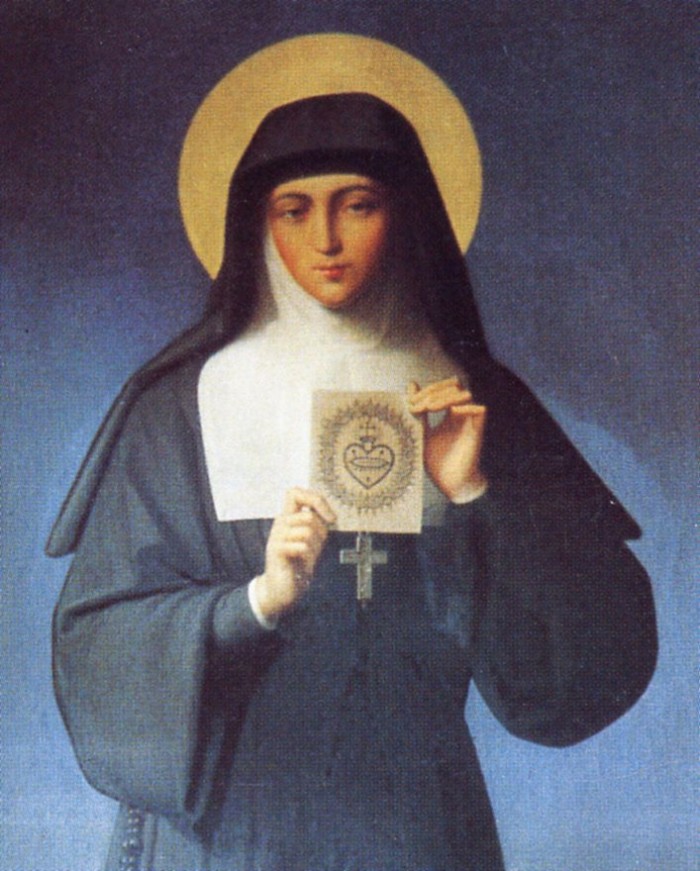
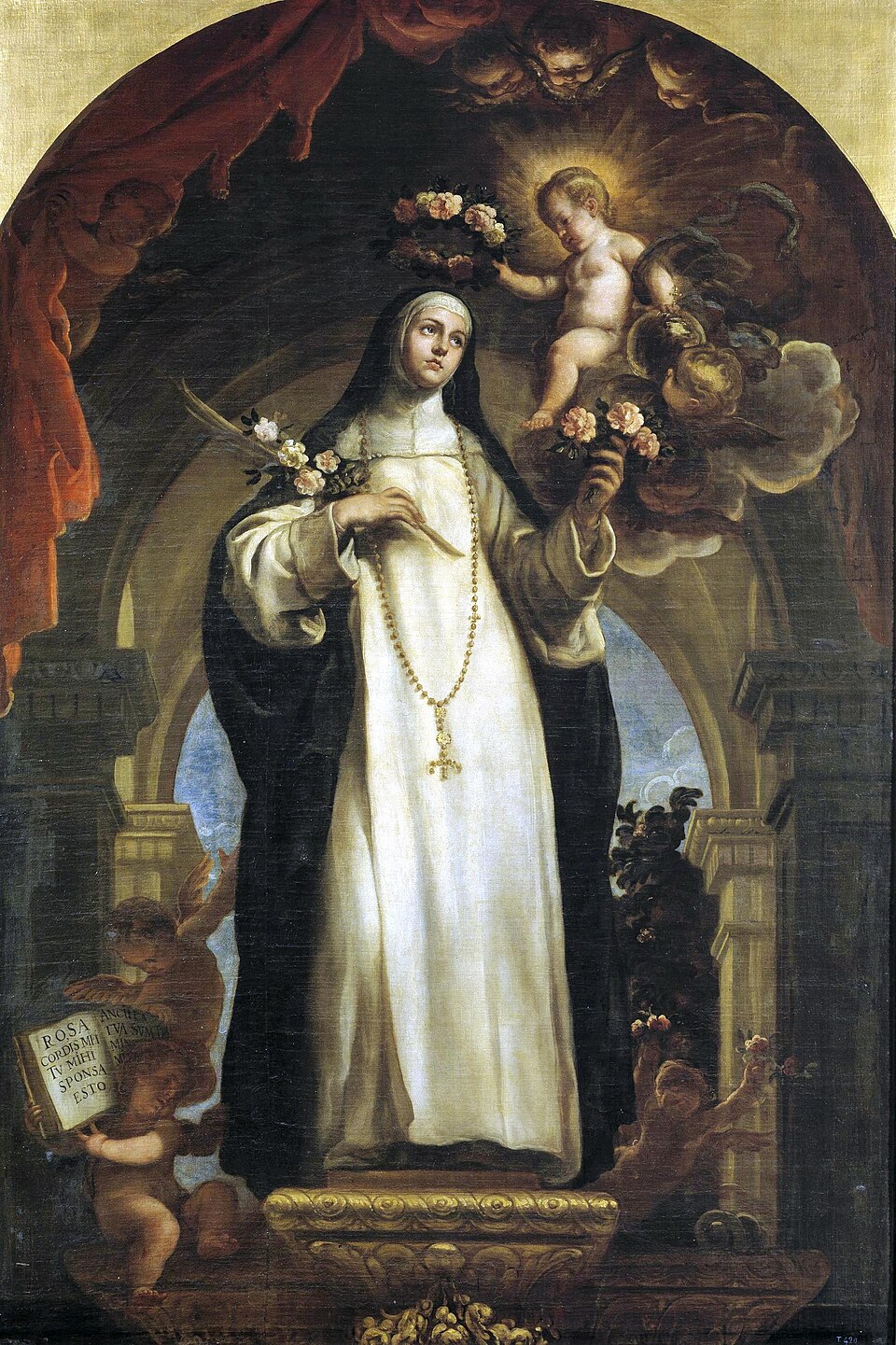
Saint Rose of Lima, born Isabel Flores de Oliva in 1586, was the tenth of thirteen children to Gaspar Flores and Maria de Oliva, a family of Spanish descent residing in the burgeoning colonial city of Lima, Peru. From her earliest years, a profound piety and an extraordinary beauty distinguished her. So striking was her appearance that she was nicknamed "Rose," a name that eventually supplanted her birth name and was confirmed at her Confirmation. Even as a young girl, Rose displayed an uncommon devotion, often retreating to a small grotto in her family's garden for prayer and penance. She was deeply influenced by the examples of Saint Catherine of Siena and Saint Teresa of Avila, whose rigorous spiritual practices she sought to emulate, much to the concern of her family who wished her to marry. Rose, however, felt an undeniable call to consecrated virginity, a path she pursued with unwavering determination.
Despite her family's financial struggles and their desire for her to marry a suitor who could improve their fortunes, Rose steadfastly refused, dedicating her life entirely to God. She joined the Third Order of Saint Dominic, living a life of extreme asceticism and prayer within the confines of her parents' home, transforming a small hut in their garden into her hermitage. There, she engaged in rigorous penances, including wearing a hair shirt, a metal crown of thorns, and fasting on bread and water for extended periods. Yet, her spiritual life was not solely focused on self-mortification; she also dedicated herself to serving the poor and the sick of Lima, bringing them into her home and tending to their needs with compassion and humility. Her charity extended to the indigenous populations, for whom she felt a particular empathy, recognizing their suffering under colonial rule. Many miracles were attributed to her during her lifetime, including healing the sick and multiplying food, solidifying her reputation as a living saint.
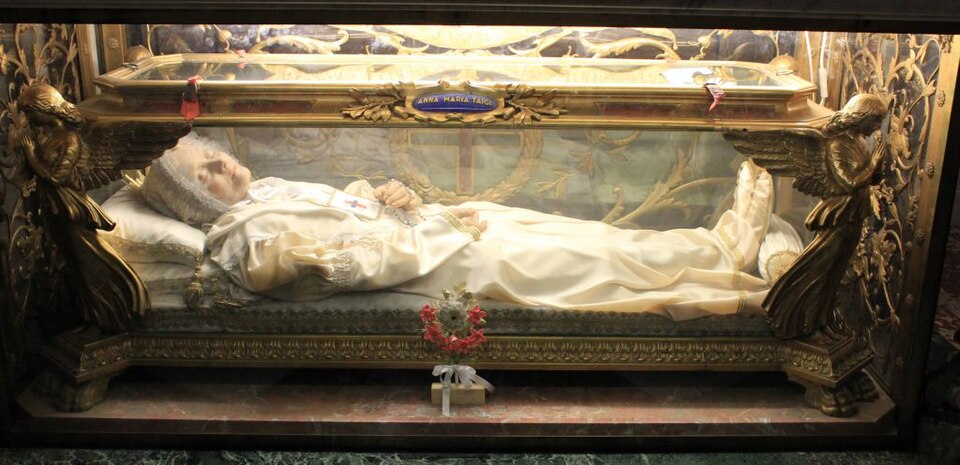
Rose's extraordinary life of penance and prayer culminated in her death on August 24, 1617, at the tender age of 31. Her funeral was an event of immense public mourning, attended by civil and ecclesiastical dignitaries, and the common people alike, all recognizing the sanctity of her life. Following her death, her body was interred in the Convent of Santo Domingo. Upon exhumation, her body was found to be remarkably preserved, remaining supple and lifelike, a testament to her profound sanctity. Today, her incorrupt remains are venerated in the Basilica and Convent of Santo Domingo in Lima, housed in a beautiful crystal casket, allowing pilgrims to gaze upon her miraculous preservation.
Saint Rose of Lima holds the unique distinction of being the first person born in the Americas to be canonized by the Catholic Church, a momentous event that occurred in 1671. Her canonization brought immense joy and pride to the people of Peru and the entire continent, establishing her as a powerful patroness of the Americas, the Philippines, and gardeners. Pilgrims from around the world continue to flock to Lima to visit her shrine, to pray at the well where she cast the key to her self-imposed chain, and to experience the profound spiritual atmosphere that still permeates the places she once lived and prayed. Her legacy endures as a beacon of fervent prayer, radical penance, and boundless charity, inspiring countless souls to dedicate their lives more fully to Christ and to serve the marginalized.
Discovery
The story of Saint Rose of Lima's incorruptibility begins not with a grand pronouncement, but with the solemn duty of burial and subsequent reinterment. Upon her death in 1617, the devout populace of Lima, already revering her as a living saint, thronged to pay their respects. She was initially laid to rest in the Dominican convent of Santo Domingo, a temporary measure as was common for prominent religious figures. It was during a subsequent exhumation, some years after her initial interment, that the remarkable state of her remains was first observed. While the precise date of this initial discovery is not definitively recorded with the same meticulous detail as later events, contemporary accounts suggest that when her coffin was opened for transfer to a more permanent resting place within the convent, those present were astonished to find her body remarkably preserved. Instead of the expected skeletal remains, her form was largely intact, a phenomenon that immediately fueled the already fervent belief in her sanctity. This initial observation, whispered among the religious community and then spreading throughout the city, laid the groundwork for her eventual canonization and the enduring veneration of her physical remains.
Over the centuries, the body of Saint Rose of Lima has undergone several examinations and transfers, each revealing a consistent, albeit subtly evolving, state of preservation. One significant event occurred in 1630, thirteen years after her death, when her body was officially exhumed and examined by ecclesiastical authorities as part of the initial investigations into her sanctity. During this examination, witnesses recorded that her flesh, though somewhat desiccated, retained its form and was not subject to the usual processes of decomposition. Her hands and feet were noted to be particularly well-preserved, and a faint, sweet fragrance was reportedly perceived by some, a phenomenon often associated with incorrupt saints. Further examinations took place in 1669, preceding her beatification, and again in 1671, following her canonization. Each time, the reports consistently affirmed the extraordinary preservation of her body, noting its flexibility and the absence of putrefaction. While the vibrant color of living flesh had naturally faded, the structural integrity of her form remained, a testament to what was widely considered a divine intervention. These repeated inspections by various ecclesiastical and medical authorities served to solidify the belief in her incorruptibility, contributing significantly to the official recognition of her sanctity.
The journey of Saint Rose of Lima's incorrupt body from its initial resting place to its current venerated display is a testament to the enduring devotion she inspires. Following her canonization, her remains were ultimately enshrined in the Convent of Santo Domingo in Lima, the very place where she had spent much of her life in prayer and penance. Today, her body is housed in a magnificent glass casket, allowing pilgrims and the faithful to view her preserved form. This casket is itself placed within a larger, ornate altar, a focal point of the convent's church. To protect the delicate remains from environmental degradation and the effects of time, the casket is sealed, and measures are taken to maintain a stable environment within the reliquary. While the body has naturally undergone some desiccation over nearly four centuries, its overall form remains remarkably intact, a striking contrast to the skeletal remains typically found after such a long period. The display is designed to facilitate veneration while ensuring the long-term preservation of this sacred relic, a tangible link to one of the Catholic Church's most beloved saints.
Beyond the remarkable physical preservation, various phenomena have been associated with Saint Rose of Lima's incorrupt body, further deepening the mystery and awe surrounding her. As mentioned, the perception of a sweet, floral fragrance emanating from her remains has been reported by numerous individuals over the centuries, a characteristic often attributed to incorrupt saints and seen as a sign of divine favor. While the body is no longer as flexible as it was in the immediate decades following her death, early accounts frequently noted its pliability, a stark contrast to the rigidity of typical cadavers. There are also accounts, though less frequently documented in official reports, of a subtle, almost luminous quality to her skin, particularly in the earlier centuries. These remarkable details, whether scientifically verifiable or rooted in spiritual experience, have contributed significantly to the profound veneration of Saint Rose of Lima. Her incorrupt body stands as a powerful symbol of sanctity and a constant source of inspiration for the faithful, drawing countless pilgrims to Lima to witness this extraordinary testament to divine grace.
Spiritual Significance
The phenomenon of incorruption within the Catholic tradition stands as a profound testament to the enduring power of God's grace and the sanctity of certain individuals. For Saint Rose of Lima, whose earthly remains have defied the natural processes of decay for centuries, this incorruption is not merely a biological anomaly but a deeply theological statement. It speaks directly to the Catholic understanding of the human body as a sacred vessel, a "temple of the Holy Spirit" (1 Corinthians 6:19), even after death. The Church interprets such preservation as a divine affirmation of the saint's exceptional holiness, a visible sign that God has set them apart. It prefigures the glorious resurrection of the body, a core tenet of Christian faith, reminding believers that our physical forms, redeemed by Christ, are destined for eternal life. In Rose's case, her incorrupt body serves as a tangible link between the earthly Church and the Church triumphant, a silent yet eloquent sermon on the communion of saints, demonstrating that those who have passed into glory remain intimately connected to us, offering their intercession and inspiring our own journey toward holiness. It is a powerful, almost visceral, reminder that death is not the end, but a passage to a transformed existence where the body, too, will share in the soul's eternal glory.
Saint Rose of Lima's unique charism was rooted in an extraordinary mysticism and a profound commitment to penitential practices, mirroring the spiritual giants who inspired her, Saint Catherine of Siena and Saint Teresa of Avila. Her heroic virtues manifested in a life of radical humility, self-denial, and an intense love for Christ, often expressed through severe mortifications and a deep desire to suffer in union with Him. Despite her striking beauty, which earned her the nickname "Rose," she deliberately disfigured herself to avoid worldly admiration and to dedicate herself entirely to God. Her daily life was a testament to poverty of spirit, as she lived in a small cell in her family's garden, engaging in manual labor to support her family and to alleviate the suffering of the poor. She was a contemplative in action, bringing her profound prayer life into service for the sick and marginalized of Lima. Her spiritual legacy contributes to the rich tradition of Spanish mysticism, demonstrating how intense personal devotion and asceticism can flourish even in the vibrant, yet often challenging, environment of the New World, offering a model of holiness that transcended cultural boundaries and spoke to the universal call to sanctity.
Devotion to Saint Rose of Lima blossomed rapidly after her death in 1617, quickly spreading throughout the Americas and Europe. She was canonized in 1671, becoming the first saint born in the Americas, a significant event that cemented her veneration as a patroness of the continent, particularly of Peru, the Philippines, and florists. Her feast day, August 23rd (formerly August 30th), is celebrated with great fervor, marked by special Masses, processions, and floral offerings. Pilgrims today flock to the Convent of Santo Domingo in Lima, where her incorrupt body is enshrined. The experience of visiting her shrine is deeply moving; the faithful approach her reliquary with reverence, often leaving petitions, flowers, and votive candles. Many touch the glass casing, seeking her intercession for healing, guidance, or strength in their own struggles. The very presence of her incorrupt body serves as a focal point for prayer, an almost palpable connection to the saint, reinforcing the belief in the enduring power of her intercession and the reality of the communion of saints. It is a place where the visible world touches the invisible, where faith is tangibly affirmed.
Numerous miracles have been attributed to Saint Rose of Lima's powerful intercession, both during her lifetime and posthumously. Documented healings from various ailments, conversions of hardened sinners, and countless answered prayers have been recorded throughout the centuries. Her biographers recount instances of her miraculous provision for the poor, her ability to communicate with animals, and even her levitation during moments of intense prayer. The incorrupt body itself has been a source of spiritual consolation for the faithful, serving as a constant reminder of God's power and the efficacy of His saints. For many, simply being in the presence of her preserved remains inspires a profound sense of awe and renewed faith, a tangible sign that God continues to work wonders through those who love Him wholeheartedly. These miracles, both grand and subtle, reinforce her status as a powerful intercessor, encouraging believers to turn to her in times of need, confident in her compassionate advocacy before God's throne.
Saint Rose of Lima's enduring message for contemporary Catholics and seekers is one of radical commitment to Christ and a profound challenge to the pervasive materialism and secularism of our age. In a world obsessed with outward appearance and fleeting pleasures, Rose's deliberate embrace of self-denial and her focus on interior beauty offer a powerful counter-narrative. Her life reminds us that true fulfillment is found not in worldly possessions or accolades, but in an intimate relationship with God and selfless service to others. Her example encourages us to cultivate a rich interior life, to find God in the ordinary moments, and to respond to the call to holiness with courage and generosity. Her incorruption serves as a tangible bridge between the visible and invisible worlds, a silent yet eloquent testimony to the reality of eternal life and the spiritual power of those who have lived lives of exceptional virtue. She invites us to look beyond the superficial, to embrace the transformative power of divine love, and to strive for a sanctity that leaves an indelible mark on both heaven and earth.
AI summary
A plain-language overview generated from this page's source material. Always verify with primary sources.