Biography
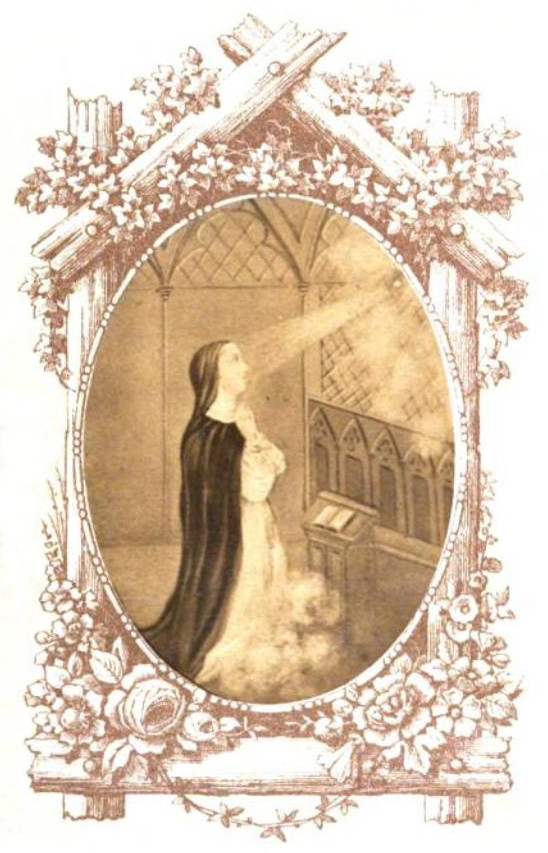
Saint Rose of Viterbo, a child mystic whose brief life shone with extraordinary grace, was born in 1233 into a humble family in Viterbo, Italy, during a tumultuous period marked by political strife between the Papacy and the Holy Roman Emperor Frederick II. From her earliest years, Rose displayed a profound piety and an intense love for God, setting her apart from her peers. At the tender age of three, she miraculously restored her aunt to life, a testament to the divine favor already resting upon her. By the age of seven, imbued with a prophetic spirit and an unwavering faith, Rose began to preach publicly in the streets of Viterbo. Her impassioned sermons, delivered with a wisdom far beyond her years, courageously denounced the prevalent Cathar heresy, which denied fundamental Catholic doctrines, and staunchly defended the authority of the Pope, then exiled from Rome by imperial forces. Her fervent advocacy for the Church, often amidst hostility and persecution, led to her banishment from Viterbo by imperial authorities, though she later returned.
Rose’s vocation was one of unwavering devotion to Christ and His Church, manifested through her courageous preaching and her life of penance and prayer. Despite her delicate health and the constant opposition she faced, she never wavered in her mission to call souls to repentance and fidelity to the Catholic faith. She desired to enter the Poor Clares, a contemplative order founded by Saint Clare of Assisi, but was denied entry due to her frail constitution and lack of dowry. Undeterred, Rose continued her spiritual journey as a laywoman, living an austere life of prayer and charity, becoming a beacon of hope and spiritual guidance for many in her community. Her brief but impactful ministry was characterized by a profound mystical connection with God, evident in her visions and prophecies, and her unwavering commitment to truth in a time of widespread error.
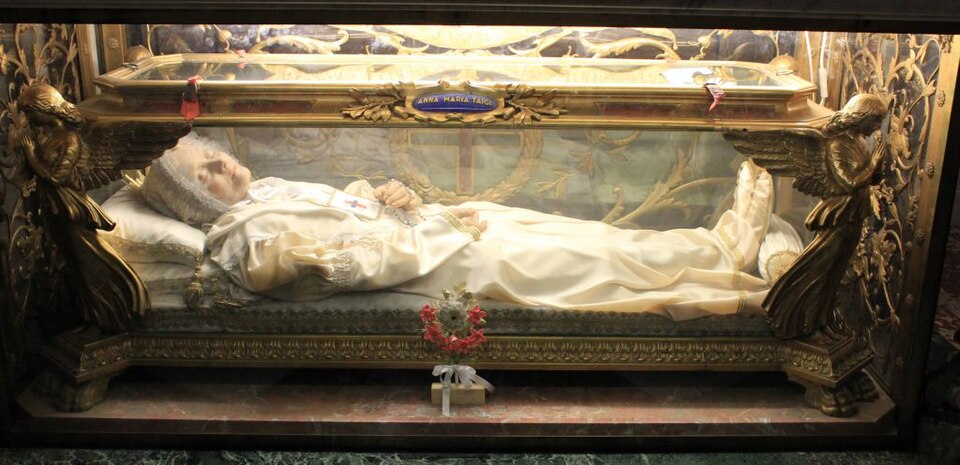
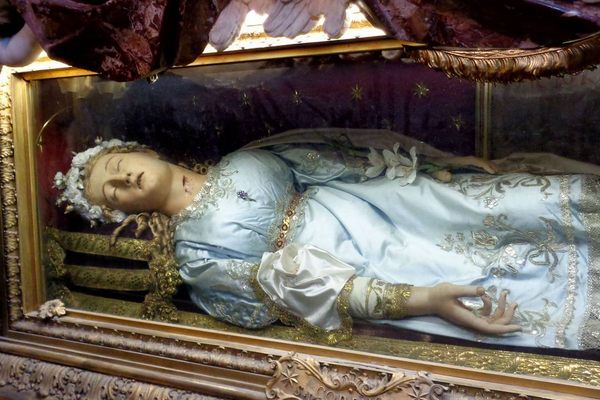
Saint Rose passed away peacefully in her home in Viterbo in 1251, at the remarkably young age of seventeen. Her death, though premature by worldly standards, was a transition into eternal glory for this holy child. Two years later, in 1253, Pope Innocent IV, who had witnessed her prophetic gifts, ordered her body to be exhumed for transfer to the monastery of the Poor Clares, the very order that had once rejected her. To the astonishment of all present, her body was found to be perfectly preserved, entirely incorrupt, a miraculous sign of her extraordinary sanctity. This state of incorruption has endured for over 770 years, defying the natural laws of decomposition. Her body, still remarkably intact, rests today in a glass reliquary within the Monastery of Saint Rose in Viterbo, where pilgrims can venerate her.
The lasting legacy of Saint Rose of Viterbo is profound and multifaceted. Canonized in 1457 by Pope Callixtus III, she stands as a powerful patroness of Viterbo and a testament to the fact that holiness is not limited by age or worldly status. Her incorrupt body, a tangible miracle, serves as a perpetual reminder of God’s power and the reward awaiting those who faithfully serve Him. Pilgrims from around the world visit Viterbo to pray before her sacred remains, seeking her intercession and drawing inspiration from her youthful courage and unwavering faith. Her life continues to inspire countless souls to embrace their faith with fervor, to speak truth in the face of adversity, and to trust in God's divine plan, even in the most challenging of times.
Discovery
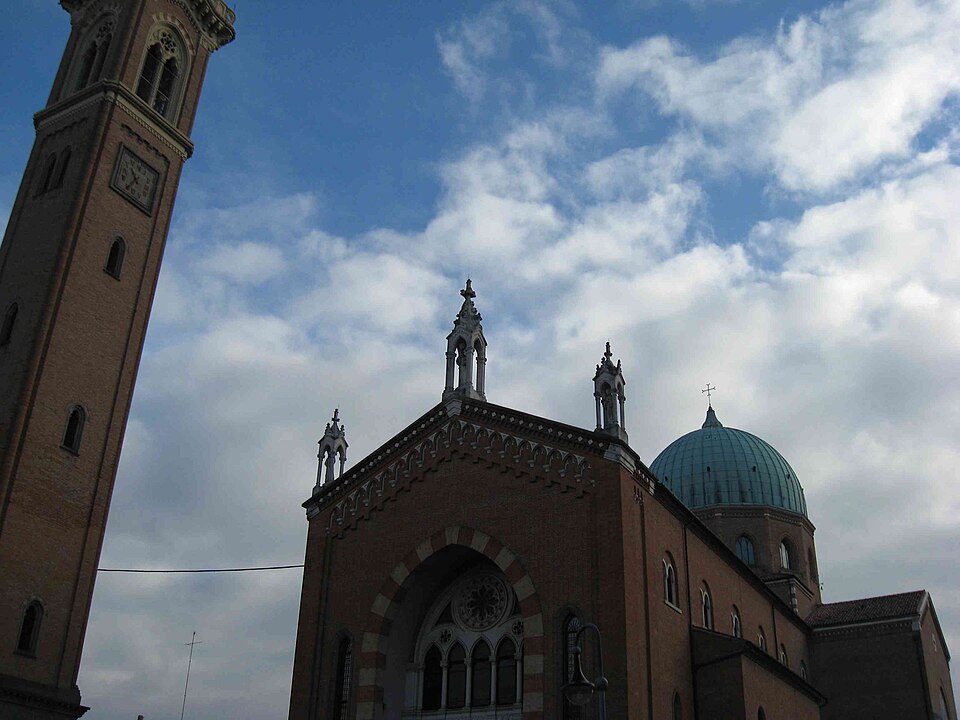
The remarkable incorruption of Saint Rose of Viterbo’s body began its documented journey not long after her earthly life concluded. Following her death in 1251 at the tender age of eighteen, Rose was initially interred in the cemetery of the Church of Santa Maria in Poggio. However, a profound vision experienced by Pope Alexander IV in 1258, in which Saint Rose herself appeared to him, prompted a papal decree for her exhumation and transfer. This extraordinary event, occurring just seven years after her passing, revealed her body to be perfectly preserved, a miraculous testament to her sanctity. The scene must have been one of awe and wonder: an assembly of ecclesiastical dignitaries, local clergy, and the faithful gathered as her simple grave was opened. Instead of the expected skeletal remains, they beheld a young woman, seemingly asleep, her features intact, her skin supple, and her garments undisturbed by the passage of time. The immediate reaction was one of profound veneration, confirming the widespread belief in her holiness that had already taken root in Viterbo. Her body was then solemnly translated to the Monastery of Santa Maria delle Rose, later renamed the Monastery of Santa Rosa, where it has remained to this day.
Over the centuries, the incorrupt body of Saint Rose has been the subject of numerous examinations, each reaffirming its miraculous state. A particularly significant inspection occurred in 1357, a century after her death, when a formal canonical process was initiated to investigate her life and miracles in anticipation of her canonization. During this period, her body was again examined and found to be in an astonishingly well-preserved state, despite the intervening decades. Further examinations were conducted in 1457, the year of her canonization, and again in 1632, when the body was placed in a more elaborate reliquary. Each inspection consistently reported the absence of significant decomposition, a phenomenon that defied natural explanation. While the skin has darkened over time to a deep brown hue, a common characteristic among many incorruptible saints, its integrity and the overall form of her body have remained remarkably intact. These repeated verifications by ecclesiastical authorities and medical professionals throughout the centuries served to solidify the Church's recognition of her incorruption as a genuine miracle.
The preservation journey of Saint Rose's body has been one of careful veneration and protection. From its initial reinterment in the Monastery of Santa Rosa, the body has been housed within a specially constructed reliquary. Today, it rests in a glass casket, allowing the faithful to gaze upon her miraculous form. This transparent enclosure is itself housed within a larger, ornate shrine, providing both protection and a focal point for devotion. The environment within the shrine is carefully maintained to minimize any external factors that might accelerate decay, though the primary agent of its preservation is believed to be divine intervention. The body has not been subjected to embalming or any artificial preservation techniques, making its enduring state all the more extraordinary. Pilgrims from across the globe visit the Monastery of Santa Rosa to pay homage to the child mystic, witnessing firsthand the enduring miracle of her incorruption, a powerful testament to her sanctity and God's power.
Among the most remarkable details associated with Saint Rose's incorrupt body is the consistent report of its flexibility. Even centuries after her death, observers have noted a certain suppleness to her limbs, defying the rigidity expected of a deceased body. While not as pronounced as in some other incorruptibles, this subtle flexibility has been a recurring observation during examinations. Furthermore, tradition holds that a sweet, faint fragrance, reminiscent of roses, has occasionally emanated from her remains, though this phenomenon is less consistently documented than the visual incorruption. Perhaps the most compelling testament to her miraculous preservation occurred in 1922, when a fire ravaged the Monastery of Santa Rosa. Despite the intense heat and destruction that consumed much of the building, Saint Rose's body, housed within its reliquary, remained completely unharmed, a truly astonishing event that further underscored the supernatural nature of its preservation. This incident, documented by eyewitnesses and photographs of the fire's aftermath, stands as a powerful and enduring testament to the miraculous protection afforded to her sacred remains.
Preservation
Body displayed in the Monastery of Santa Rosa, Viterbo.
Scientific Analysis
The phenomenon of extraordinary bodily preservation, particularly over extended periods, presents a complex intersection for scientific inquiry, often challenging conventional understanding of decomposition. In the case of Saint Rose of Viterbo, whose remains have reportedly persisted for over seven centuries, the scientific community has had limited, yet significant, opportunities for formal examination. While comprehensive, modern forensic analyses akin to those performed on contemporary cases are largely absent, historical accounts and observations from various ecclesiastical and medical personnel offer crucial insights. One notable examination occurred in 1921, when Professor Edoardo Palmieri, a physician and anatomist, conducted a detailed observation of the body. His findings, documented at the time, described the remains as remarkably intact, noting the preservation of skin, internal organs, and even the eyes, albeit in a desiccated state. Palmieri's report highlighted the absence of any discernible embalming agents or artificial preservation techniques, which would have been rudimentary at best in the 13th century. Subsequent, less formal inspections by local physicians and clergy throughout the centuries have consistently corroborated the unusual state of preservation, often remarking on the flexibility of the limbs and the natural appearance of the skin, features highly atypical for unpreserved human remains of such antiquity. These historical observations, while not always meeting contemporary forensic standards, provide a consistent narrative of an anomalous preservation.
The scientific mystery surrounding the preservation of this young woman's body lies in its defiance of typical decomposition processes. Normal human decay, driven by autolysis (self-digestion by cellular enzymes) and putrefaction (bacterial action), typically reduces a body to a skeleton within a few years, especially in unsealed environments. Rose of Viterbo died in 1251 and was initially buried in unconsecrated ground, a condition that would usually accelerate decomposition due to exposure to soil microorganisms and moisture. Later, her body was exhumed and moved to the Monastery of Santa Rosa, where it has remained exposed to ambient air, albeit within a protective reliquary. The reported preservation of soft tissues, including skin and internal organs, over seven centuries, without evidence of mummification through desiccation in an arid environment or deliberate embalming, is highly unusual. The temperate, often humid climate of Viterbo, Italy, is not conducive to natural mummification. Furthermore, the absence of adipocere formation, a waxy substance resulting from the hydrolysis of body fat in moist, anaerobic conditions, is also noteworthy. Adipocere can preserve body contours but typically alters the texture and color of tissues significantly, and its formation is a specific chemical process not universally observed in long-term preservation. The reported flexibility and relatively natural appearance of the tissues, as described in historical accounts, suggest a different mechanism than simple saponification.
Natural explanations for extraordinary preservation often include environmental factors, such as extremely dry conditions leading to mummification, or specific soil compositions that inhibit bacterial growth or promote saponification. However, these explanations appear insufficient in this particular case. Viterbo's climate is not arid, ruling out natural mummification by desiccation. While certain soil types can contribute to preservation, Rose was eventually interred above ground, negating ongoing soil interaction. Skeptics often point to the possibility of undocumented historical preservation techniques or the gradual desiccation of tissues over centuries, leading to a mummified appearance that is then interpreted as miraculous. However, the consistent historical accounts of flexibility and the reported lack of artificial agents challenge these simpler explanations. The specific chemical processes that might lead to such preservation without overt mummification or adipocere formation remain largely unexplained by conventional forensic science in this context. The precise interplay of unknown environmental factors, intrinsic biological characteristics of the individual, or unique post-mortem biochemical changes that could inhibit decomposition to such an extent are not fully understood.
From a modern scientific perspective, the case of Saint Rose of Viterbo represents a compelling, albeit challenging, subject for further study within the broader field of taphonomy – the study of decomposition and preservation. While historical observations provide valuable qualitative data, the absence of contemporary, non-invasive forensic techniques applied to the remains leaves many questions unanswered. Techniques such as CT scans could provide detailed three-dimensional imaging of internal structures without disturbing the body, revealing the extent of organ preservation and any potential internal alterations. Carbon dating could precisely confirm the age of the tissues, while advanced tissue analysis, including histological examination (if minimally invasive sampling were permitted), could shed light on the cellular and molecular mechanisms of preservation. DNA analysis, if viable, might offer insights into the individual's genetic makeup, though its success on such ancient, exposed remains is questionable. The application of sophisticated analytical chemistry techniques could potentially identify any trace elements or compounds that might have contributed to preservation, even if not deliberately applied as embalming agents. The ongoing challenge lies in balancing scientific curiosity with the reverence and historical significance accorded to such relics, often limiting the scope of invasive investigations. Ultimately, cases like Saint Rose of Viterbo continue to highlight the gaps in our complete understanding of the complex processes governing post-mortem decay and preservation, standing as intriguing anomalies that push the boundaries of scientific explanation.
Spiritual Significance
The phenomenon of incorruption, particularly as exemplified by Saint Rose of Viterbo, stands as a profound testament within Catholic theology to the sanctity of the human body and the ultimate triumph of grace over the natural order of decay. Her youthful incorruption, a marvel preserved for centuries, powerfully echoes the scriptural truth that the body is a temple of the Holy Spirit, as articulated in 1 Corinthians 6:19. This extraordinary preservation of her earthly remains, defying the usual processes of decomposition, is interpreted by the Church not as a mere biological anomaly, but as a divine sign, a tangible prefigurement of the resurrection of the body. It offers a glimpse into the glorified state promised to the faithful, reinforcing the hope that our perishable bodies will one day be raised imperishable. For Saint Rose, whose life was marked by an exceptional purity and a fervent dedication to God from her earliest years, her incorrupt body serves as a perpetual sermon, an enduring symbol of her profound participation in the communion of saints, bridging the earthly and heavenly realms and reminding us of the eternal destiny awaiting those who live in Christ.
Saint Rose of Viterbo’s unique charism was undeniably her prophetic voice and precocious mysticism, a spiritual gift that manifested with astonishing clarity from childhood. Born in 1233, her brief eighteen years were characterized by a heroic practice of virtues that belied her tender age. Humility shone through her willingness to preach in the streets despite societal norms, while her unwavering charity was evident in her compassionate outreach to the poor and suffering. Her obedience was directed primarily to divine promptings, even when they led her into conflict with temporal authorities. Her profound mystical experiences, including visions and prophecies, were not cloistered but propelled her into active evangelization, directly challenging the prevalent Cathar heresy with a theological clarity far beyond her years. She embodied a radical Franciscan spirit of poverty, though not formally a member of the order, advocating for the Church’s spiritual purity and denouncing corruption, thus contributing to a vibrant tradition of lay witness and prophetic challenge within Catholicism.
Devotion to Saint Rose of Viterbo has flourished remarkably since her death in 1251, culminating in her canonization in 1457. Her patronage extends to Viterbo, where she is revered as a principal patroness, and she is also invoked by those suffering from illness, particularly children. The annual "Macchina di Santa Rosa," a spectacular procession carrying a towering, illuminated structure with her statue through the city, is a testament to the enduring vibrancy of her cult, drawing pilgrims and spectators from around the world. Pilgrims visiting the Monastery of Santa Rosa in Viterbo today are profoundly moved by the sight of her incorrupt body, reverently displayed in a glass reliquary. The experience is often described as one of deep spiritual awe and connection, a tangible encounter with a life lived entirely for God. The quiet reverence of the shrine, coupled with the visible evidence of her preserved remains, fosters an atmosphere of prayer and contemplation, inviting the faithful to seek her intercession and emulate her virtues.
Miracles attributed to Saint Rose’s intercession began even during her lifetime, most notably the miraculous restoration of her aunt to life at the tender age of three. Following her death and the discovery of her incorrupt body, countless healings and conversions have been documented, further cementing her reputation as a powerful intercessor. The incorrupt body itself has been a continuous source of spiritual consolation for the faithful, its very existence a silent miracle that speaks volumes about divine favor. Throughout history, the faithful have flocked to her shrine, seeking relief from physical ailments, spiritual guidance, and strength in times of trial. The enduring preservation of her remains is perceived as a perpetual sign of God’s power and love, offering hope and reassurance that the prayers offered through her intercession are heard and answered, fostering a deep sense of trust in the communion of saints.
For modern believers and seekers alike, Saint Rose of Viterbo offers an enduring and challenging message. Her life, lived with such intense spiritual fervor in an age of political and religious turmoil, stands as a powerful counter-narrative to contemporary materialism and secularism. She reminds us that true wealth lies not in earthly possessions or power, but in an unwavering commitment to God and a life of virtue. Her youthful courage in speaking truth to power, her prophetic voice against injustice, and her profound mystical connection to the divine challenge us to examine our own priorities and to cultivate a deeper spiritual life. Her incorruption serves as a tangible bridge between the visible world of our senses and the invisible reality of God’s grace, a constant reminder that the spiritual realm is not distant or abstract, but intimately interwoven with our earthly existence, offering hope for eternal life and inspiring us to live with greater faith and purpose.
AI summary
A plain-language overview generated from this page's source material. Always verify with primary sources.