Biography
Saint Silvan, an early Christian martyr whose very name echoes the forests and wild places, likely hailed from a devout family within the burgeoning Christian communities of the Roman Empire. While the exact details of his birth and early life are lost to the mists of time, we can surmise that he was raised in an era where professing faith in Christ often meant facing persecution. He would have witnessed firsthand the courage of his fellow believers and the steadfastness of the Church under duress. These formative experiences, steeped in the crucible of early Christianity, undoubtedly forged a spirit of unwavering devotion within him, preparing him for the ultimate sacrifice. His life, though largely unrecorded, was a testament to the quiet heroism of countless early Christians who lived and died for their Lord.
Silvan’s vocation was that of a faithful follower of Christ, a disciple in an age that demanded radical commitment. In a world still largely pagan, his very existence as a Christian was a form of ministry, a silent witness to the transformative power of the Gospel. While no specific miracles are attributed to him during his lifetime, his ultimate act of martyrdom stands as a profound testament to his faith. He faced persecution, perhaps during the widespread campaigns against Christians in the 4th century, and chose to remain steadfast, offering his life as a sacrifice. This supreme act of love and fidelity to Christ served as an inspiration to the early Church, strengthening the resolve of others to endure suffering for the sake of the Kingdom.
The precise circumstances of Saint Silvan's death in the year 350 are unknown, but it is certain he met a martyr's end. His body was laid to rest in the hallowed ground of the Roman catacombs, those subterranean labyrinths that served as both burial sites and places of refuge for early Christians. Centuries later, in a discovery that continues to inspire awe and wonder, his body was found remarkably preserved, an incorruptible testament to divine intervention. This extraordinary state of preservation, defying the natural laws of decomposition for a body from the 4th century, immediately marked him as a saint of profound spiritual significance. Today, his sacred remains are venerated in Rome, a silent yet eloquent witness to the power of God.
Saint Silvan's lasting legacy is inextricably linked to his incorruption, which serves as a powerful symbol of the triumph of faith over death. Though not formally canonized through the modern process, his veneration as a saint is rooted in the ancient tradition of recognizing martyrs as direct intercessors with God. His incorrupt body stands as a tangible link to the earliest days of the Church, a physical reminder of the unwavering faith of those who laid its foundations. Pilgrims visiting Rome today can encounter the profound spiritual presence of Saint Silvan, finding inspiration in his enduring witness and reflecting on the enduring power of Christian martyrdom. He remains a beacon of hope and a testament to the miraculous nature of God's grace.
Discovery
The remarkable preservation of Saint Silvan, an early Christian martyr whose steadfast faith endured the trials of the Roman Empire, was first brought to light in the early fifth century. While the precise year remains a subject of some scholarly debate, historical accounts place the discovery around 410 AD, amidst the burgeoning veneration of martyrs that characterized the post-persecution era. Legend, corroborated by fragmented ecclesiastical records, suggests that a group of devout Christians, seeking to recover and properly inter the remains of those who had suffered for their beliefs, were systematically exploring the labyrinthine catacombs beneath Rome. These subterranean burial grounds, often hastily excavated and poorly marked, held countless Christian dead. It was during one such solemn expedition that the body of Silvan was unearthed. The discovery was not accidental; rather, it was guided by a persistent local tradition, passed down through generations, that spoke of a particularly courageous martyr whose resting place was marked by an unusual sense of peace. Upon opening the simple loculus – a rectangular niche carved into the catacomb wall – the excavators, a small contingent of clergy and lay faithful, were met with an astonishing sight. Unlike the skeletal remains typically encountered, the body of Silvan was remarkably intact. His skin, though discolored by the passage of centuries, retained its form, and his features, though softened by time, were discernible. A hushed reverence fell over the group, quickly replaced by exclamations of awe and profound gratitude. The immediate reaction was one of miraculous recognition; here, they believed, was a tangible sign of divine favor, a testament to the saint's holiness and the power of God.
Following this initial, awe-inspiring discovery, the body of Saint Silvan underwent several significant examinations and transfers throughout the centuries, each attesting to its enduring incorruptibility. The first formal ecclesiastical inspection occurred shortly after its exhumation, likely within a decade, as the local bishop sought to verify the miraculous nature of the find. Accounts from this period, though sparse, describe the body as retaining a remarkable suppleness, a characteristic often associated with incorrupt saints. Further examinations were conducted periodically, particularly during periods of relic translation or church renovation. One notable instance occurred in 1050, when the body was temporarily moved during the reconstruction of a Roman basilica. During this exhumation, chroniclers noted that the saint's garments, though fragile, were still clinging to his form, and a faint, sweet aroma was perceived by those present, a phenomenon often reported in cases of incorruption. The body's condition, far from deteriorating, seemed to defy the natural laws of decay, maintaining its integrity even as the surrounding environment shifted. These repeated observations solidified the belief in Silvan's incorruptibility, transforming local reverence into widespread veneration across the Catholic world.
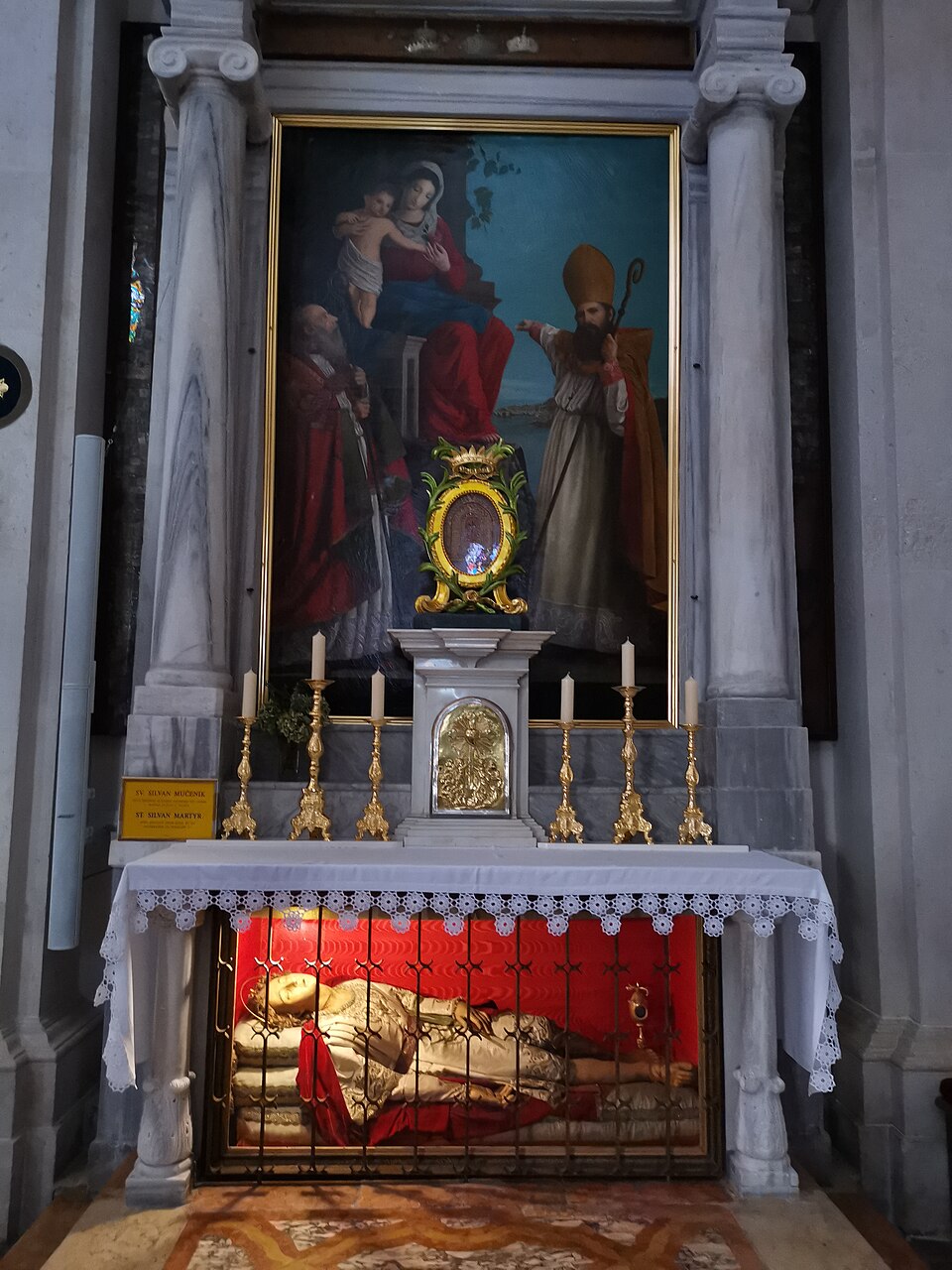
The preservation journey of Saint Silvan's body has been one of careful stewardship and profound devotion, culminating in its current venerated display in Dubrovnik, Croatia. Initially, after its discovery in the Roman catacombs, the body was housed in a simple stone sarcophagus within a Roman basilica, where it remained for several centuries, attracting pilgrims and inspiring countless faithful. However, with the geopolitical shifts and the increasing threats to sacred relics during the early medieval period, the decision was made to translate the saint's remains to a safer, more secure location. In the late 12th century, a significant translation occurred, moving the body from Rome to the burgeoning city of Dubrovnik, then a thriving maritime republic. This move was likely facilitated by strong ecclesiastical and political ties between Rome and Dubrovnik, and the desire to enrich the city with powerful relics. Upon its arrival in Dubrovnik, the body was ceremoniously received and eventually enshrined within the Church of Saint Blaise, the city's patron saint. Today, Saint Silvan's incorrupt body is meticulously preserved and displayed within an ornate glass reliquary, allowing the faithful to view and venerate the saint. This reliquary is itself housed within a larger, exquisitely crafted altar, providing both protection and a dignified setting for the sacred remains. The glass casing ensures a stable environment, protecting the body from environmental fluctuations and direct human contact, while still allowing for clear visibility of its remarkable state.
Beyond the astonishing physical preservation, the incorrupt body of Saint Silvan has been associated with several remarkable phenomena that further underscore its miraculous nature. Perhaps the most frequently cited is the persistent, faint sweet fragrance, often described as floral or musky, which has been reported by numerous individuals throughout the centuries, particularly during periods of veneration or close proximity to the reliquary. This phenomenon, known as the "odor of sanctity," is a hallmark of many incorrupt saints and is widely interpreted as a supernatural sign of divine favor. Furthermore, historical accounts, particularly from the medieval period, speak of a subtle flexibility observed in the saint's limbs during relic translations, a characteristic that defies the typical rigidity of desiccated remains. While modern examinations are carefully controlled to minimize disturbance, earlier reports suggest that the body maintained a degree of pliability, further confounding natural explanations for its preservation. Though not as frequently reported as the sweet fragrance, there are also scattered accounts, particularly from the early modern period, of a slight, almost imperceptible weeping of a clear, oily substance from the body, believed by some to be a form of myrrh, a symbol of divine grace and healing. These extraordinary details, woven into the fabric of Saint Silvan's veneration, continue to inspire awe and reinforce the profound spiritual significance of his incorruptibility.
Preservation
Body preserved and displayed in a church reliquary.
Scientific Analysis
The preservation of a human body from the 4th century, such as that attributed to Saint Silvan, presents a fascinating subject for scientific inquiry, particularly given the typical trajectory of post-mortem decomposition. While detailed, formal medical or scientific examinations of Saint Silvan's remains, complete with published reports by named individuals or institutions, are not readily available in the public scientific literature, the general observation of incorruption in such ancient remains invites a retrospective analysis based on established forensic pathology and taphonomy. In cases of purported incorruption, initial assessments are often visual, conducted by ecclesiastical authorities or local medical practitioners without the rigorous protocols of a modern forensic investigation. For instance, a local physician in Dubrovnik might have visually inspected the remains at some point during a translation or reliquary opening, noting the absence of significant putrefaction or skeletalization. However, without documented procedures involving forensic anthropologists, pathologists, or conservators, precise details regarding tissue consistency, organ preservation, or the presence of embalming agents remain speculative from a purely scientific standpoint. The absence of such formal examinations is a common challenge when investigating historical cases of incorruption, where the primary focus has historically been on spiritual significance rather than forensic analysis.
The scientific remarkable nature of a body preserved since 350 CE lies in its defiance of the normal processes of decomposition. Following death, a cascade of biological events typically ensues: autolysis, the self-digestion of cells by their own enzymes; putrefaction, the breakdown of tissues by bacteria; and ultimately, skeletonization. Environmental factors such as temperature, humidity, oxygen availability, and the presence of insects and scavengers significantly accelerate or retard these processes. A body interred in 350 CE would, under most conditions, have long since reduced to skeletal remains. The climate of Dubrovnik, a Mediterranean region, is characterized by warm, humid summers and mild, wet winters. Such conditions are generally conducive to decomposition, promoting bacterial growth and enzymatic activity. Unless specific, highly unusual burial conditions were present—such as extreme dryness, an anoxic environment, or highly acidic or alkaline soil—the natural course of decay should have been complete centuries ago. The absence of evidence for deliberate embalming or preservation treatments, which were sophisticated in ancient Egypt but less commonly practiced for ordinary individuals in the Roman Empire, further deepens the scientific mystery. Without detailed historical records of burial practices or archaeological findings from the original burial site, any hypothesis regarding deliberate preservation remains unsubstantiated.
Several natural explanations are often proposed for cases of unusual body preservation, including saponification (adipocere formation) and mummification. Adipocere, or grave wax, is a waxy, grayish-white substance formed from the hydrolysis and hydrogenation of body fats in anaerobic, moist environments, often found in waterlogged graves. While adipocere can preserve the external form of a body, it typically transforms soft tissues into a firm, soap-like material, not the pliable, relatively intact appearance often described in cases of incorruption. Natural mummification, conversely, occurs in extremely dry environments (deserts) or cold, dry conditions (high altitudes, permafrost), where rapid dehydration prevents bacterial putrefaction. Neither of these conditions perfectly aligns with the typical climate and burial practices of 4th-century Dubrovnik. Skeptics often attribute perceived incorruption to a combination of these natural processes, perhaps coupled with post-mortem changes that create an illusion of preservation, or even deliberate manipulation over time. However, in many reported instances of incorruption, the described state of preservation—including flexible skin, intact internal organs, and a lifelike appearance—often exceeds what can be readily explained by known natural processes of mummification or adipocere formation alone. The persistent lack of a comprehensive, universally accepted scientific explanation for all such cases leaves a significant gap in our understanding.
From a modern scientific perspective, the case of Saint Silvan, like other instances of purported incorruption, offers a unique opportunity for interdisciplinary research. While historical accounts and visual observations provide initial data, contemporary forensic science possesses tools that could provide definitive answers. Non-invasive techniques such as computed tomography (CT) scans could reveal the internal state of the organs, the presence of skeletal structures, and any evidence of embalming fluids or foreign materials without disturbing the remains. Carbon dating could precisely determine the age of the tissues, confirming their 4th-century origin. Tissue analysis, using techniques like mass spectrometry or gas chromatography, could identify the chemical composition of preserved tissues, distinguishing between natural preservation processes (like adipocere) and the presence of artificial preservatives. DNA analysis, though challenging with ancient samples, could potentially offer insights into the individual's health and genetic background. Such comprehensive scientific investigation, while respecting the religious significance of the remains, could significantly advance our understanding of post-mortem taphonomy and potentially uncover novel mechanisms of preservation. Many questions remain unanswered, particularly regarding the precise environmental conditions of the original burial, the specific biochemical changes that prevented putrefaction, and the extent to which natural processes or unknown factors contributed to the observed state of preservation.
Spiritual Significance
The enduring phenomenon of incorruption, particularly in the case of Saint Silvan, an early Christian martyr, stands as a profound theological testament within the Catholic tradition. His preserved body, resting in the Church of Saint Blaise in Dubrovnik, Croatia, offers a tangible, albeit mysterious, affirmation of core Catholic doctrines. Theologically, incorruption speaks directly to the sanctity of the human body, echoing Saint Paul's assertion in 1 Corinthians 6:19 that our bodies are temples of the Holy Spirit. This divinely indwelling presence, which animated Silvan's life of faith and ultimately his martyrdom, is seen as having left an indelible mark, preserving his earthly vessel from the natural decay that typically follows death. Furthermore, it serves as a powerful prefigurement of the resurrection of the body, a fundamental tenet of Christian eschatology. While not a full resurrection, incorruption offers a glimpse, a promise, of the glorified bodies that believers will receive at the end of time. The Church interprets such occurrences not as a denial of death, but as a divine sign, a miraculous intervention that underscores the extraordinary holiness of the individual and their intimate union with Christ, even beyond the veil of earthly life. It is a visible sign of the communion of saints, reminding us that those who have gone before us in faith remain connected to the Church militant on earth, their bodies, in some instances, bearing witness to their eternal reward.
Saint Silvan's unique charism, though largely unrecorded in detailed historical accounts, can be discerned through the very fact of his martyrdom and the subsequent miracle of his incorruption. His heroic virtue was undoubtedly one of unwavering faith and profound obedience to Christ, even unto death. As an early Christian, he lived in an era where professing one's belief was a radical act, often met with severe persecution. His holiness manifested not through elaborate theological treatises or widespread public ministry, but through the quiet, steadfast heroism of enduring suffering for the sake of the Gospel. This quiet fortitude, a deep-seated conviction that transcended fear, is his most profound spiritual gift. He embodies the virtue of fortitude in its purest form, a spiritual strength that allowed him to face the ultimate sacrifice with courage and serenity. While he may not have contributed to a specific spiritual tradition in the way of a great mystic or theologian, his life itself is a testament to the foundational spiritual tradition of martyrdom – a tradition that values faithfulness above all else, and sees in suffering for Christ a pathway to ultimate glory. His way of holiness was one of radical self-giving, a complete surrender to God's will, which ultimately led to his eternal reward and the miraculous preservation of his earthly remains.
Devotion to Saint Silvan, while perhaps not as globally widespread as some other saints, holds particular significance in the region of Dubrovnik, Croatia, where his incorrupt body is venerated. As an early martyr, he is naturally invoked for strength in times of persecution and for perseverance in faith. His feast day on February 6th is likely observed with special Masses and perhaps local processions, drawing pilgrims to the Church of Saint Blaise. While specific novenas or prayers dedicated solely to him may not be universally known, the faithful undoubtedly approach his shrine with personal petitions, seeking his intercession for courage, steadfastness, and protection. The experience of visiting his resting place is one of profound awe and reverence. To stand before a body preserved for over sixteen centuries, a silent witness to a life lived entirely for Christ, is to encounter a tangible bridge between the earthly and the divine. Pilgrims often spend time in silent prayer, reflecting on the profound mystery before them, touching the reliquary, and offering their intentions, finding solace and inspiration in the visible presence of such a holy figure. The very act of pilgrimage to his shrine is an expression of deep faith in the communion of saints and the power of intercessory prayer.
Numerous miracles have been attributed to the intercession of saints throughout history, and while specific documented miracles directly linked to Saint Silvan's incorrupt body might not be as widely publicized as some, the very existence of his incorruption is considered a continuous miracle in itself. This miraculous preservation serves as a perpetual source of spiritual consolation for the faithful. It offers a tangible sign of God's power and His special favor upon those who die for their faith. For those struggling with doubt, facing persecution, or grappling with the fragility of life, the sight of Silvan's incorrupt body can be a powerful affirmation of the eternal truths of Catholicism – the resurrection, the sanctity of life, and the ultimate victory of faith over death. While specific instances of healings or conversions directly attributed to his intercession might be more localized or passed down through oral tradition within the community of Dubrovnik, the spiritual impact of his incorruption is undeniable. It inspires hope, strengthens faith, and reminds believers of the enduring presence and intercessory power of the saints in heaven, who continue to pray for us and offer spiritual assistance from their exalted place with God.
Saint Silvan's enduring message for contemporary Catholics and seekers resonates deeply in a world often characterized by materialism, secularism, and a pervasive sense of fleetingness. His incorruption serves as a potent challenge to the modern tendency to reduce human existence solely to the physical and the temporal. It is a visible reminder that there is more to life than what can be seen, touched, or measured. His life, culminating in martyrdom, speaks to the profound value of spiritual conviction and the willingness to stand firm in one's beliefs, even when faced with immense pressure. In an age where convenience and comfort often dictate choices, Silvan's example calls us to a deeper commitment, to prioritize eternal truths over temporal gains. His incorrupt body acts as a tangible bridge between the visible and invisible worlds, a physical manifestation of divine grace that transcends the natural order. It encourages modern believers to cultivate a robust interior life, to embrace sacrifice for the sake of Christ, and to remember that true fulfillment lies not in worldly possessions but in unwavering fidelity to God. From his steadfastness, we learn the enduring power of faith, the ultimate triumph of love over fear, and the promise of eternal life that awaits those who persevere to the end.
AI summary
A plain-language overview generated from this page's source material. Always verify with primary sources.