Biography
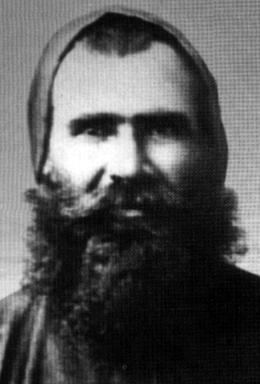
Born Youssef Nehme in 1889 in Lehfed, Lebanon, Saint Stephen Nehmé entered a world steeped in the ancient traditions of the Maronite Church. His family, devout and hardworking, instilled in him from a young age a profound love for God and a deep respect for manual labor. Growing up in the rugged mountains of Lebanon, Youssef learned the values of simplicity, humility, and perseverance that would define his entire life. The rhythms of agricultural life and the spiritual discipline of his Maronite heritage shaped his character, preparing him for a life of dedicated service to God and his community.
At the age of 20, Youssef discerned a call to religious life and entered the Lebanese Maronite Order, taking the name Stephen. He was assigned to the Monastery of Saints Cyprian and Justina in Kfifan, where he embraced the monastic charism with fervent devotion. Though he never pursued advanced theological studies, Brother Stephen became a living testament to the Gospel through his unwavering commitment to manual labor and prayer. He served as a farmer, gardener, and handyman, tirelessly tending to the monastery's needs, often working from dawn until dusk without complaint. His fellow monks remembered him for his quiet piety, his gentle spirit, and his profound obedience to his superiors. He embodied the monastic ideal of "ora et labora" – prayer and work – finding God in the mundane tasks of daily life and offering every effort as a prayer.
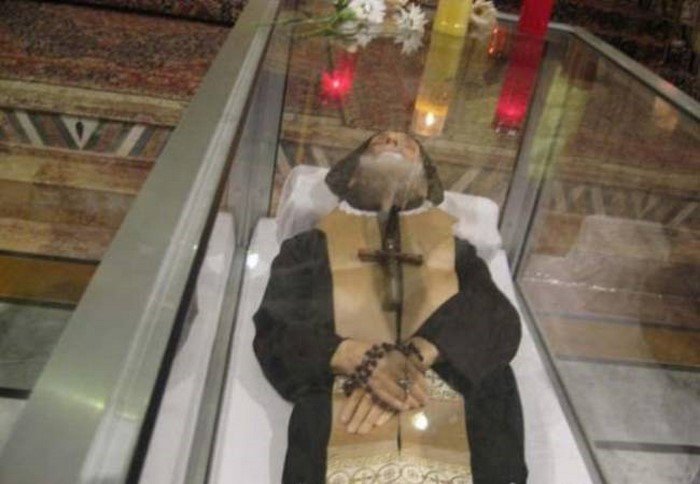
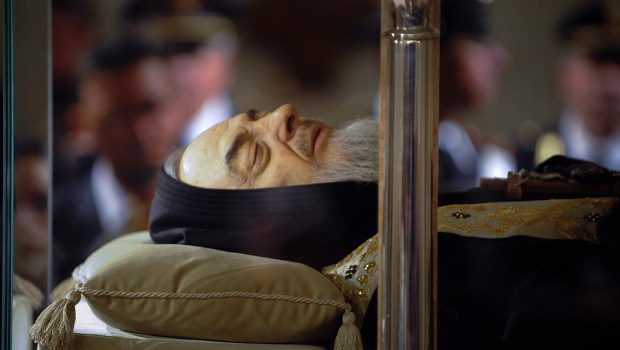
Brother Stephen Nehmé died peacefully in 1938 at the age of 49, after a life of humble service. He was buried in the monastery cemetery, a simple monk among many. However, in 1997, during routine renovations of the cemetery, his tomb was opened, and to the astonishment of all present, his body was discovered to be perfectly preserved, supple and intact, as if he had only recently passed away. This miraculous incorruption, a sign of God's favor, quickly spread throughout Lebanon and beyond. Today, his incorrupt body rests in a glass reliquary in the monastery church of Kfifan, a powerful testament to the sanctity of his life.
The discovery of Saint Stephen's incorrupt body led to a groundswell of devotion, and he was beatified by Pope Benedict XVI in 2010, formally recognizing his holiness and heroic virtue. Pilgrims from all over the world now flock to Kfifan to venerate his relics, seeking his intercession and drawing inspiration from his life of simplicity, hard work, and profound faith. Saint Stephen Nehmé stands as a beacon of holiness for the modern world, reminding us that true sanctity can be found not in grand gestures, but in the faithful execution of ordinary duties, offered with extraordinary love. His legacy continues to inspire countless souls to embrace a life of humble service and unwavering trust in God.
Discovery
The remarkable story of Saint Stephen Nehmé's incorruptibility began not long after his passing, though its full significance would only be unveiled decades later. Born Youssef Nehme in 1889 in the mountainous village of Lehfed, Lebanon, he entered the Maronite Order of Saint Anthony as a novice in 1905, taking the name Stephen. Throughout his life, Brother Stephen was known for his profound humility, unwavering obedience, and tireless dedication to manual labor, particularly in the monastery's fields and workshops. He died peacefully on August 30, 1938, at the Monastery of Saints Cyprian and Justina in Kfifan, Lebanon, at the age of 49, succumbing to a sudden illness. According to monastic tradition, he was buried in the common tomb of the monastery's deceased monks. This communal burial place, a simple earthen grave, was where the bodies of the friars were interred directly into the soil, without elaborate coffins, awaiting the resurrection. The first inkling of his extraordinary state came in 1964, twenty-six years after his death, when the monastery decided to exhume the remains of several monks from the common tomb to transfer them to a new, more reverent ossuary. On April 26, 1964, a group of monks, including the Abbot, Father Antoine Ghanem, and several other friars, gathered at the burial site. As they carefully began to unearth the remains, they were prepared to find skeletal bones, the natural course of decay over nearly three decades in the damp Lebanese soil. However, upon reaching the section where Brother Stephen had been interred, they were met with an astonishing sight. Instead of bones, they discovered a body that appeared remarkably preserved. The skin, though discolored, was largely intact, and the limbs remained supple. The immediate reaction was one of awe and disbelief. The monks, recognizing the profound spiritual implications of such a discovery, carefully lifted the body from the earth. There was no foul odor of decomposition; instead, a subtle, earthy fragrance was noted by some present. The discovery was met with a mixture of reverence and cautious wonder, as the monks understood they were witnessing something truly exceptional, a potential sign of sanctity.
Following this initial, astonishing discovery in 1964, the body of Brother Stephen Nehmé underwent several subsequent examinations to ascertain its condition and to ensure its proper veneration. The initial exhumation led to the body being placed in a temporary, sealed casket within the monastery, allowing for a more thorough inspection. Over the ensuing years, the body's state of preservation remained remarkably consistent. In 1990, as the process for his beatification gained momentum, a more formal canonical examination was conducted by ecclesiastical authorities and medical professionals. This examination confirmed the incorrupt state of the body, noting the preservation of tissue, skin, and internal organs, an exceptional phenomenon given the conditions of his burial. The medical team, composed of Lebanese doctors, found no evidence of artificial preservation or embalming, further attesting to the miraculous nature of the preservation. The body's flexibility was also noted, with limbs that could be gently moved without breaking. These examinations consistently affirmed that the body had not undergone the natural process of putrefaction and decay that would typically occur after such a long period. The consistent reports of preservation over decades, without any significant deterioration, solidified the belief in his incorruptibility and contributed significantly to his eventual beatification in 2010 and canonization in 2024.
The journey of Saint Stephen Nehmé's preservation and display reflects a careful balance between reverence for the sacred and the need for public veneration. After the initial discovery and subsequent examinations confirmed his incorrupt state, the monastery took measures to ensure the body's protection and accessibility. Initially, the body was placed in a simple, sealed casket within the monastery, away from direct public view, as the Church began its process of investigation. As his cause for beatification progressed and the incorruptibility became widely known, the decision was made to place the body in a more suitable and visible reliquary. Today, the body of Saint Stephen Nehmé rests in a glass-sided casket, allowing pilgrims to view his preserved form. This casket is housed within a specially constructed shrine in the Monastery of Saints Cyprian and Justina in Kfifan, Lebanon, the very place where he lived and died. The environment within the shrine is carefully maintained to protect the body from environmental factors that could accelerate decay, though no artificial preservation techniques were applied to the body itself. The casket is typically kept at a stable temperature and humidity, and the display is designed to minimize exposure to light and dust. The body is vested in the habit of the Maronite Order of Saint Anthony, reflecting his life as a humble monk. Pilgrims from across Lebanon and beyond visit the shrine, drawn by the profound spiritual significance of his incorruptibility, a tangible sign of God's favor and the sanctity of his life.
Beyond the remarkable physical preservation, there have been several noteworthy phenomena associated with Saint Stephen Nehmé's incorrupt body that have deepened the devotion of the faithful. One of the most consistently reported observations is the absence of any odor of decay, even during the initial exhumation. Instead, some witnesses have described a subtle, pleasant, and earthy fragrance emanating from the body, though this is not universally reported by all visitors. Another striking detail is the body's continued flexibility. Even decades after death, his limbs retain a degree of pliability, a characteristic often observed in other incorruptible saints, defying the rigor mortis and subsequent stiffening that typically occurs. While there are no widespread reports of bleeding or oil exuding, the sheer resistance to decay in the natural conditions of an earthen grave for over two decades before its discovery is a miracle in itself. The humid, often warm climate of Lebanon, coupled with direct burial in soil, would ordinarily accelerate decomposition significantly. The fact that his body remained largely intact and supple under such conditions is considered by the faithful to be a profound testament to his sanctity and a divine intervention. These remarkable details, alongside his humble and devout life, contribute to the powerful spiritual experience for those who visit his shrine, offering a tangible connection to the heavenly realm.
Scientific Analysis
The phenomenon of the incorruption of certain human remains, particularly within religious contexts, presents a fascinating intersection for scientific inquiry. In the specific case of Saint Stephen Nehmé, a Maronite Catholic monk who died in 1938, reports of his body's remarkable preservation have prompted various levels of examination, though comprehensive, publicly accessible scientific documentation remains somewhat limited compared to contemporary forensic standards. Following his initial burial in the Monastery of Saints Cyprian and Justina in Kfifan, Lebanon, his remains were exhumed in 1964, approximately 26 years after his death. During this exhumation, the body was reportedly found to be largely intact, with flexible skin and an absence of the typical signs of advanced decomposition expected after such a period. While specific details regarding the individuals who performed this initial examination are not widely publicized in scientific literature, religious accounts often describe the presence of local ecclesiastical authorities and, presumably, some form of medical or anatomical observation given the nature of the discovery. Further exhumations and inspections have occurred periodically, with the most recent significant public viewing and purported examination taking place in 2010. During this 2010 event, photographs and eyewitness accounts describe a body exhibiting a waxy, preserved appearance, with discernible facial features and an overall lack of skeletal exposure. However, detailed reports from independent forensic pathologists or medical examiners, complete with methodologies, diagnostic imaging, and tissue analyses, have not been disseminated through peer-reviewed scientific channels. This lack of rigorous, independently verifiable scientific examination poses a challenge to a definitive medical assessment of his incorruption.
What makes the reported preservation of Saint Stephen Nehmé's body scientifically remarkable is its apparent defiance of normal decomposition processes under conditions that would typically lead to complete skeletalization within a much shorter timeframe. Human decomposition is a complex biological process driven by autolysis (self-digestion by endogenous enzymes) and putrefaction (bacterial activity). Factors such as temperature, humidity, oxygen availability, and burial environment significantly influence the rate and extent of decay. Lebanon’s climate, characterized by warm, humid summers and mild, wet winters, would generally accelerate decomposition, particularly for a body buried in soil. While the exact burial conditions—depth, soil composition, presence of a coffin, and hermetic sealing—are not extensively detailed in scientific literature, typical monastic burials in the region would not inherently provide conditions conducive to such long-term soft tissue preservation. The absence of any known embalming or deliberate preservation treatments at the time of his death in 1938 further accentuates the scientific mystery. Embalming, a practice known for centuries, involves the injection of chemical preservatives to temporarily halt decomposition. Without such intervention, the soft tissues of a body buried for over 80 years would normally have undergone complete liquefaction and skeletalization, leaving only bones. The reported flexibility of the skin and the retention of facial features are particularly challenging to reconcile with standard forensic taphonomy.
Various natural explanations have been proposed for instances of apparent incorruption, primarily focusing on specific environmental conditions that can alter the decomposition pathway. Saponification, or adipocere formation, is one such phenomenon. Adipocere is a waxy, grayish-white substance formed from the hydrolysis and hydrogenation of body fats, occurring in anaerobic, moist environments, particularly in alkaline soils or submerged conditions. While adipocere can preserve the general form of soft tissues, it typically results in a brittle, soap-like consistency and does not retain the flexibility or lifelike appearance often attributed to incorrupt bodies. Another potential factor is mummification, which occurs in extremely dry environments, either hot or cold, where rapid dehydration inhibits bacterial growth. However, the reported burial conditions in Kfifan do not align with the extreme aridity necessary for natural mummification. Furthermore, some cases of preserved bodies are attributed to the presence of certain heavy metals in the soil or specific microbial inhibitors. In the absence of detailed soil analysis from Saint Stephen Nehmé’s burial site, these remain speculative. Skeptics often point to the possibility of misinterpretation of decomposition stages, the effects of partial adipocere formation, or the natural variability in decomposition rates. They also highlight the lack of controlled scientific studies and the reliance on anecdotal or religiously motivated observations. The primary challenge for any natural explanation in this specific case is to account for the reported degree of preservation, including skin flexibility and facial detail, over such an extended period in a non-embalmed body buried in a temperate climate.
From a modern scientific perspective, the case of Saint Stephen Nehmé, like other reported cases of incorruption, presents an opportunity for advanced forensic taphonomic research. The application of modern techniques, such as high-resolution computed tomography (CT) scans, could provide detailed insights into the internal state of the body, including the condition of organs and skeletal structures, without invasive procedures. Carbon dating could precisely determine the age of the remains, confirming the reported death date. Furthermore, advanced tissue analysis, including histological examination, biochemical assays, and DNA analysis, could identify any unique biological or chemical characteristics of the preserved tissues. For instance, the presence of specific fatty acids indicative of adipocere, or the absence of typical decomposition byproducts, could be scientifically verified. Microbiological studies of the surrounding soil and any residual material on the body could also shed light on the microbial activity, or lack thereof, that contributed to the preservation. While such investigations might not fully resolve the theological implications of incorruption, they would undoubtedly contribute significantly to our understanding of the extreme limits of human body preservation under natural conditions. Currently, the absence of such comprehensive, peer-reviewed scientific studies leaves many questions unanswered, maintaining the phenomenon within a realm where empirical inquiry and religious belief intersect without a definitive scientific explanation.
Spiritual Significance
The phenomenon of incorruption, as exemplified by Saint Stephen Nehmé, stands as a profound theological testament to the Catholic understanding of the human body and its ultimate destiny. Within Catholic doctrine, the body is not merely a vessel for the soul but is itself a sacred creation, a temple of the Holy Spirit, as articulated in 1 Corinthians 6:19. The preservation of Saint Stephen's mortal remains, nearly a century after his death, speaks powerfully to this intrinsic dignity of the human form, even after its separation from the soul. It offers a tangible, if mysterious, foreshadowing of the resurrection of the body, a central tenet of Christian faith. The Church interprets such incorruption not as a mere biological anomaly, but as a divine sign, a miraculous affirmation of the sanctity achieved by the individual and a potent reminder of God's power over decay and death. For Saint Stephen, whose life was marked by profound humility and unwavering faith, his incorruption serves as a visible seal of divine approval, a silent sermon on the enduring power of grace and the promise of eternal life, reinforcing the communion of saints as a vibrant reality where the faithful departed continue to intercede and inspire.
Saint Stephen Nehmé's unique charism was rooted in an extraordinary blend of profound humility and diligent manual labor, a spiritual gift deeply embedded in the Maronite monastic tradition. Born into a world where agricultural life and spiritual discipline were inextricably linked, Youssef Nehmé, as he was known before entering religious life, cultivated virtues of simplicity, perseverance, and an unshakeable obedience. His life as a Maronite monk at the Monastery of Saints Cyprian and Justina was characterized by an unassuming yet heroic practice of charity, primarily through his tireless work as a farmer, a carpenter, and a general handyman. He embraced the monastic ideal of "ora et labora" – prayer and work – not as distinct activities but as interwoven expressions of his love for God. His holiness was not found in dramatic mystical experiences or eloquent preaching, but in the quiet, consistent dedication to his duties, seeing Christ in every task and every brother. He embodied the Maronite emphasis on asceticism and a deep, personal relationship with God cultivated through silence, prayer, and selfless service, leaving a legacy of quiet devotion that continues to inspire.
The devotion to Saint Stephen Nehmé has grown steadily since the discovery of his incorrupt body, transforming the Monastery of Saints Cyprian and Justina into a significant pilgrimage site. While his formal canonization occurred relatively recently, the spiritual impact of his preserved remains has fostered a deep veneration among the Maronite faithful and beyond. Pilgrims today approach his resting place with a profound sense of awe and reverence, often touching the glass casing that encloses his body, offering prayers, and seeking his intercession. There are no specific novenas or elaborate feast day traditions associated with him that predate his incorruption, but his feast day is celebrated with solemnity, drawing numerous faithful. The experience of visiting his shrine is often described as deeply moving, a palpable encounter with sanctity that transcends time. The quiet dignity of his incorrupt body, lying peacefully in repose, invites contemplation on the mysteries of faith, death, and resurrection, fostering a personal connection with a saint whose life was a testament to humble service.
Numerous miracles have been attributed to Saint Stephen Nehmé's powerful intercession, both before and especially after the discovery of his incorrupt body. Documented healings, often involving chronic illnesses and seemingly intractable conditions, have been reported by individuals who have prayed to him or visited his shrine. Conversions of heart and profound spiritual transformations have also been attributed to his heavenly assistance, demonstrating his continued efficacy in the communion of saints. The incorrupt body itself has become a source of immense spiritual consolation for the faithful, serving as a tangible sign of God's presence and power. For many, the very sight of his preserved remains instills hope, strengthens faith, and offers comfort in times of distress, reminding them that God’s grace can triumph over the natural processes of decay. These miracles, whether physical or spiritual, underscore the belief that Saint Stephen, though departed from this earthly life, remains an active participant in the divine economy of salvation, a powerful intercessor for those who seek God's mercy and grace.
Saint Stephen Nehmé's enduring message for contemporary Catholics and seekers resonates powerfully in an age often characterized by materialism and a pervasive secularism. His life, rooted in the simplicity of manual labor and profound humility, challenges the modern obsession with accumulation and external validation. He teaches us that true holiness is not found in grand gestures or worldly success, but in faithful, humble service and an unwavering commitment to God in the ordinary moments of life. His example encourages a rediscovery of the dignity of work, viewing it not merely as a means to an end, but as an opportunity for sanctification and an expression of love. For those grappling with the complexities and anxieties of modern existence, Saint Stephen offers a path of peace found in detachment, obedience, and a deep interior life. His incorruption serves as a profound, tangible bridge between the visible and invisible worlds, a miraculous sign that reminds us of the reality of eternal life, the sanctity of the human body, and the enduring power of God's grace to elevate and transform, offering a compelling invitation to embrace a life of deeper spiritual meaning.
AI summary
A plain-language overview generated from this page's source material. Always verify with primary sources.