Biography
Saint Ubald of Gubbio, born Ubaldo Baldassini in 1085, emerged from a noble family in Gubbio, a picturesque town nestled in the Umbrian hills of Italy. From a young age, Ubald displayed an uncommon piety and a profound intellect, which led him to pursue theological studies. He was educated by the canons of the local cathedral, immersing himself in scripture and the teachings of the Church. His formative years were marked by a deep commitment to prayer and an ascetic lifestyle, which set him apart from many of his peers. This early dedication to spiritual discipline laid the groundwork for the remarkable sanctity that would define his life and ministry.
Ordained a priest, Ubald initially served as a prior of the cathedral chapter, where his administrative skills and pastoral zeal quickly became evident. He reformed the canons' way of life, restoring discipline and fostering a spirit of communal prayer and service. His reputation for holiness, wisdom, and miraculous intervention grew throughout the region. When the bishopric of Gubbio became vacant, the clergy and people unanimously elected Ubald, recognizing in him a true shepherd. As Bishop, he was renowned for his extraordinary patience, especially in mediating disputes and bringing peace to a society often plagued by factionalism. He rebuilt the cathedral after a devastating fire, personally overseeing its reconstruction and inspiring the community with his unwavering faith. Many miracles were attributed to his intercession during his lifetime, including healings and interventions in times of crisis, solidifying his image as a divine instrument of grace.
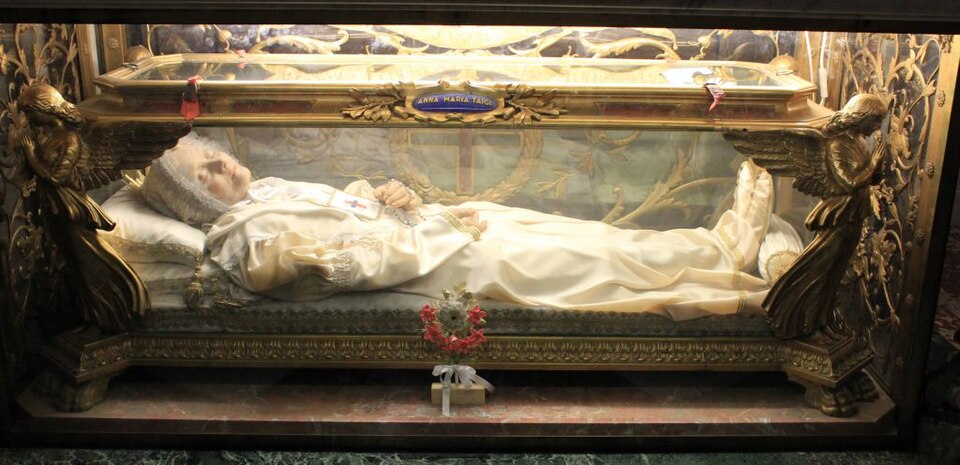
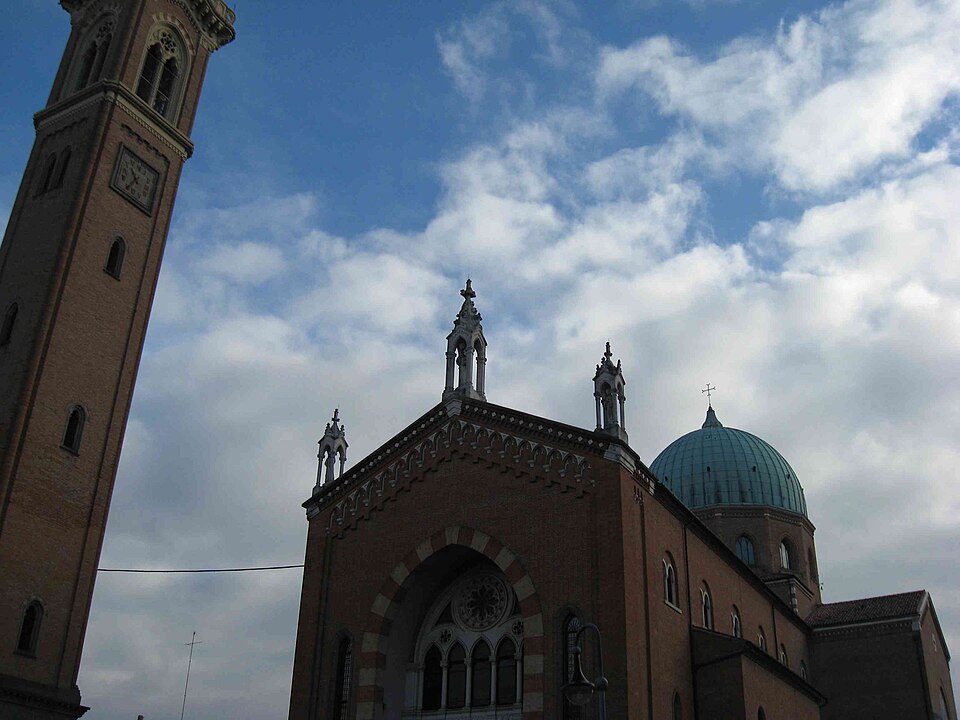
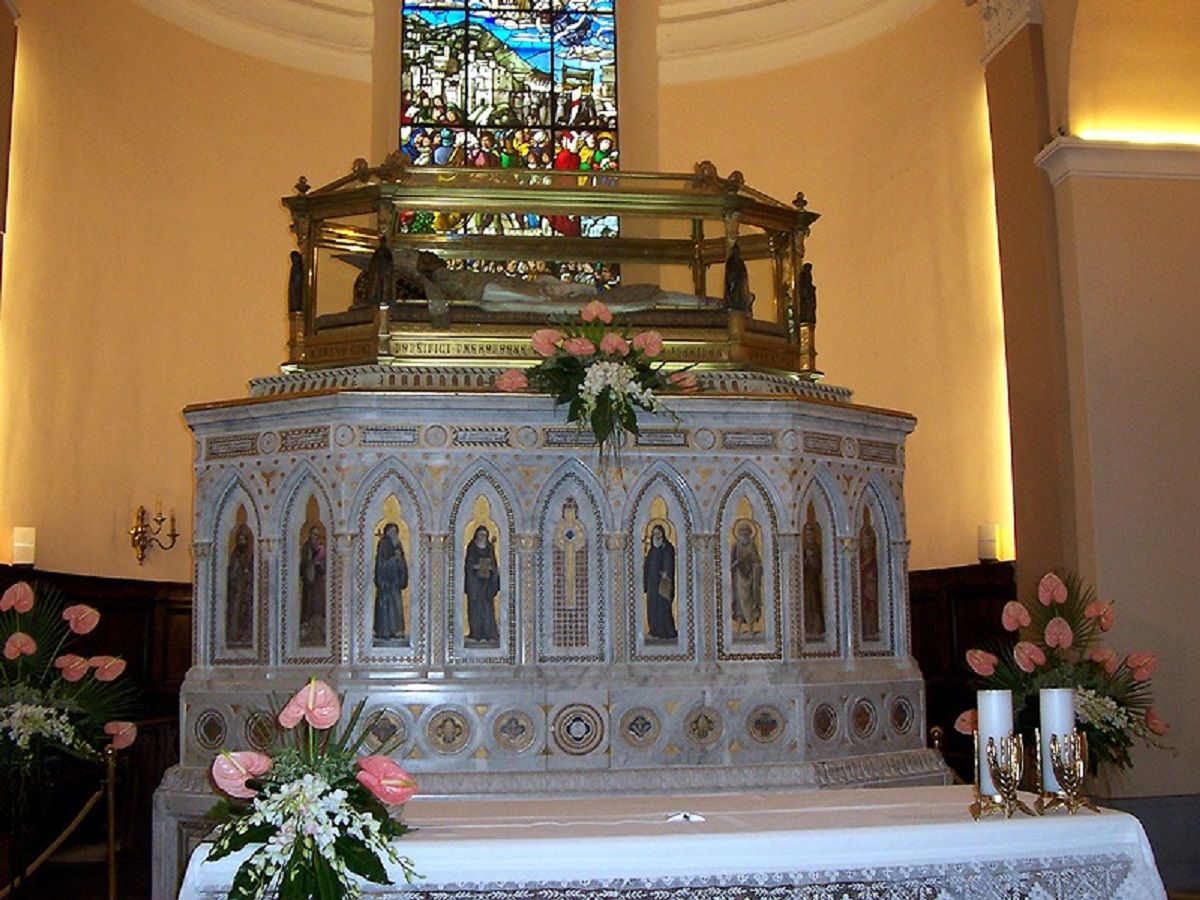
Bishop Ubald passed away peacefully in 1160, after a life of tireless service and profound holiness. His death was met with widespread mourning, and he was immediately venerated as a saint by the local populace. Just over thirty years later, in 1192, his tomb was opened, and his body was discovered to be miraculously preserved, completely incorrupt and emitting a sweet fragrance. This extraordinary discovery confirmed the popular belief in his sanctity and accelerated his canonization by Pope Celestine III. Today, the incorrupt body of Saint Ubald rests in a glass reliquary in the Basilica of Sant'Ubaldo atop Mount Ingino, overlooking Gubbio. The remarkable state of preservation, enduring for over 860 years, stands as a testament to his sanctity and the power of God.
Saint Ubald's lasting legacy is deeply intertwined with the city of Gubbio, where he remains its beloved patron saint. His life of patience, peacemaking, and unwavering faith continues to inspire pilgrims who visit his shrine. The annual "Corsa dei Ceri" (Race of the Candles) on May 15th, the eve of his feast day, is a vibrant and ancient tradition where three massive wooden "Ceri" (candles), each topped with a statue of a saint, are carried in a thrilling race through the streets of Gubbio to the Basilica of Sant'Ubaldo. This fervent celebration, steeped in centuries of devotion, vividly demonstrates the enduring spiritual connection between Saint Ubald and his people, a bond solidified by his miraculous incorruption and his powerful intercession.
Discovery
The remarkable story of Saint Ubald of Gubbio’s incorruptibility begins not at his death in 1160, but some years later, after his canonization in 1192. The initial discovery of his miraculously preserved remains occurred in 1194, a mere two years after he was formally recognized as a saint by Pope Celestine III. The citizens of Gubbio, deeply devoted to their former bishop, decided to translate his body from its original burial place in the cathedral crypt to a more prominent location within the newly consecrated Basilica of Sant'Ubaldo, which was being constructed on Mount Ingino in his honor. This exhumation was a solemn affair, attended by the bishop of Gubbio, the local clergy, and a multitude of the faithful. As the tomb was opened, a hush fell over the assembled crowd. Instead of the skeletal remains typically expected after decades of interment, they beheld the body of Ubald, remarkably intact. His flesh, though somewhat discolored by the passage of time, was still supple, and his garments, though faded, clung to him as if he had only recently passed. The air, far from the stench of decay, was said to be filled with a faint, sweet fragrance, a phenomenon often associated with incorrupt saints. This miraculous preservation was immediately recognized as a sign of divine favor, confirming the sanctity of their beloved bishop. The immediate reaction was one of profound awe and renewed devotion, solidifying Ubald’s status as the patron saint of Gubbio.
Over the centuries, the incorrupt body of Saint Ubald has undergone several examinations and translations, each affirming its extraordinary state of preservation. One significant re-examination occurred in 1300, when the body was again moved to a more elaborate reliquary within the same basilica. During this event, chroniclers recorded that the body remained flexible, a testament to its continued incorruption. Further inspections in the 16th and 17th centuries consistently noted the remarkable integrity of his remains, despite the natural processes of decomposition that should have long since claimed them. While some natural mummification might occur in certain burial conditions, the consistent reports of flexibility and the absence of decay over such an extended period, particularly in the humid climate of central Italy, defy conventional explanation. These subsequent observations, made by various ecclesiastical authorities and medical professionals over hundreds of years, have consistently upheld the initial discovery, noting that while some desiccation has naturally occurred, the overall structure and integrity of the body have remained remarkably intact, far beyond what is scientifically explicable for a body buried for nearly a millennium.
The journey of Saint Ubald’s preservation and display reflects the profound reverence accorded to his incorrupt body. Following its initial translation in 1194, the body was eventually encased in a magnificent silver urn, which itself was housed within a larger, ornate glass casket. This elaborate reliquary allows pilgrims to view the saint’s body while also providing a measure of protection. The current resting place of Saint Ubald is within the Basilica of Sant'Ubaldo, perched majestically atop Mount Ingino, overlooking the city of Gubbio. This prominent location is not merely symbolic; it ensures that the saint remains a constant spiritual beacon for the faithful. The glass casket, designed to maintain a stable environment, is regularly cleaned and inspected by a dedicated team of custodians, ensuring that the body is protected from environmental degradation. The basilica itself is a testament to the enduring devotion to Saint Ubald, and the display of his incorrupt body is the central focus of pilgrimage, drawing countless visitors who seek his intercession and marvel at this enduring miracle.
Beyond the mere physical preservation, the incorrupt body of Saint Ubald has been associated with several remarkable phenomena throughout its long history. As mentioned, during its initial discovery and subsequent translations, a sweet, ethereal fragrance was often reported to emanate from the body, a scent entirely distinct from the odor of decomposition. This “odor of sanctity” is a recurring theme in the accounts of incorrupt saints. Furthermore, historical records indicate instances where the body exhibited a surprising degree of flexibility, even centuries after death, suggesting a preservation that goes beyond simple desiccation. While no modern, rigorous scientific examination has been publicly conducted to confirm all these phenomena, the consistent historical accounts from multiple witnesses over many centuries lend significant weight to these claims. The enduring presence of his remarkably preserved body, defying the natural laws of decay for over 860 years, stands as a powerful and tangible testament to the extraordinary life and holiness of Saint Ubald of Gubbio, continuing to inspire faith and wonder in all who behold it.
Preservation
Body displayed in the Basilica of Sant'Ubaldo on Mount Ingino, Gubbio.
Scientific Analysis
The phenomenon of exceptional post-mortem preservation, often termed incorruption within religious contexts, presents a compelling subject for scientific inquiry. In the case of Saint Ubald of Gubbio, whose body is venerated in the Basilica of Sant'Ubaldo, the reported state of preservation has prompted various observations over centuries, though formal, modern scientific examinations with detailed methodologies are less comprehensively documented than for some other cases. Historical accounts indicate that upon his death in 1160 and subsequent canonization in 1192, his remains were noted for their unusual integrity. While specific records of early medical examinations by named physicians or institutions are scarce from the medieval period, the continuous veneration and public display of his body imply ongoing observation by ecclesiastical authorities and, presumably, local medical practitioners who would have attested to its condition. Later, particularly in the 19th and 20th centuries, when relics became subject to more scrutiny, it is likely that local physicians or anatomists would have informally assessed the body's state during routine inspections or transfers. However, precise dates, names of examiners, and detailed findings from such historical assessments are not widely published in scientific literature, making it difficult to cite specific medical reports. The primary evidence for his incorruption status largely rests on continuous historical tradition and visual inspection by religious and lay observers over many centuries, rather than a series of rigorously documented scientific studies.
The scientific mystery surrounding Saint Ubald's preservation lies in its reported defiance of typical human decomposition processes. Under normal circumstances, following death, the body undergoes a series of predictable changes driven by autolysis (self-digestion by cellular enzymes) and putrefaction (bacterial decomposition). These processes, influenced by factors such as temperature, humidity, and oxygen availability, typically lead to complete skeletalization within a few years, or at most, a few decades, especially in above-ground or non-sealed environments. Gubbio, located in the Umbrian hills of Italy, experiences a Mediterranean climate with warm, dry summers and mild, wet winters. Such conditions, particularly the humidity, are generally conducive to microbial activity and thus to decomposition, rather than preservation. Furthermore, the body has been housed in a basilica, an environment that, while offering some protection, is not typically characterized by the extreme dryness, anoxia, or cold temperatures known to inhibit decay. There are no historical records or physical indications suggesting that Saint Ubald's body underwent any form of deliberate embalming, mummification, or chemical preservation treatments at the time of his death or subsequent interments. The absence of such interventions, coupled with the environmental conditions, makes the reported long-term preservation of soft tissues and overall bodily integrity scientifically perplexing.
Various natural explanations have been proposed for cases of exceptional body preservation, including saponification (the transformation of fatty tissues into adipocere or "grave wax"), natural mummification, or preservation in highly specific environmental conditions such as peat bogs or permafrost. Adipocere formation occurs when fatty tissues hydrolyze in an anaerobic, moist environment, forming a waxy, soap-like substance that can preserve the body's contours. However, adipocere typically results in a waxy, often brittle texture, and does not retain the natural pliability or appearance often attributed to incorrupt bodies. Natural mummification, conversely, requires extremely dry conditions that rapidly desiccate tissues, halting bacterial action. Neither of these conditions perfectly aligns with the reported state of Saint Ubald's body or the typical climate of Gubbio. Skeptics often point to misinterpretations of natural processes, the drying and hardening of tissues over time, or even historical embellishment as potential explanations. They might argue that the term "incorrupt" is often applied to bodies that are merely desiccated or partially preserved, rather than truly defying decomposition. However, for cases like Saint Ubald's, where the preservation is described as remarkably complete and enduring over centuries without apparent artificial means, the existing natural explanations often fall short of fully accounting for the phenomenon, leaving a significant gap in scientific understanding.
From a modern scientific perspective, the case of Saint Ubald of Gubbio, like other reported instances of incorruption, presents an intriguing opportunity for interdisciplinary research. While historical accounts and visual observations provide a basis for study, a comprehensive understanding would necessitate the application of advanced forensic and medical techniques. Non-invasive methods such as multi-detector computed tomography (MDCT) scans could provide detailed anatomical information without disturbing the remains, revealing the internal state of tissues and organs, and identifying any subtle signs of natural preservation processes or historical interventions. Carbon dating of tissue samples, if ethically permissible and minimally invasive, could confirm the age of the remains, while histological and biochemical analyses of minute tissue biopsies could identify the specific molecular changes that have occurred, such as protein cross-linking or lipid alteration, which might contribute to preservation. The absence of such detailed, peer-reviewed scientific studies specifically on Saint Ubald's body leaves many questions unanswered. Such research could potentially reveal novel mechanisms of natural preservation or, alternatively, provide definitive evidence of previously undocumented environmental factors or historical preservation techniques. The ongoing scientific challenge lies in reconciling the historical and religious claims of extraordinary preservation with empirical, verifiable data, thus bridging the gap between faith-based tradition and modern scientific inquiry.
Spiritual Significance
The phenomenon of incorruption, as exemplified by Saint Ubald of Gubbio, stands as a profound theological statement within the Catholic tradition, speaking directly to core doctrines of faith. His preserved body, resting in the Basilica of Sant'Ubaldo, serves as a tangible affirmation of the sacredness of the human body, a "temple of the Holy Spirit" as articulated in 1 Corinthians 6:19. This miraculous preservation transcends mere biological anomaly; it is understood by the Church as a divine sign, a prefigurement of the resurrection of the body, a central tenet of Christian eschatology. While not every saint is granted this extraordinary grace, those who are, like Ubald, offer a powerful witness to the ultimate destiny of the redeemed body, destined for glorification in the new heavens and new earth. Furthermore, his incorruption reinforces the doctrine of the communion of saints, illustrating a vibrant connection between the Church militant on earth and the Church triumphant in heaven. It suggests that the sanctity achieved in life can, in rare instances, leave an indelible mark even upon the physical remains, bridging the temporal and the eternal. The Church interprets such cases not as a reward for personal holiness, but as a divine testament to the sanctity of the individual and a call to deeper faith for the faithful.
Saint Ubald's life was characterized by a unique charism of profound patience and unwavering dedication to his flock, virtues that are profoundly reflected in his incorrupt state. From his early days as a prior of the cathedral chapter, Ubald exhibited remarkable administrative acumen coupled with an intense pastoral zeal. He was known for his humility, often mediating disputes with a gentle yet firm hand, and his charity extended to all, especially the poor and marginalized of Gubbio. His obedience to the Church and his ascetic lifestyle, cultivated from a young age, formed the bedrock of his spiritual discipline. He embodied a practical, pastoral holiness, less concerned with grand theological pronouncements and more with the daily living out of the Gospel in tangible ways. His leadership during times of civic strife, notably his successful efforts to prevent Gubbio from being sacked, showcased not only his diplomatic skills but also a deep trust in divine providence. This blend of spiritual fortitude and practical leadership defined his episcopacy, manifesting a holiness rooted in service and self-sacrifice, a quiet yet powerful witness to the transformative power of Christ's love in the world.
Devotion to Saint Ubald has flourished for centuries, deeply embedded in the cultural and spiritual fabric of Gubbio and beyond. His feast day on May 16th is a highlight of the city's calendar, marked by the famous Corsa dei Ceri, a vibrant and ancient procession where three enormous wooden "Ceri" (candles) are carried through the streets in his honor. This unique tradition, dating back to the 12th century, is a testament to the enduring affection and veneration the people hold for their patron saint. Pilgrims from all walks of life visit the Basilica of Sant'Ubaldo, drawn by the profound presence of his incorrupt body. The experience of standing before his preserved remains is often described as deeply moving, a tangible encounter with a life lived fully for God. While specific prayers and novenas are recited, the very act of pilgrimage and the participation in local traditions serve as powerful expressions of devotion, seeking his intercession for peace, protection, and guidance. His patronage extends to those suffering from nervous disorders, as well as to the city of Gubbio itself, reflecting his historical role as a protector and intercessor for his people.
Numerous miracles have been attributed to Saint Ubald's intercession throughout history, solidifying his reputation as a powerful heavenly advocate. Documented healings, often involving those afflicted with various illnesses, have been recorded over the centuries, offering solace and hope to countless faithful. Beyond physical cures, many have reported profound spiritual conversions and answered prayers after seeking his intercession, testifying to his continued active role in the communion of saints. The incorrupt body itself has been a source of immense spiritual consolation, acting as a visible sign of God's grace and a reminder of the enduring power of holiness. For those grappling with doubt or despair, the sight of his preserved remains can be a powerful affirmation of faith, a tangible link to the transcendent. These miracles, both physical and spiritual, underscore the belief that death does not sever the bond between the saints in heaven and the faithful on earth, but rather transforms it into a channel of divine grace and intercession.
Saint Ubald's enduring message for contemporary Catholics and seekers resonates deeply in a world often characterized by materialism and secularism. His life, marked by humility, service, and profound trust in God, offers a compelling counter-narrative to the relentless pursuit of worldly success and fleeting pleasures. In an age where the spiritual is often relegated to the abstract, his incorruption serves as a tangible bridge between the visible and invisible worlds, a powerful reminder that there is more to existence than what can be perceived by the senses. He challenges modern believers to cultivate a deeper interior life, to prioritize spiritual virtues over material possessions, and to embrace a life of compassionate service. From his example, people today can learn the profound impact of patience in the face of adversity, the strength found in humility, and the transformative power of unwavering faith. His preserved body, a silent yet eloquent witness, continually points beyond itself to the ultimate reality of God's enduring love and the promise of eternal life, inviting all to consider the profound mystery of sanctity and the enduring legacy of a life lived for Christ.
AI summary
A plain-language overview generated from this page's source material. Always verify with primary sources.