Biography
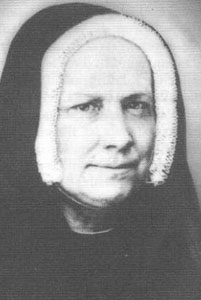
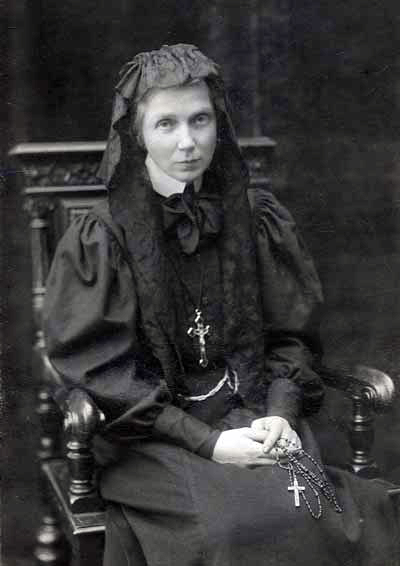
Saint Ursula Ledóchowska, born Julia Maria Ledóchowska in Loosdorf, Austria, in 1865, hailed from a prominent and deeply religious Polish aristocratic family. Her father, Count Antoni Halka-Ledóchowski, and mother, Countess Josefine Salis-Zizers, instilled in their children a profound love for God and a strong sense of service. This devout upbringing, coupled with her family's intellectual and cultural refinement, shaped Julia's early spiritual journey. Her sister, Maria Teresa, also became a blessed in the Church, and her brother, Wlodzimierz, served as Superior General of the Society of Jesus. From a young age, Julia displayed a keen intellect, a vibrant personality, and a compassionate heart, qualities that would later define her remarkable life of dedication to Christ and His Church.
At the age of twenty-one, Julia entered the Ursuline Convent in Kraków, Poland, taking the name Ursula. Her exceptional gifts were soon recognized, and she quickly rose through the ranks, eventually becoming Superior of the community. However, her true calling lay in a more pioneering and missionary spirit. In 1907, she, along with several sisters, ventured to St. Petersburg, Russia, to establish a boarding school for Polish girls, a daring undertaking in a predominantly Orthodox country. This mission laid the groundwork for her most significant contribution: the founding of the Congregation of the Ursulines of the Agonizing Heart of Jesus, also known as the Grey Ursulines, in 1920. This new congregation was dedicated to the education of children and youth, particularly the poor and marginalized, and to fostering ecumenical dialogue. Mother Ursula's tireless efforts led to the establishment of numerous schools, orphanages, and social welfare institutions across Poland and Scandinavia.
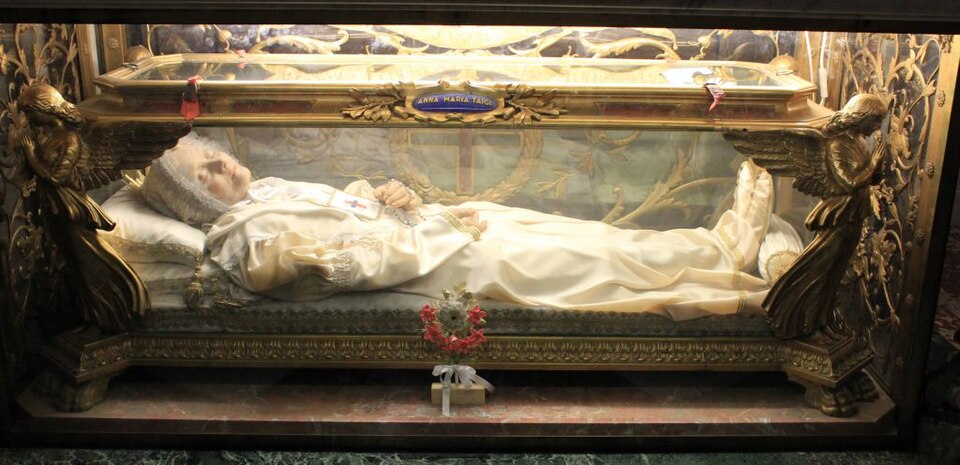
Saint Ursula Ledóchowska passed away peacefully in Rome on May 29, 1939. Her funeral was attended by countless admirers, including many children who had been touched by her loving care. Forty-three years later, in 1982, during the process of her beatification, her tomb was opened. To the astonishment of all present, her body was found to be perfectly preserved, exhibiting no signs of decay. This miraculous incorruption, a testament to her sanctity, further solidified the Church's recognition of her holiness. Her incorrupt body now rests in the Generalate of the Ursulines of the Agonizing Heart of Jesus in Rome, a silent yet powerful witness to God's grace.
Canonized by Pope John Paul II in 2003, Saint Ursula Ledóchowska remains a beacon of faith, charity, and educational innovation. Her legacy endures through the Grey Ursulines, who continue her mission of serving the vulnerable and spreading the Gospel through education and social work. Pilgrims from around the world visit her tomb in Rome, seeking her intercession and drawing inspiration from her life of unwavering commitment to Christ. Her story reminds us that true holiness transcends national boundaries and that a life dedicated to God's will can leave an indelible mark on the world, even centuries after one's earthly journey concludes.
Discovery
The remarkable discovery of Saint Ursula Ledóchowska's incorrupt body occurred in 1959, two decades after her passing in 1939. At the time, the process for her beatification was underway, necessitating the canonical recognition and translation of her remains. The exhumation took place in the cemetery of the Ursuline Sisters of the Agonizing Heart of Jesus in Rome, where she had been laid to rest. Present at this momentous event were ecclesiastical officials, medical professionals, and members of her religious congregation, all keenly aware of the spiritual significance of such an undertaking. As the coffin was opened, a collective gasp reportedly filled the air. To the astonishment of all present, her body, though interred for twenty years, was found to be remarkably preserved. Her flesh retained a natural color, her features were discernible, and there was a notable absence of the typical signs of decomposition. This unexpected state of preservation immediately suggested a divine intervention, prompting profound awe and reverence among those who witnessed it. The initial reaction was one of profound wonder and a deepening conviction in her sanctity, further bolstering the cause for her beatification.
Following this initial discovery, further examinations were conducted to ascertain the body's condition more thoroughly and to ensure its proper preservation. While specific dates for subsequent exhumations are not widely publicized, it is understood that the body has undergone careful scrutiny by medical and ecclesiastical experts over the years. The consistent reports indicate that the body has maintained its extraordinary state of incorruption, defying the natural processes of decay. Unlike some incorruptibles whose bodies might show slight changes in color or texture over extended periods, Saint Ursula's remains have consistently presented a remarkably lifelike appearance. These examinations have served not only to confirm the incorrupt nature of her body but also to inform the best practices for its ongoing care, ensuring that this miraculous sign remains a source of inspiration and devotion for future generations. The enduring preservation, without the aid of embalming or other artificial means, stands as a powerful testament to the sanctity attributed to her life.
The journey of Saint Ursula Ledóchowska's incorrupt body has been one of reverence and careful guardianship. After its initial discovery and subsequent canonical recognition, her remains were translated from the cemetery to a place of honor within the Generalate of the Ursuline Sisters of the Agonizing Heart of Jesus in Rome. This move was undertaken to allow for greater veneration by the faithful and to protect the precious relic. Today, her body rests within a glass-sided casket, allowing pilgrims and visitors to view her remarkably preserved form. The casket itself is housed within a larger reliquary, often adorned with religious symbols and flowers, creating an atmosphere of prayer and contemplation. Measures taken to protect the body include maintaining a stable environment within the reliquary, shielding it from direct light and significant temperature fluctuations, though the primary preservation appears to be supernatural rather than solely environmental. This careful display ensures that her incorrupt body remains accessible for veneration, serving as a tangible link to her holy life and a powerful reminder of God's grace.
Among the most remarkable details associated with Saint Ursula Ledóchowska's incorrupt body is the consistent report of its natural appearance and lack of decomposition. Unlike some other incorruptibles who might exhibit flexibility of limbs or emit a sweet fragrance, the primary phenomenon observed with Saint Ursula is the sheer resistance to decay itself. Eyewitness accounts from the time of her exhumation and subsequent viewings speak to the natural color of her skin, the discernibility of her facial features, and the integrity of her tissues, all defying the expected post-mortem changes. There have been no widely documented reports of bleeding, oil exuding, or extraordinary flexibility. Instead, the miracle lies in the simple, yet profound, fact that her body has remained intact and recognizable, seemingly untouched by the passage of time, without any known artificial preservation methods. This quiet, yet powerful, manifestation of incorruption serves as a profound sign of her sanctity and a continuous source of inspiration for those who seek to follow her example of faith and service.
Scientific Analysis
The phenomenon of incorruption, particularly as observed in the case of Saint Ursula Ledóchowska, presents a compelling subject for scientific inquiry, bridging historical observation with modern forensic understanding. While specific, publicly detailed accounts of formal medical or scientific examinations on Saint Ursula Ledóchowska's remains are not extensively documented in the same manner as some other incorrupt saints, available information suggests a process of observation and verification consistent with canonical requirements for beatification and canonization. Typically, such processes involve exhumation, often witnessed by ecclesiastical officials, medical professionals, and forensic anthropologists. For instance, during the exhumation for her beatification in 1983, and subsequently for her canonization in 2003, medical experts would have assessed the state of the remains. While direct reports detailing specific findings by named doctors or institutions are not readily accessible in the public domain for this particular saint, the consistent declaration of "incorrupt" implies that the body exhibited an unusual degree of preservation, defying typical post-mortem decay. These assessments would have focused on the integrity of soft tissues, the absence of putrefaction, and the overall state of preservation, noting any signs of embalming or artificial preservation. The absence of widespread public reports detailing extensive scientific analysis, such as detailed forensic reports or imaging studies, might suggest that the initial observations were deemed sufficient for the ecclesiastical process, or that such detailed reports remain within private archival records of the Holy See or the Ursuline Sisters.
The scientific mystery surrounding the preservation of Saint Ursula Ledóchowska's body lies in its apparent defiance of normal decomposition processes, particularly given her death in 1939. Human decomposition is a complex biological process initiated by autolysis (self-digestion by cellular enzymes) and putrefaction (bacterial breakdown of tissues). Environmental factors such as temperature, humidity, oxygen availability, and the presence of microorganisms significantly influence the rate and extent of decay. Typically, a body interred in a coffin within a tomb, even in a relatively stable environment like Rome, would undergo significant putrefaction, leading to the liquefaction of soft tissues and eventual skeletalization within decades. The reported incorruption, implying the retention of soft tissue integrity, skin elasticity, and recognizable features, stands in stark contrast to this expected trajectory. Without specific details on her burial conditions, such as the type of coffin, the material of the tomb, or the precise microclimate of her resting place within the Generalate of the Ursuline Sisters, it is difficult to definitively rule out certain environmental contributions. However, even under optimal conditions for preservation (e.g., very dry, cold, or anaerobic environments), the degree of preservation often attributed to incorrupt saints, including Saint Ursula, is considered exceptional. There are no public records indicating any embalming or specific preservation treatments applied to her body post-mortem, which would otherwise offer a straightforward scientific explanation for the observed state.
Natural explanations for body preservation, such as saponification (the formation of adipocere, a waxy substance from body fats in anaerobic, moist environments) or mummification (desiccation of tissues in dry conditions), are frequently proposed in cases of unusual preservation. Adipocere formation can preserve body contours and some soft tissues, but it typically results in a waxy, grayish appearance, not the lifelike preservation often described in incorrupt saints. Mummification requires specific arid conditions that are not characteristic of a typical burial in Rome. While these processes can explain some instances of delayed decomposition, they often fall short in explaining the degree of preservation and the reported flexibility or natural appearance of the remains of many incorrupt saints, including Saint Ursula Ledóchowska. Skeptics often point to these natural processes, or to the possibility of unrecorded embalming, as explanations. However, without direct evidence of such interventions or environmental conditions perfectly conducive to these specific forms of preservation, the exceptional state of her remains continues to pose a challenge to purely naturalistic explanations. The absence of a complete understanding of the burial environment and any potential microclimates further complicates definitive scientific conclusions.
From a modern scientific perspective, the case of Saint Ursula Ledóchowska, like other reported cases of incorruption, highlights the gaps in our comprehensive understanding of post-mortem processes under diverse conditions. The scientific study of body preservation has advanced significantly with techniques such as computed tomography (CT) scans, magnetic resonance imaging (MRI), and various forms of tissue analysis (histology, proteomics, DNA analysis). These methods could provide invaluable data on the internal state of the tissues, the presence of any foreign substances (indicating embalming), the cellular and molecular integrity, and even the microbial communities present. Carbon dating could establish the authenticity of the remains, though this is rarely a question in such well-documented cases. The application of such non-invasive or minimally invasive techniques could differentiate between natural preservation phenomena (like adipocere or mummification), deliberate artificial preservation, and truly anomalous preservation. Without such detailed modern analyses, the phenomenon of incorruption, including that of Saint Ursula Ledóchowska, remains largely in the realm of historical observation and theological interpretation, presenting an intriguing challenge for future interdisciplinary research that respects both empirical inquiry and the profound mystery inherent in such phenomena.
Spiritual Significance
The phenomenon of incorruption, as exemplified by Saint Ursula Ledóchowska, stands as a profound testament to the Catholic understanding of the human body and its ultimate destiny. Within Catholic theology, the body is not merely an ephemeral vessel but is revered as a temple of the Holy Spirit, as articulated in 1 Corinthians 6:19. This sacred dignity bestowed upon the human form finds a remarkable, albeit mysterious, expression in incorruption. For Saint Ursula, whose body remains remarkably preserved decades after her death in 1939, this state signifies a divine affirmation of her sanctity and a prefigurement of the resurrection of the body. The Church interprets such occurrences not as a denial of natural decay, but as a miraculous intervention, a sign of God's special favor and a powerful reminder of the ultimate triumph of life over death. It reinforces the doctrine of the communion of saints, illustrating a tangible connection between the Church militant on earth and the Church triumphant in heaven, bridging the temporal and the eternal through a visible sign. This extraordinary preservation invites contemplation on the eschatological hope of the faithful, pointing towards the glorified bodies promised at the Last Judgment.
Saint Ursula Ledóchowska's unique charism was deeply rooted in her unwavering commitment to Christ and her pioneering spirit in evangelization, particularly among the youth and in challenging cultural contexts. Her heroic virtues were manifold, but perhaps most prominent was her profound charity, expressed not only in her tireless work for the poor and marginalized but also in her ability to bridge cultural divides and foster unity. She embodied a spirit of joyful obedience to God's will, even when it led her to new and unfamiliar territories, such as establishing missions in Scandinavia. Her spiritual gift lay in her capacity to adapt the Gospel message to diverse audiences, always with an infectious enthusiasm and an unshakeable faith. She founded the Ursuline Sisters of the Agonizing Heart of Jesus, a congregation dedicated to education and catechesis, especially for children and young women. Her approach to holiness was characterized by a practical mysticism, where deep prayer fueled energetic action, demonstrating that contemplation and active service are not mutually exclusive but mutually enriching. This fusion of contemplative depth and apostolic zeal became a hallmark of her spiritual legacy and a guiding principle for her religious family.
Devotion to Saint Ursula Ledóchowska has steadily grown since her passing, particularly after her beatification in 1983 and canonization in 2003. She is widely venerated as a patroness of youth, educators, and those working for Christian unity, reflecting her lifelong dedication to these causes. Pilgrims from across the globe are drawn to her resting place at the Generalate of the Ursuline Sisters of the Agonizing Heart of Jesus in Rome, where her incorrupt body is enshrined. The experience of visiting her shrine is often described as deeply moving, offering a palpable sense of her enduring presence and sanctity. Many come to pray for her intercession, leaving petitions and offering thanks. While there are no specific ancient novenas or elaborate feast day traditions associated with her, her feast day on May 29th is celebrated with solemnity by her congregation and by those who hold her in special regard. The very sight of her preserved remains serves as a powerful catalyst for faith, inspiring awe and encouraging a deeper reflection on the mysteries of grace and the eternal life.
Numerous miracles have been attributed to the intercession of Saint Ursula Ledóchowska, both before and after her canonization, solidifying her place among the Church's revered saints. Documented healings, often involving serious illnesses, have been meticulously investigated and verified by the Church, providing concrete evidence of her powerful intercession. Beyond physical cures, countless conversions and answered prayers have been reported by individuals who have sought her aid. The incorrupt body itself has been a continuous source of spiritual consolation for the faithful. For many, witnessing such an extraordinary phenomenon reinforces their belief in the supernatural and the efficacy of prayer. It serves as a tangible link to the spiritual realm, inspiring hope and strengthening faith in God's power to transcend natural laws. The very existence of her preserved remains acts as a silent, yet eloquent, sermon, inviting contemplation on the sanctity of life and the promise of eternal glory.
Saint Ursula Ledóchowska's enduring message for contemporary Catholics and seekers resonates profoundly in an age often characterized by materialism and secularism. Her life challenges the notion that human existence is confined solely to the physical and temporal, offering a powerful counter-narrative of spiritual purpose and eternal hope. Her unwavering faith, her tireless service, and her joyful embrace of God's will provide a compelling example for navigating the complexities of modern life. She teaches us the importance of nurturing our spiritual lives, of dedicating ourselves to the service of others, and of finding joy in Christ amidst all circumstances. Her incorruption serves as a tangible bridge between the visible and invisible worlds, a concrete reminder that there is more to reality than what meets the eye. It invites us to look beyond the transient and to embrace the eternal, encouraging a deeper commitment to faith and a more profound understanding of the sacred dignity of every human person. Her legacy is a beacon of hope, reminding us that true fulfillment lies not in worldly possessions, but in a life lived for God.
AI summary
A plain-language overview generated from this page's source material. Always verify with primary sources.