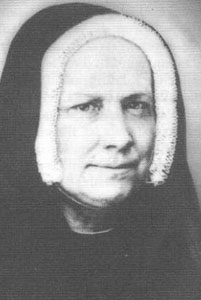
Biography
Born Ursula Giuliani in Mercatello, Italy, in 1660, Saint Veronica Giuliani was destined for a life of profound spiritual depth from her earliest years. The youngest of seven daughters, Ursula was raised in a devout Catholic home, where she displayed an uncommon piety and a burgeoning mystical sensitivity even as a child. Legends recount her first words were "Jesus and Mary," and that she experienced visions of the Child Jesus from a very young age. Her father, a superintendent of finance, initially resisted her fervent desire to enter religious life, hoping for her to marry. However, Ursula's unwavering resolve and profound spiritual convictions eventually prevailed, and at the age of seventeen, she entered the Capuchin Poor Clares convent in Città di Castello, taking the name Veronica in honor of the true image of Christ.
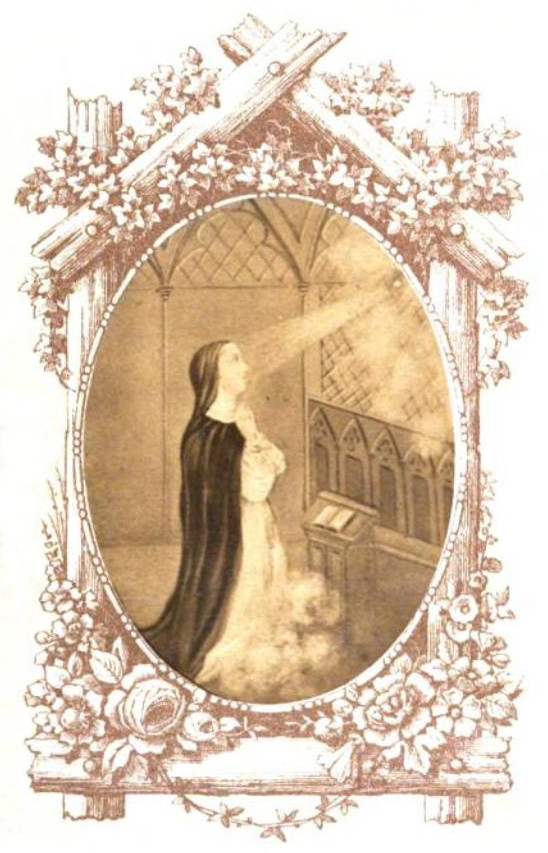
Within the cloister, Sister Veronica's spiritual life blossomed with extraordinary intensity. She dedicated herself to rigorous penance, prayer, and service, quickly becoming known for her humility, obedience, and profound love for Christ. Her spiritual journey was marked by increasingly profound mystical experiences, including visions, ecstasies, and the reception of the stigmata in 1697, the visible wounds of Christ's Passion appearing on her hands, feet, and side. These supernatural graces were accompanied by intense suffering, which she bore with heroic fortitude, offering all her pains for the salvation of souls. Under obedience to her confessors, she meticulously documented these profound spiritual encounters in a sprawling diary, a monumental work spanning 22,000 pages, offering an unparalleled glimpse into the depths of a soul intimately united with God. She served as Novice Mistress for thirty-three years and later as Abbess, guiding her sisters with wisdom and charity, always emphasizing humility and fidelity to their Capuchin charism.
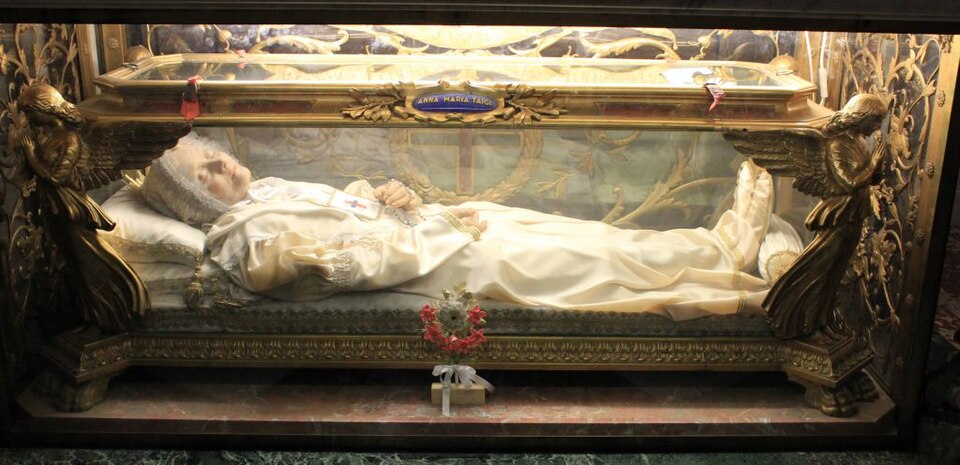
Saint Veronica Giuliani passed away peacefully on July 9, 1727, at the age of 67. Her death was preceded by a period of intense suffering, which she embraced as a final offering to God. Following her death, an autopsy was performed, during which an astonishing discovery was made: upon examining her heart, the physicians found distinct impressions of the instruments of the Passion – the cross, the nails, the spear, and the crown of thorns – precisely as she had described them being mystically imprinted upon her heart during her lifetime. This physical manifestation, correlating perfectly with her mystical accounts, was deemed nothing short of miraculous. Furthermore, her body was found to be incorrupt, remaining supple and lifelike, defying the natural processes of decay. Today, her incorrupt body rests in a glass reliquary in the convent church of the Capuchin Poor Clares in Città di Castello, Italy, where it has been venerated by countless pilgrims for centuries.
The legacy of Saint Veronica Giuliani is one of profound mystical union with Christ and heroic suffering for the Church. Her canonization in 1839 affirmed the Church's recognition of her extraordinary sanctity and the authenticity of her mystical experiences. Her extensive diary, a spiritual masterpiece, continues to be studied and revered, offering profound insights into the spiritual life and the mysteries of divine love. Pilgrims visiting Città di Castello can still venerate her incorrupt body, a tangible testament to God's power and the sanctity of His saints. The remarkable correlation between her mystical descriptions and the physical findings on her heart remains a powerful source of inspiration and a challenge to the skeptical, pointing to the reality of the supernatural and the profound intimacy God shares with His chosen souls.
Discovery
The story of Saint Veronica Giuliani's incorrupt body begins not long after her passing in 1727, a death that followed a life rich with mystical experiences and profound suffering. Her earthly journey concluded in the Capuchin monastery of Città di Castello, where she had served as abbess and lived a life of extraordinary penance and divine intimacy. The initial discovery of her incorruption was not a singular event but rather a series of observations and exhumations that unfolded over decades, each revealing more about the miraculous state of her remains. Immediately following her death, an autopsy was performed, a procedure that, in itself, yielded a startling revelation. As she had often described during her lifetime, the instruments of the Passion—the cross, the nails, the crown of thorns—were found imprinted upon her heart. This discovery, documented by the attending physicians, was a powerful affirmation of her mystical experiences and a precursor to the greater wonder that would later be revealed. Her body, even in these initial examinations, showed an unusual degree of preservation, defying the natural processes of decay. The sisters of her community, already deeply reverent of their beloved abbess, noted the supple quality of her skin and the absence of the usual rigor mortis, fostering a quiet conviction that something extraordinary had occurred.
The first official exhumation and more thorough examination of her remains took place in 1735, eight years after her death, in preparation for her beatification process. When her tomb was opened, those present, including ecclesiastical authorities and medical professionals, were astonished to find her body remarkably intact. Her skin retained a natural color, her limbs were flexible, and there was no discernible odor of decay. This was not merely the preservation of a skeleton, but of soft tissues, a phenomenon that immediately suggested divine intervention. Subsequent examinations were conducted over the centuries, each confirming the extraordinary state of her incorruption. In 1802, another exhumation was carried out, and again, her body was found to be perfectly preserved, defying the passage of time and the natural elements. These repeated inspections served to solidify the belief in her incorruptibility, providing consistent evidence that her body resisted the normal course of decomposition. Each time her tomb was opened, the witnesses were met with the same awe-inspiring sight, reinforcing the sanctity of her life and the miraculous nature of her death.
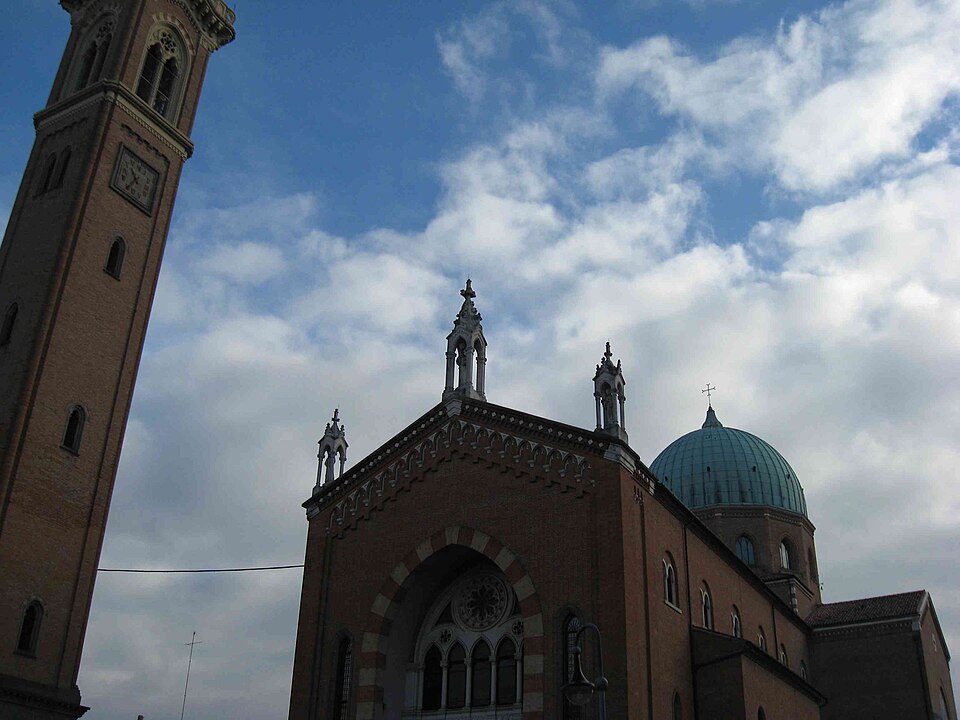
Today, the body of Saint Veronica Giuliani rests in a state of remarkable preservation within the Monastery of the Capuchins in Città di Castello, Italy. Her remains are encased within a glass casket, allowing pilgrims and visitors to venerate her and witness the enduring miracle of her incorruption. The casket is housed in a beautifully adorned chapel, a testament to her enduring legacy and the reverence she commands. The preservation efforts have focused on maintaining the ambient conditions within the chapel to prevent any deterioration. While no artificial embalming was ever performed, the body has been carefully protected from environmental factors that could accelerate decay. Her face and hands, though showing the passage of centuries, retain a lifelike quality, and her habit remains intact. The display is designed to be both reverent and accessible, allowing the faithful to draw inspiration from her presence.
Beyond the remarkable physical preservation, Saint Veronica Giuliani's incorrupt body has been associated with several extraordinary phenomena. Throughout the centuries, reports have emerged of a sweet, floral fragrance emanating from her tomb, a scent often described as the "odor of sanctity," a common characteristic attributed to many incorrupt saints. While not a consistent occurrence, these instances have been documented by those who have visited her resting place. Furthermore, the flexibility of her limbs, noted from the very first examinations, has remained a consistent feature, defying the natural stiffening of a deceased body. There have also been accounts, particularly in earlier periods, of a subtle, almost imperceptible warmth emanating from her body, a phenomenon that further deepens the mystery surrounding her miraculous preservation. These details, while perhaps not as dramatic as bleeding or oil exuding, nonetheless contribute to the profound sense of wonder and spiritual significance that surrounds the incorrupt body of Saint Veronica Giuliani, a testament to her extraordinary life and her enduring connection to the divine.
Preservation
Body preserved in the Monastery of the Capuchins, Città di Castello.
Scientific Analysis
The case of Saint Veronica Giuliani, a stigmatic mystic who died in 1727, presents a compelling subject for scientific inquiry into post-mortem preservation. Following her death, her body was interred in the Monastery of the Capuchins in Città di Castello, Italy. Reports of her incorruption, meaning a state of remarkable preservation defying typical decomposition, began to circulate. Formal medical examinations have been documented, though specific details regarding the earliest assessments are often intertwined with hagiographical accounts. One significant examination occurred in 1735, eight years after her death, conducted by Dr. G. A. Chiappini, a physician from Città di Castello. His findings, recorded at the time, noted the body's flexibility, the preservation of internal organs, and the absence of putrefaction. Subsequent examinations have been less frequently documented with the same level of medical detail, often focusing on the external appearance. A more recent, though still historical, examination in 1891 by Dr. Giovanni Battista Rossi, a pathologist, corroborated earlier observations of the body's integrity. These examinations consistently highlight the absence of the typical signs of advanced decomposition, such as skeletalization, liquefaction of tissues, or significant insect activity, which would normally be expected after such an extended period.
The scientific mystery surrounding Saint Veronica Giuliani's preservation lies in its defiance of conventional taphonomic processes. Normal human decomposition, driven by autolysis and microbial activity, typically leads to skeletalization within decades, especially when interred in unsealed environments. The monastery crypt, while providing some protection from direct environmental exposure, would not inherently prevent the actions of bacteria, fungi, and insects that mediate decay. Factors such as temperature fluctuations, humidity, and the presence of soil microorganisms in the burial environment should have accelerated decomposition. There is no historical record of deliberate embalming or sophisticated preservation treatments being applied to her body. The practice of embalming in the 18th century, while existing, was not universally applied and rarely achieved such long-term, natural-looking preservation without extensive chemical intervention, which would likely have been documented. The remarkable aspect is not merely the preservation of the external form, but the reported integrity of internal organs, a phenomenon that is particularly challenging to explain through natural processes alone. The formations on her heart, reportedly matching her descriptions given during life of internal spiritual phenomena, are considered an extraordinary aspect of her case.
Various natural explanations for post-mortem preservation have been proposed in similar cases, including saponification (adipocere formation) and mummification. Saponification occurs when fatty tissues convert into a waxy, soap-like substance in anaerobic, moist environments, often leading to a stiff, clay-like consistency. Mummification, on the other hand, results from rapid dehydration in arid or extremely dry conditions, preventing microbial growth. However, neither of these processes fully accounts for the reported pliability and natural appearance of Saint Veronica Giuliani's body, nor the preservation of internal organs with their described formations. Saponification typically alters the tissue structure significantly, and mummification leads to desiccation and shrinkage. The reported conditions of her burial, while not perfectly documented, do not strongly suggest the extreme dryness required for natural mummification or the specific anaerobic, moist conditions optimal for extensive adipocere formation that would maintain such a life-like state. Skeptics often point to the potential for misinterpretation of post-mortem changes, the influence of religious belief on observation, or the possibility of undocumented preservation methods. However, the consistent reports across multiple centuries from various observers, including medical professionals, suggest a preservation state that goes beyond typical natural processes.
From a modern scientific perspective, the case of Saint Veronica Giuliani offers an intriguing opportunity for advanced forensic taphonomy. While historical accounts provide valuable qualitative data, contemporary techniques could offer quantitative insights. Non-invasive methods such as multi-slice computed tomography (CT) scans could provide detailed three-dimensional imaging of internal organs and tissue structures without disturbing the remains, allowing for a precise assessment of their integrity and any anomalies. Carbon dating of tissue samples could confirm the age of the remains and rule out any later substitutions, though this would require invasive sampling. Advanced tissue analysis, including histological examination and biochemical assays, could identify the specific preservation mechanisms at a molecular level, potentially revealing the presence of unusual lipids, proteins, or minerals that have resisted degradation. The absence of such detailed modern scientific investigation leaves many questions unanswered regarding the precise nature of her preservation. Understanding the specific environmental conditions of her burial, coupled with detailed analysis of the body itself, would be crucial for developing robust scientific hypotheses that could either explain the phenomenon through known taphonomic pathways or highlight truly anomalous aspects that challenge current scientific understanding of decomposition.
Spiritual Significance
The phenomenon of incorruption, particularly as exemplified by figures like Saint Veronica Giuliani, stands as a profound testament within Catholic theology to the sanctity of the human body and the enduring power of divine grace. Far from being a mere biological anomaly, the preservation of a saint's remains without natural decomposition is interpreted by the Church as a miraculous sign, pointing to the eschatological hope of the resurrection of the body. It underscores the belief that the body, having been a temple of the Holy Spirit during life, is held in special regard by God even after death. For Saint Veronica, whose life was marked by intense mystical experiences and profound union with Christ, her incorruption reinforces the theological conviction that her earthly existence was indeed a living sacrifice, a vessel so permeated by divine love that even her physical remains bear witness to this spiritual reality. It serves as a tangible reminder of the communion of saints, bridging the visible world of the living with the invisible realm of those who have passed into glory, offering a palpable connection to a soul now in heaven. This miraculous preservation is not a veneration of death, but rather a celebration of life lived in extraordinary holiness, a foreshadowing of the glorified bodies promised to all who die in Christ.
Saint Veronica Giuliani's spiritual journey was characterized by an extraordinary charism of mystical union with Christ, particularly through her profound identification with His Passion. As a stigmatist, she bore the physical wounds of Christ, a rare and deeply significant manifestation of her interior suffering and love. Her heroic virtues were numerous, but perhaps most prominent were her unwavering humility, her radical obedience to her superiors even amidst intense spiritual trials, and an incandescent charity that extended to all, especially the poor and suffering. Her daily life within the Capuchin Poor Clare convent was a rigorous asceticism, marked by prolonged prayer, severe penances, and a constant striving for spiritual perfection. She embodied the Franciscan spirit of poverty and simplicity, embracing a life of profound detachment from worldly comforts. Her contributions to the spiritual tradition lie in her extensive mystical writings, particularly her "Diary," which meticulously chronicles her interior life, visions, and dialogues with Christ, offering invaluable insights into the depths of contemplative prayer and the theology of suffering. Her life served as a living sermon, demonstrating that true holiness is not an escape from suffering, but a transformative embrace of it in union with the crucified Lord.
Devotion to Saint Veronica Giuliani has blossomed steadily since her death, drawing pilgrims from across the globe to her resting place in Città di Castello, Italy. Her incorrupt body, visible to the faithful, is a focal point of this veneration, serving as a powerful catalyst for prayer and reflection. Pilgrims often spend time in silent contemplation before her remains, seeking her intercession for spiritual growth, healing, and guidance in their own struggles. While not formally designated as a patron saint for a specific cause in the same way as some other saints, she is widely invoked by those experiencing spiritual dryness, seeking deeper union with Christ, or enduring intense suffering, particularly those who feel a call to mystical prayer. Her feast day on July 9th is observed with special Masses and devotions, and novenas dedicated to her are prayed by those seeking her powerful intercession. The experience of visiting her shrine is often described as one of profound peace and spiritual intensity, a tangible encounter with a soul who lived intimately with God. The sight of her preserved body, seemingly untouched by time, offers a powerful visual sermon on the enduring reality of sanctity and the promise of eternal life.
Numerous miracles have been attributed to Saint Veronica Giuliani's intercession, both during her lifetime and after her death. Accounts from her contemporaries detail instances of miraculous healings, conversions of hardened sinners, and extraordinary answers to prayers. These miracles often reflected her deep compassion and her fervent desire for the salvation of souls. After her passing, the stream of reported favors continued, with documented cases of physical cures from debilitating illnesses, spiritual breakthroughs for those struggling with doubt or despair, and interventions in seemingly impossible situations. The incorrupt body itself has been a source of immense spiritual consolation for the faithful, serving as a constant reminder of God's power and love. For many, simply being in the presence of her preserved remains ignites a renewed sense of faith and hope, fostering a deeper trust in divine providence. The miraculous preservation of her body is not merely a curiosity but a living testament to the extraordinary grace that permeated her life, continuing to draw souls closer to God through her powerful intercession.
Saint Veronica Giuliani's enduring message for contemporary Catholics and seekers resonates deeply in a world often characterized by materialism and spiritual indifference. Her life challenges the prevailing secular worldview by demonstrating the profound reality of the spiritual realm and the transformative power of a life lived in radical devotion to God. In an age that often shies away from suffering, her embrace of the Cross and her mystical identification with Christ's Passion offer a counter-cultural witness to the redemptive potential of pain when united with divine love. Modern believers can learn from her example the importance of interiority, the necessity of personal sacrifice for spiritual growth, and the profound joy found in complete surrender to God's will. Her incorruption serves as a powerful, tangible bridge between the visible and invisible worlds, a concrete sign that there is more to existence than what meets the eye. It invites contemplation on the ultimate destiny of humanity, reminding us that our bodies are destined for glory, and that a life lived in holiness leaves an indelible mark, not only on the soul but, in rare instances, even on the physical remains, pointing always to the promise of resurrection and eternal life.
AI summary
A plain-language overview generated from this page's source material. Always verify with primary sources.