Biography
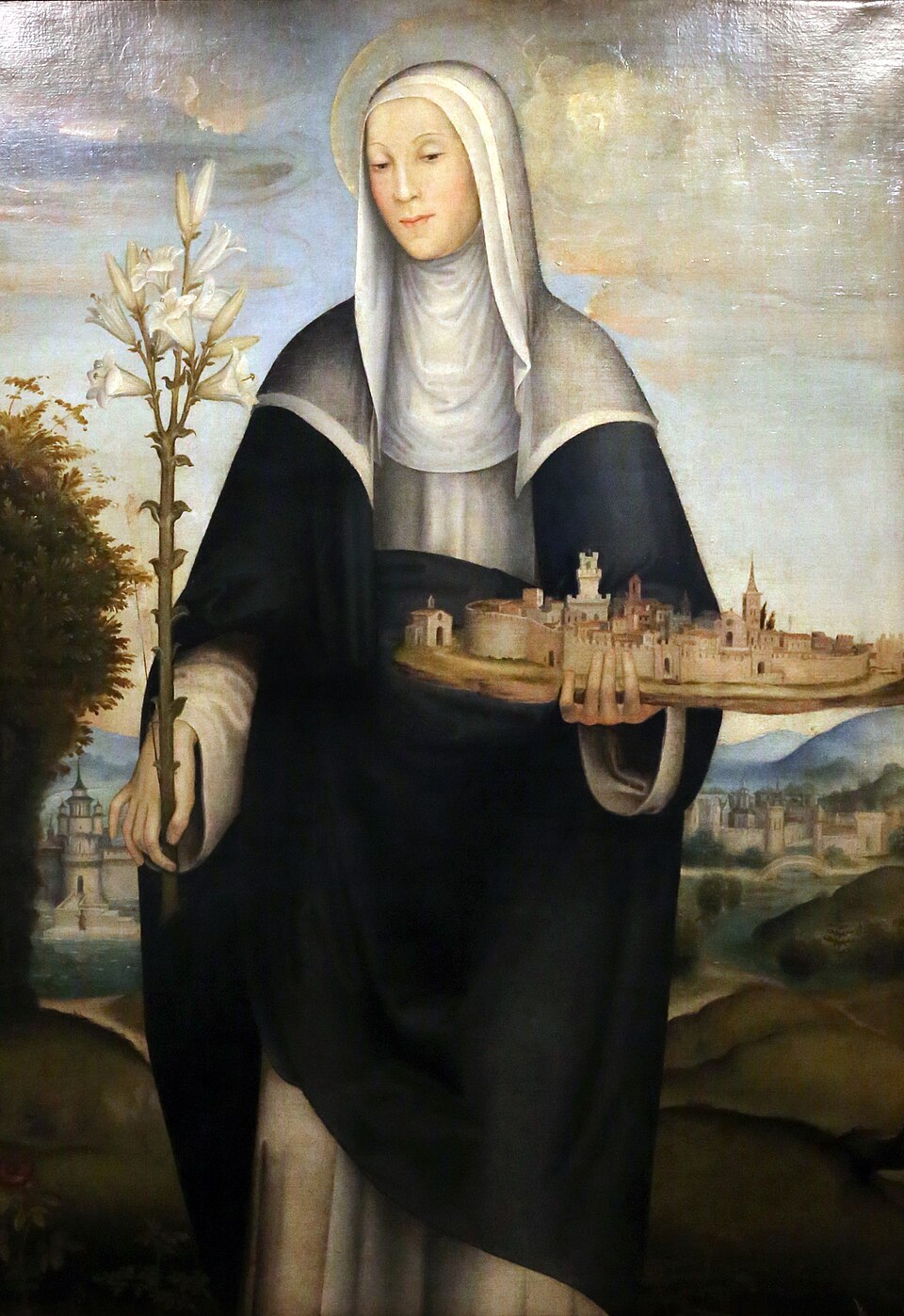
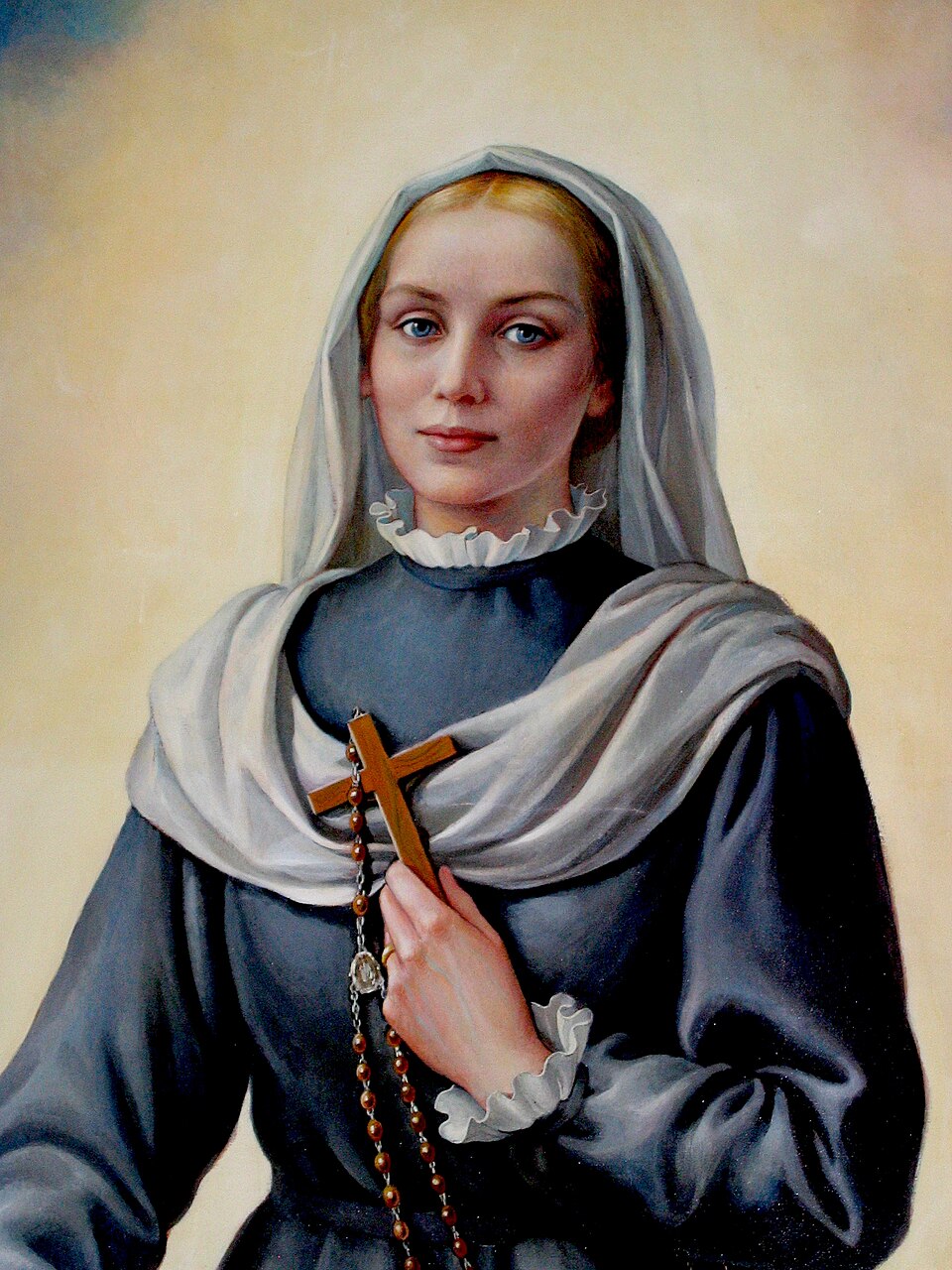
Saint Virginia Centurione Bracelli, born in Genoa, Italy, in 1587, was a woman whose life was a testament to unwavering faith and profound charity, even amidst the opulence of her noble birth. The daughter of Giorgio Centurione, Doge of Genoa, and Lelia Spinola, Virginia was raised in an environment of privilege. However, her heart yearned for a life dedicated to God from a young age, a desire that was initially thwarted by her family's insistence on an arranged marriage. At the tender age of fifteen, she was wed to Gaspare Grimaldi Bracelli, a union that, though initially difficult due to her husband's gambling and profligate ways, ultimately deepened her spiritual resolve. She bore him two daughters, Lelia and Isabella, and it was during this period that her compassionate nature began to blossom, as she cared for her ailing husband with unwavering devotion until his early death in 1607, leaving her a widow at just twenty years old.
Following her husband's death, Virginia steadfastly refused all proposals for a second marriage, dedicating herself entirely to prayer, penance, and works of mercy. She lived a life of profound austerity, embracing a simple habit and devoting her considerable resources and energy to the care of the poor, the sick, and the abandoned. Her charitable endeavors were particularly focused on young women and girls, for whom she established a refuge known as the "House of Refuge of Monte Calvario." This initiative, which began by housing fifteen destitute girls, quickly grew, eventually leading to the foundation of two religious congregations: the Sisters of Our Lady of Refuge on Mount Calvary (Brignoline Sisters) and the Daughters of Our Lady of Mount Calvary. These communities were dedicated to the corporal and spiritual works of mercy, providing education, vocational training, and spiritual guidance to those in need, profoundly impacting the social fabric of Genoa.
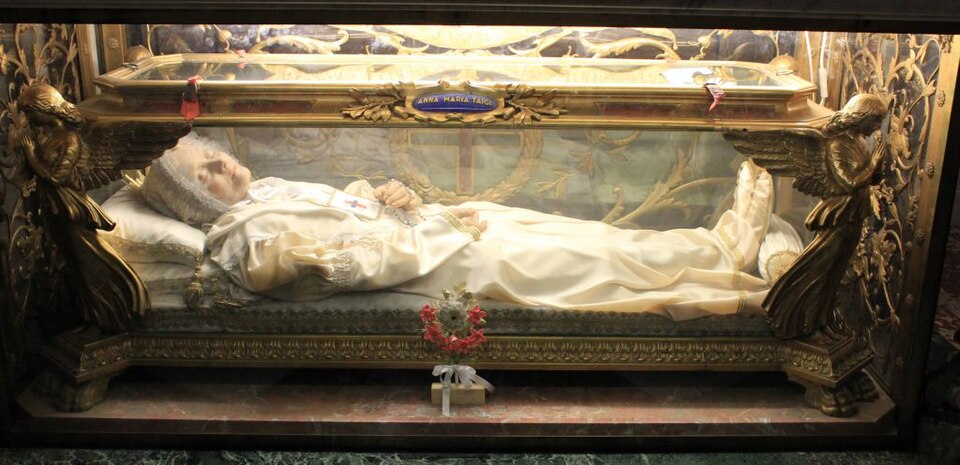
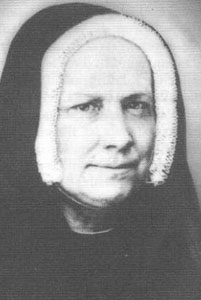
Saint Virginia Centurione Bracelli passed away in 1651, her life a beacon of Christian charity and humility. Her reputation for sanctity was immediate and widespread, and her body was interred in the church of Santa Maria della Pace. Over two centuries later, in 1801, during a reinterment, her body was discovered to be incorrupt, a miraculous preservation that further attested to her holy life. Today, her incorrupt body rests in the motherhouse of the Brignoline Sisters in Genoa, a tangible reminder of God's favor and her extraordinary virtue. The body, preserved in a remarkably lifelike state, is venerated by pilgrims who come to seek her intercession and draw inspiration from her example.
The lasting legacy of Saint Virginia Centurione Bracelli is profound, extending far beyond the city of Genoa. Her two religious congregations, the Brignoline Sisters and the Daughters of Our Lady of Mount Calvary, continue her mission of charity and education in various parts of the world, serving the poor and vulnerable. She was beatified by Pope John Paul II in 1985 and canonized by him in 2003, officially recognizing her heroic virtues and her powerful intercession. For pilgrims today, visiting her incorrupt body in Genoa offers a unique opportunity to connect with a saint whose life exemplified radical charity and unwavering faith, a woman who, despite her noble origins, chose to walk the path of humility and service, leaving an indelible mark on the Church and the world.
Discovery
The remarkable story of Saint Virginia Centurione Bracelli's physical incorruptibility began to unfold many years after her death in 1651. Her initial burial was in the church of Santa Maria della Cella in Sampierdarena, a district of Genoa, where she had founded her first charitable institutions. It was not until 1801, a full 150 years after her passing, that her remains were first exhumed. This exhumation was necessitated by the ongoing Napoleonic Wars and the subsequent suppression of religious orders and the demolition of many ecclesiastical buildings. The sisters of her order, the Daughters of Our Lady of Refuge on Monte Calvario, fearing for the sanctity of her resting place, decided to move her remains to a more secure location. When the coffin was opened, those present were astonished to find her body largely intact, remarkably preserved despite the passage of a century and a half. The immediate reaction was one of profound awe and reverence, recognizing this as a sign of divine favor. The sisters carefully transferred her body to a new, more discreet burial site within their convent on Monte Calvario, hoping to protect it from further disturbance.
Over the subsequent decades, the body of Saint Virginia was exhumed and examined several times, each instance reaffirming its extraordinary state of preservation. A significant examination occurred in 1937, in preparation for her beatification. During this detailed inspection, medical professionals and ecclesiastical authorities meticulously documented the condition of her remains. They noted that her skin, though discolored by time, remained supple in many areas, and her internal organs were surprisingly well-preserved. Her hands and feet, in particular, retained a remarkable degree of integrity, with the nails still present. This examination provided compelling evidence for her incorruptibility, further strengthening the case for her sanctity. Another important exhumation took place in 1985, coinciding with her canonization by Pope John Paul II. This examination confirmed the continued preservation of her body, demonstrating a consistent resistance to the natural processes of decay over more than three centuries. These repeated inspections, conducted under varying circumstances and by different authorities, consistently attested to the miraculous state of her remains.
Following her canonization, the decision was made to display Saint Virginia's body for public veneration, allowing the faithful to draw inspiration from her life and the miraculous preservation of her earthly vessel. Her body was carefully prepared for this public display. It was clothed in the habit of her order, reflecting her lifelong dedication to God and service to the poor. To protect the delicate remains from environmental factors and the natural passage of time, the body was placed within a magnificent glass casket. This casket is then housed within a larger, ornate reliquary, which is prominently displayed in the main chapel of the Motherhouse of the Daughters of Our Lady of Refuge on Monte Calvario in Genoa, Italy. The transparent nature of the casket allows pilgrims to view her body directly, offering a powerful visual testament to her sanctity and the enduring mystery of incorruptibility. The careful climate control within the reliquary and the chapel further ensures the long-term preservation of her precious remains.
Among the most remarkable details associated with Saint Virginia Centurione Bracelli's incorrupt body is the consistent observation of a sweet, floral fragrance emanating from her remains. This phenomenon, often described as the "odor of sanctity," has been noted during multiple exhumations and continues to be perceived by some visitors to her shrine. While subjective, this fragrant emanation is a recurring element in the accounts of many incorruptible saints and is often interpreted as a spiritual sign. Furthermore, despite the passage of centuries, her body has retained a degree of flexibility, particularly in the joints, which is highly unusual for desiccated human remains. There have been no reports of bleeding or the exuding of oil, as seen in some other incorruptibles, but the combination of the persistent fragrance and the unexpected suppleness of her tissues stands as a profound testament to the extraordinary nature of her physical preservation. These phenomena, coupled with the consistent findings of medical examinations, underscore the miraculous character of Saint Virginia Centurione Bracelli's incorruptibility, offering a powerful witness to her holy life and God's enduring grace.
Spiritual Significance
The phenomenon of incorruption, as exemplified by Saint Virginia Centurione Bracelli, offers a profound theological statement within Catholicism, resonating deeply with core doctrines concerning the sacredness of the human body and the promise of future resurrection. The Church teaches that the body, as articulated in 1 Corinthians 6:19, is a temple of the Holy Spirit, a vessel consecrated by baptism and destined for glory. When a saint's body remains miraculously preserved, often for centuries without embalming or natural explanation, it is seen not merely as a biological anomaly but as a divine affirmation of this truth. For Saint Virginia, whose earthly life was a testament to extraordinary virtue and self-sacrifice, her incorruption serves as a tangible sign of God's favor and a prefigurement of the glorified body promised to all who die in Christ. It underscores the belief that even in death, the saint's physical being retains a special connection to the divine, a visible manifestation of the communion of saints, where the Church Militant on earth remains intimately connected to the Church Triumphant in heaven. This miraculous preservation is interpreted by the Church as a sign of her exceptional holiness and a powerful reminder of the ultimate triumph over decay and death through Christ's resurrection.
Saint Virginia Centurione Bracelli's unique charism was undeniably rooted in an extraordinary blend of profound charity and unwavering faith, exercised amidst personal adversity and societal need. While born into aristocratic privilege, her heart was consistently drawn to the suffering and marginalized. Her heroic virtues were most vividly expressed in her radical commitment to the poor and neglected of Genoa. After her husband's early death, she eschewed a life of comfortable widowhood, instead dedicating her considerable resources and tireless energy to establishing homes for abandoned girls and women, eventually founding the Sisters of Our Lady of Refuge on Monte Calvario. Her humility was evident in her willingness to serve the most outcast, often performing the most menial tasks herself. Her obedience was to the promptings of the Holy Spirit, guiding her in establishing and expanding her charitable works despite numerous challenges. This practical, active charity, born from deep contemplation and prayer, placed her firmly within the tradition of social reformers and founders of religious congregations dedicated to active service, a spiritual school that emphasizes faith expressed through concrete acts of love for one's neighbor. Her life was a living sermon on the Gospel imperative to feed the hungry, clothe the naked, and shelter the homeless.
Devotion to Saint Virginia Centurione Bracelli has steadily grown since her death in 1651, evolving from local veneration in Genoa to broader recognition within the universal Church, culminating in her canonization by Pope John Paul II in 2003. She is particularly invoked as a patroness of abandoned children, single mothers, and those working with the poor and marginalized. Her feast day is observed on December 15th, a day often marked by special Masses, prayers, and acts of charity inspired by her example. Pilgrims today journey to her resting place in the Church of Our Lady of Refuge on Monte Calvario in Genoa, where her incorrupt body is enshrined. The experience of visiting her shrine is often described as deeply moving and inspiring. To stand before her remarkably preserved form, seemingly untouched by the ravages of time, offers a tangible connection to a life lived entirely for God and neighbor. This encounter fosters a sense of awe and reverence, encouraging visitors to reflect on their own spiritual journey and to seek her intercession for strength in their own charitable endeavors, bridging the centuries between her earthly life and contemporary faith.
Miracles attributed to Saint Virginia Centurione Bracelli's intercession have been a cornerstone of her veneration, both before and after her canonization. Numerous accounts detail documented healings from seemingly incurable illnesses, conversions of hardened hearts, and answered prayers for those facing dire circumstances. These miracles, meticulously investigated by the Church, served as crucial evidence of her sanctity during her beatification and canonization processes. Beyond specific documented cases, the incorrupt body itself has been a continuous source of spiritual consolation for the faithful. The very sight of her preserved remains, defying natural processes, acts as a powerful visual sermon, reinforcing belief in the supernatural and the enduring power of God's grace. For many, it is a tangible sign that holiness is rewarded, that faith can overcome the limitations of the material world, and that the saints in heaven remain actively engaged in the lives of those on earth, offering hope and encouragement through their powerful intercession.
For modern believers and seekers alike, Saint Virginia Centurione Bracelli's enduring message is one of radical charity, unwavering faith, and the transformative power of a life dedicated to God, even amidst personal hardship. In a world often consumed by materialism and secularism, her example challenges the notion that true fulfillment lies in wealth or worldly success. Her life demonstrates that genuine joy and purpose are found in self-giving love and service to others, particularly the most vulnerable. She teaches us that privilege, rather than being an end in itself, is a call to greater responsibility and generosity. Her incorruption serves as a potent, tangible bridge between the visible and invisible worlds, a physical reminder that there is more to existence than what can be perceived by the senses. It invites contemporary individuals to look beyond the immediate and the temporal, to consider the eternal, and to find inspiration in a life that continues to speak volumes centuries after its earthly conclusion, urging us all to embrace a deeper spiritual reality and to live lives of profound impact.
AI summary
A plain-language overview generated from this page's source material. Always verify with primary sources.