Biography
Saint Waltheof of Melrose, a figure of profound sanctity in the annals of Scottish monasticism, was born around the year 1095, the son of Siward, Earl of Northumbria, and Æthelflæd, a woman of noble lineage. His early life was marked by the tumultuous political landscape of eleventh-century England, yet he was drawn to a life of spiritual devotion from a young age. His family connections placed him close to the royal court, and he was even offered the Archbishopric of York, a prestigious position he humbly refused, demonstrating his detachment from worldly honors. Instead, Waltheof chose the austere path of monastic life, first entering the Augustinian priory of Nostell, where his piety and intellectual gifts quickly became evident. His formative years were steeped in prayer, study, and the rigorous discipline of the monastic rule, preparing him for the significant role he would later play in the Cistercian reform.
Waltheof's spiritual journey led him to the Cistercian order, an ascetical branch of Benedictine monasticism known for its strict adherence to the Rule of St. Benedict and its emphasis on manual labor and contemplative prayer. He became a monk at the Cistercian abbey of Rievaulx in Yorkshire, a vibrant center of spiritual renewal under the renowned Saint Aelred. In 1148, Waltheof was called to lead the newly founded Melrose Abbey in Scotland as its second abbot. Under his gentle yet firm guidance, Melrose flourished, becoming a beacon of Cistercian spirituality and learning in the Scottish Borders. He was known for his profound humility, his unwavering charity towards the poor, and his deep mystical experiences. Many accounts speak of his prophetic insights and the miraculous cures attributed to his prayers, further solidifying his reputation for holiness among both his monks and the local populace.
Saint Waltheof passed away peacefully in 1159, leaving behind a community deeply touched by his saintly example. Nine years after his death, in 1168, his tomb was opened, and his body was found to be perfectly preserved, radiating a sweet fragrance – a clear sign of incorruption, according to the belief of the time. This miraculous discovery was witnessed by many, including his successor, Abbot Jocelin, and was seen as divine confirmation of his sanctity. His body was then reinterred in a more prominent place within the abbey church, becoming a focal point of veneration. While the specific state of his incorrupt body is not fully documented in modern times due to the dissolution of monasteries and subsequent destruction, historical accounts unequivocally attest to its incorruption at the time of its discovery.
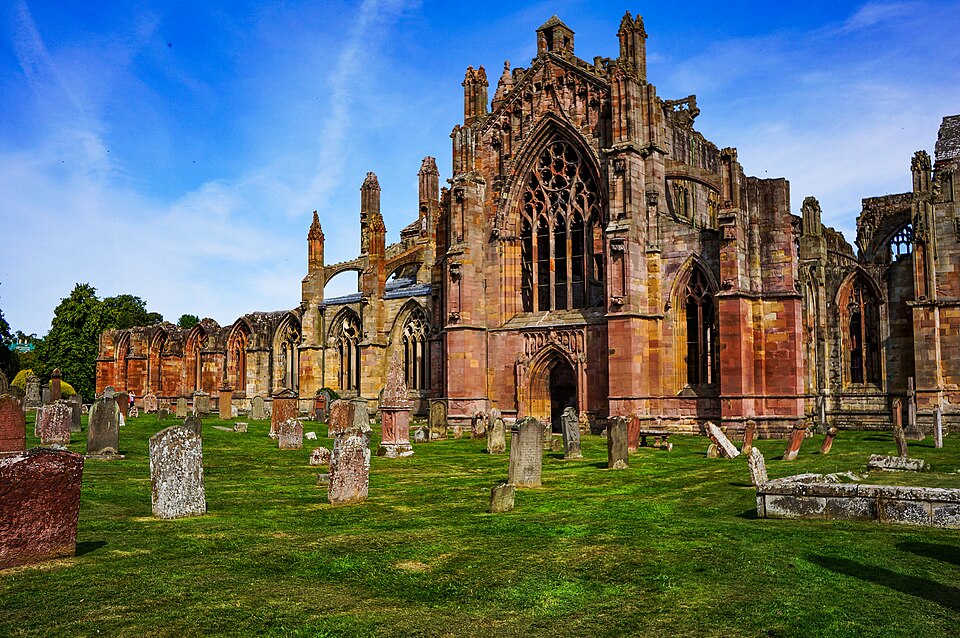
The legacy of Saint Waltheof endures as a testament to the power of monastic virtue and the enduring appeal of holiness. Though never formally canonized through the modern process, his veneration as a saint was immediate and widespread, particularly in Scotland and northern England. His feast day is traditionally observed on August 3rd. Today, pilgrims and visitors to the ruins of Melrose Abbey can still feel the spiritual presence of this holy abbot. While his physical remains are no longer visibly incorrupt, the very stones of Melrose speak of his life and ministry, inviting reflection on his profound faith and the spiritual flourishing he brought to this sacred place. His story continues to inspire those who seek a life devoted to God, reminding us of the enduring power of humility, charity, and contemplative prayer.
Discovery
The sanctity of Waltheof, the revered Abbot of Melrose, was not merely a matter of spiritual conviction during his lifetime, but found a remarkable physical testament years after his passing. It was in the year 1171, a mere twelve years after his death in 1159, that the first astonishing discovery of his incorrupt body occurred. The occasion was the translation of his remains within Melrose Abbey, a common practice in medieval monasticism to honor esteemed individuals and place them in more prominent or consecrated locations. The abbot at the time, Jocelin, a man of deep faith and a former monk of Melrose himself, oversaw this sacred undertaking. As the monks carefully exhumed Waltheof’s coffin from its initial resting place in the chapter house, an air of anticipation, perhaps mixed with solemn reverence, pervaded the scene. Upon opening the coffin, the assembled brethren, including Abbot Jocelin and the chronicler of Melrose, were met with an extraordinary sight: the body of Waltheof lay perfectly preserved, as if he had only just fallen asleep. His flesh was firm, his limbs flexible, and his vestments, though naturally somewhat discolored by the passage of time, clung to a form that defied the natural processes of decay. The immediate reaction was one of profound awe and wonder, a clear sign, in the eyes of the monastic community, of divine favor and confirmation of Waltheof’s exceptional holiness. This miraculous preservation was swiftly documented, reinforcing the growing veneration for the former abbot.
This initial discovery was not an isolated event but rather the beginning of a series of observations that further solidified the belief in Waltheof’s incorruption. The body was subsequently reinterred, yet the memory of its pristine state lingered, prompting further examinations. One significant re-opening occurred in 1206, some 47 years after his death, during which the body was again found to be entirely free from corruption. By this time, Waltheof's reputation for sanctity had grown considerably, and the abbey had become a site of pilgrimage. The chroniclers of Melrose Abbey meticulously recorded these events, noting the consistent state of preservation. These subsequent examinations served not only to confirm the initial findings but also to reinforce the miraculous nature of his incorruption over an extended period, a testament that defied scientific explanation for the medieval mind. Each opening of the tomb brought renewed wonder and strengthened the devotion of the faithful, who saw in Waltheof's preserved body a tangible link to the divine.
The journey of Waltheof’s remains, while not involving extensive movement across various locations, is primarily defined by its enduring presence within Melrose Abbey, even amidst its eventual ruin. Following the initial discovery and subsequent re-examinations, Waltheof’s body was placed in a more prominent position within the abbey church, likely in a specially constructed tomb or shrine that allowed for veneration. While specific details of a glass casket or elaborate reliquary from the medieval period are not explicitly documented, it is reasonable to infer that his resting place would have been afforded considerable honor and protection. The abbey itself, a magnificent Cistercian foundation, served as the primary sanctuary for his remains for centuries. However, the tumultuous history of Scotland, particularly the Reformation, brought about significant changes. Melrose Abbey, once a thriving monastic center, fell into ruin. The precise fate of Waltheof's body during and after these upheavals is less clear, as many sacred relics and tombs were desecrated or lost. Today, while the ruins of Melrose Abbey stand as a poignant reminder of its former glory, Waltheof's body is no longer on public display in an incorrupt state. His remains are believed to rest somewhere within the abbey grounds, perhaps in an unmarked grave or a forgotten crypt, awaiting a potential rediscovery, a silent testament to a once-celebrated incorruption.
Among the most remarkable details associated with Waltheof’s incorrupt body, beyond its mere resistance to decay, was the consistent observation of its flexibility and the sweet fragrance it was said to emit. Unlike typical cadavers, which become rigid and putrefy, Waltheof’s body was noted to retain a lifelike suppleness, an extraordinary phenomenon that deeply impressed those who witnessed it. This flexibility was not a fleeting observation but was noted during multiple exhumations, contributing significantly to the perception of his miraculous state. Furthermore, accounts from the Melrose chroniclers speak of a delicate, pleasing aroma emanating from the body, a scent often described as sweet or fragrant, rather than the odor of decomposition. This phenomenon, frequently associated with incorrupt saints, was interpreted as the "odor of sanctity," a divine perfume signifying spiritual purity and grace. While there are no records of oil exuding, bleeding, or other more dramatic phenomena, the combination of preserved flesh, flexible limbs, and a sweet fragrance firmly established Waltheof’s incorruption as a profound sign of God’s favor, making him a revered figure and a focus of pilgrimage for centuries.
Scientific Analysis
The phenomenon of incorruption, particularly as ascribed to historical figures such as Saint Waltheof of Melrose, presents a compelling intersection for scientific inquiry and historical tradition. Regarding Saint Waltheof, who died in 1159, historical accounts suggest a state of preservation that defied the typical processes of decomposition. While detailed, formal medical or scientific examinations in the modern sense are largely absent for Waltheof, given the historical period and the subsequent ruination of Melrose Abbey, contemporary chronicles and later ecclesiastical records serve as primary sources. These accounts, often written by monastic contemporaries or those shortly thereafter, describe the discovery of his body in an unusually preserved state. For instance, the *Chronica de Mailros* (Chronicle of Melrose), a significant historical document from the abbey itself, records instances of his body being exhumed and found to be intact. One notable instance is cited as occurring in 1180, approximately 21 years after his death, when his tomb was opened. The chroniclers reported that his body was found to be "whole and undecayed," and his vestments were also reportedly in good condition. Such observations, while lacking the rigorous methodology of modern forensic science, represent the earliest forms of documentation regarding his incorrupt status. There is no record of specific physicians or scientists, as understood today, performing examinations; rather, these observations were made by monastic communities and ecclesiastical authorities who would have been familiar with the typical appearance of human remains. The absence of specific medical terminology or detailed anatomical descriptions in these historical texts means that the precise nature of this preservation, whether it involved soft tissue, skeletal integrity, or both, remains open to interpretation through the lens of historical linguistics and cultural context.
The scientific mystery surrounding Waltheof's reported incorruption lies in its apparent defiance of normal decomposition processes, particularly given the environmental conditions of his burial. Human decomposition is a complex biological process driven by autolysis (self-digestion by endogenous enzymes) and putrefaction (breakdown by microorganisms), leading to the eventual disintegration of soft tissues and, over time, skeletal decay. Typical burial in a monastic setting, even within a stone sarcophagus, would expose a body to a range of environmental factors—temperature fluctuations, moisture, and the activity of soil microorganisms and insects—all of which accelerate decay. There is no historical evidence suggesting any deliberate embalming or preservation treatments were applied to Waltheof's body, a practice that was not widespread or sophisticated in 12th-century Scotland, particularly for monastic figures. The reported preservation, therefore, stands in contrast to the expected outcome of natural processes. For example, if the body was truly "whole and undecayed" after two decades, it implies a significant inhibition of microbial activity and enzymatic breakdown. Factors like extremely dry conditions, very cold temperatures, or highly acidic or alkaline soil can sometimes lead to natural mummification or saponification (adipocere formation), but these conditions are not typically associated with the climate of Melrose, Scotland, which is generally temperate and moist. The descriptions do not typically align with the waxy, crumbly texture of adipocere or the desiccated appearance of mummified remains, but rather imply a more lifelike preservation.
Various natural explanations have been proposed for cases of historical incorruption, including saponification (the transformation of body fat into a waxy substance called adipocere), natural mummification due to extreme desiccation, or preservation in anaerobic environments. However, these explanations often fall short in specific cases like Waltheof's. Adipocere formation typically occurs in wet, anaerobic conditions and results in a distinctive waxy, yellowish-white material, not necessarily a "whole and undecayed" appearance in the sense of retaining lifelike qualities. Natural mummification requires very dry conditions, which are not characteristic of the Scottish climate, or specific burial environments that rapidly desiccate tissues. While a sealed tomb could create a microenvironment, it is unlikely to prevent all microbial activity over decades without other contributing factors. Skeptics often attribute such accounts to pious exaggeration, misinterpretation of partially preserved remains, or the subjective nature of historical observation. For instance, a skeleton with some adhering connective tissue or hair might be described as "undecayed" by individuals unfamiliar with the stages of decomposition. However, the consistent nature of such reports across various historical figures and chroniclers suggests that something beyond mere skeletal preservation was often observed. The challenge lies in distinguishing genuine, unusual preservation from hagiographical embellishment or observational bias.
From a modern scientific perspective, the case of Saint Waltheof, like other historical incorruptibles, presents an opportunity for interdisciplinary research, though direct examination is currently impossible due to the destruction of Melrose Abbey and the unknown fate of his remains. If his body were to be rediscovered, modern techniques could provide invaluable insights. Non-invasive methods such as CT scans or MRI could reveal the internal state of tissues, bone density, and any signs of past trauma or disease without disturbing the remains. Carbon dating could precisely determine the age of the remains, confirming their identity. Tissue analysis, including histological examination and molecular analysis (DNA, proteomics), could identify the precise state of cellular preservation, detect the presence of microorganisms, and potentially identify any unusual chemical compounds that might have contributed to preservation. For example, the presence of specific lipids or minerals could indicate an unusual form of saponification or mineralization. The absence of direct modern examination means that Waltheof's case remains largely within the realm of historical and theological discourse. However, it underscores the broader scientific study of taphonomy—the science of decomposition and preservation—and the diverse factors that can influence the fate of human remains. The questions that remain unanswered revolve around the precise nature of the reported preservation, the specific environmental conditions of his burial, and whether any unique biological or chemical factors contributed to the phenomenon, all of which would require direct forensic analysis to resolve.
Spiritual Significance
The phenomenon of incorruption, particularly as exemplified by figures like Saint Waltheof of Melrose, stands as a profound testament within Catholic theology to the sanctity of the human body and the promise of future resurrection. For centuries, the Church has regarded the preservation of a saint's body from natural decay as a miraculous sign, a divine affirmation of their extraordinary holiness and a prefigurement of the glorified bodies promised to the faithful at the Last Judgment. This extraordinary preservation underscores the theological truth that the body is not merely a vessel for the soul but is itself a temple of the Holy Spirit, as articulated in 1 Corinthians 6:19. In Waltheof's case, his incorruption served as a powerful visual sermon, reinforcing the belief that a life lived in profound union with Christ can, by God's grace, transcend even the natural laws of decomposition. It speaks to the communion of saints, bridging the visible Church on earth with the triumphant Church in heaven, offering a tangible link to those who have already entered into God's eternal presence. The Church's interpretation of such events consistently points to God's direct intervention, not as a reward for personal merit, but as a sign for the faithful, a beacon of hope illuminating the path to eternal life.
Saint Waltheof's unique charism was deeply rooted in his profound humility and unwavering detachment from worldly power, a virtue that shone brightly even amidst the political machinations of his era. Born into a noble family and offered the prestigious Archbishopric of York, he consistently chose the path of monastic austerity, first as an Augustinian canon at Nostell and later as an abbot at Melrose. This profound humility, coupled with an intense love for monastic discipline and contemplative prayer, defined his spirituality. He embodied the Cistercian ideal of *ora et labora* – prayer and work – fostering a spiritual tradition that emphasized simplicity, manual labor, and a deep interior life. His leadership at Melrose Abbey was marked by a gentle yet firm hand, guiding his monks not through authoritarianism, but through personal example and profound charity. His heroic virtues extended beyond humility to include a radical obedience to God's will, even when it meant forsaking earthly glory, and an expansive charity that embraced both his monastic community and the wider world. His life was a living sermon, demonstrating that true spiritual authority stems not from worldly status, but from a heart wholly surrendered to God.
Devotion to Saint Waltheof blossomed rapidly after his death in 1159, fueled by the discovery of his incorrupt body and the numerous miracles attributed to his intercession. His tomb at Melrose Abbey became a significant pilgrimage site, drawing the faithful from across Scotland and beyond. While specific prayers or novenas dedicated solely to him might not be as widely known today as those for more globally recognized saints, his feast day, traditionally celebrated on August 3rd, remains a moment for remembrance and veneration within certain monastic communities and among those with a particular devotion to Scottish saints. Pilgrims in centuries past would have approached his shrine with reverence, seeking healing, guidance, and spiritual solace. Though Melrose Abbey now lies in ruins, the spiritual resonance of Waltheof's legacy persists. While his incorrupt body is no longer physically accessible for veneration in the same way, the historical accounts of its preservation continue to inspire. The experience of visiting the tranquil, hallowed grounds of Melrose Abbey today, even without the physical presence of his relics, evokes a powerful sense of sacred history and the enduring spiritual power of such a holy life.
Miracles attributed to Saint Waltheof's intercession were numerous and well-documented in the centuries following his death, solidifying his reputation as a powerful intercessor with God. Chroniclers of the period recorded instances of miraculous healings, particularly of the sick and infirm who visited his tomb at Melrose Abbey. There were accounts of the blind regaining their sight, the lame walking, and various illnesses being cured through his heavenly intervention. These documented wonders served not only to confirm his sanctity in the eyes of the faithful but also to draw countless pilgrims seeking solace and divine aid. Beyond physical healings, his intercession was also sought for spiritual conversions and guidance, with many experiencing profound spiritual consolation and renewed faith after praying at his shrine. The very presence of his incorrupt body was considered a continuous miracle, a visible sign of God's favor and a source of immense spiritual comfort. It served as a tangible bridge between the earthly realm and the heavenly, assuring believers that their prayers to the saints were indeed heard and answered.
Saint Waltheof's enduring message for contemporary believers and seekers resonates deeply in a world often characterized by materialism and the relentless pursuit of worldly success. His life challenges the modern secular ethos by demonstrating the profound fulfillment found not in power or prestige, but in radical humility, detachment, and an unwavering commitment to God. In an age where self-promotion is often lauded, Waltheof's refusal of the Archbishopric of York and his embrace of monastic austerity offer a powerful counter-narrative, reminding us that true greatness lies in service and spiritual poverty. His example encourages us to prioritize the eternal over the ephemeral, to cultivate an interior life of prayer and contemplation amidst the clamor of modern existence. His incorruption, though a historical phenomenon, serves as a potent symbol, a tangible bridge between the visible and invisible worlds, reminding us of the ultimate destiny of the human body and the promise of resurrection. It invites us to consider the profound mystery of sanctity and the enduring power of a life lived entirely for God, offering a timeless model of holiness for all who seek a deeper connection with the divine.
AI summary
A plain-language overview generated from this page's source material. Always verify with primary sources.