Biography
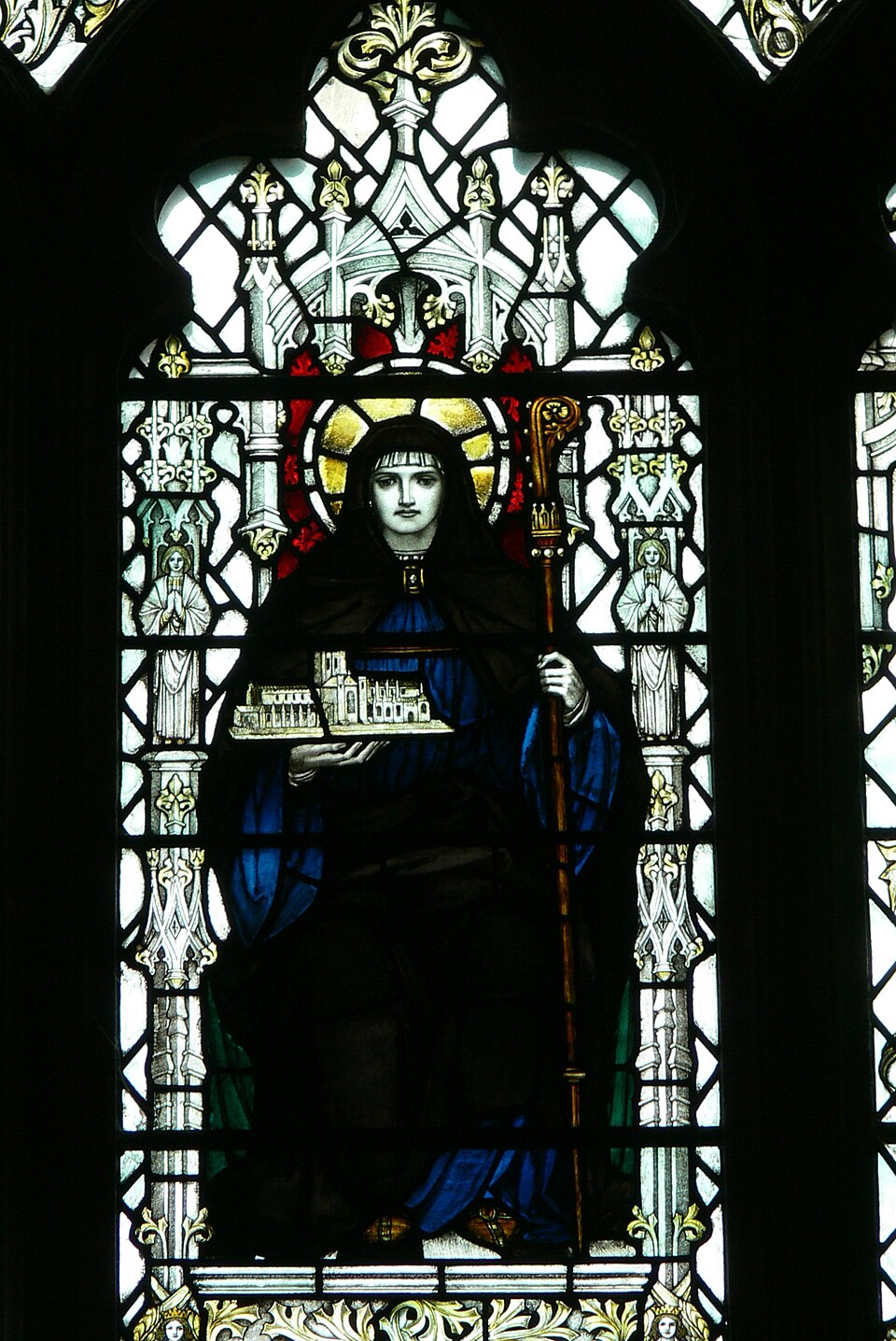
Saint Werburgh, a luminous figure of early Anglo-Saxon Christianity, was born a princess into the royal house of Mercia around the mid-7th century. Her father was King Wulfhere of Mercia, a powerful ruler who had converted to Christianity, and her mother was Saint Ermenilda, herself a former queen who later became an abbess. This noble lineage and a devout upbringing within a newly Christianized kingdom provided Werburgh with a spiritual foundation from her earliest years. Surrounded by the nascent fervor of the English Church, she was exposed to the monastic ideals championed by figures like Saint Chad and Saint Etheldreda, her own great-aunt. Despite the expectations of a royal marriage and a life of courtly splendor, Werburgh felt a profound call to dedicate her life entirely to God, a desire she pursued with unwavering conviction.
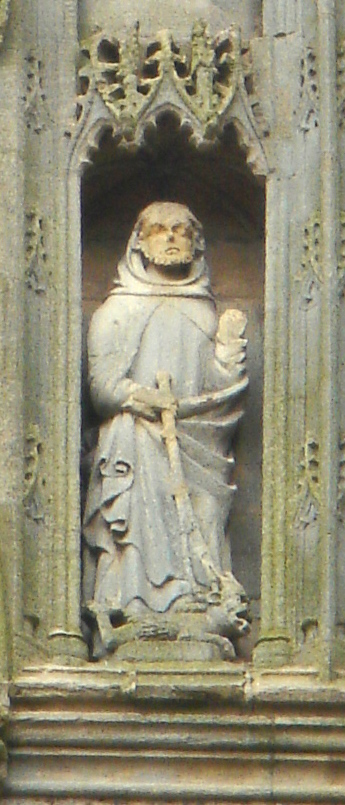
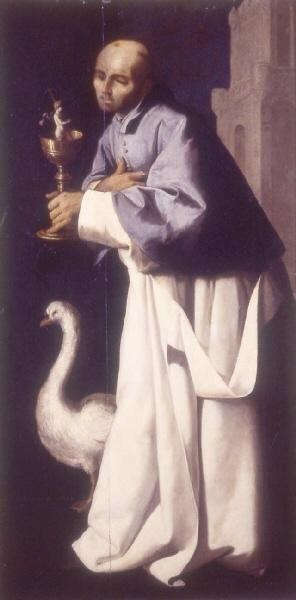
Embracing her vocation, Saint Werburgh renounced her worldly status and entered the monastery at Ely, founded by her great-aunt, Saint Etheldreda. Under the tutelage of her mother, who was then abbess, Werburgh flourished in monastic life, embodying humility, piety, and diligent service. Her reputation for sanctity soon reached her uncle, King Æthelred of Mercia, who entrusted her with the significant task of reforming and establishing several convents throughout his kingdom. She became abbess of Weedon, Hanbury, and Trentham, bringing order, spiritual discipline, and a fervent love for Christ to each community. Her leadership was marked by wisdom, compassion, and a tireless commitment to the welfare of her sisters, earning her deep respect and admiration. She was known for her miracles, including the protection of crops from geese, a testament to her intercessory power and God's favor.
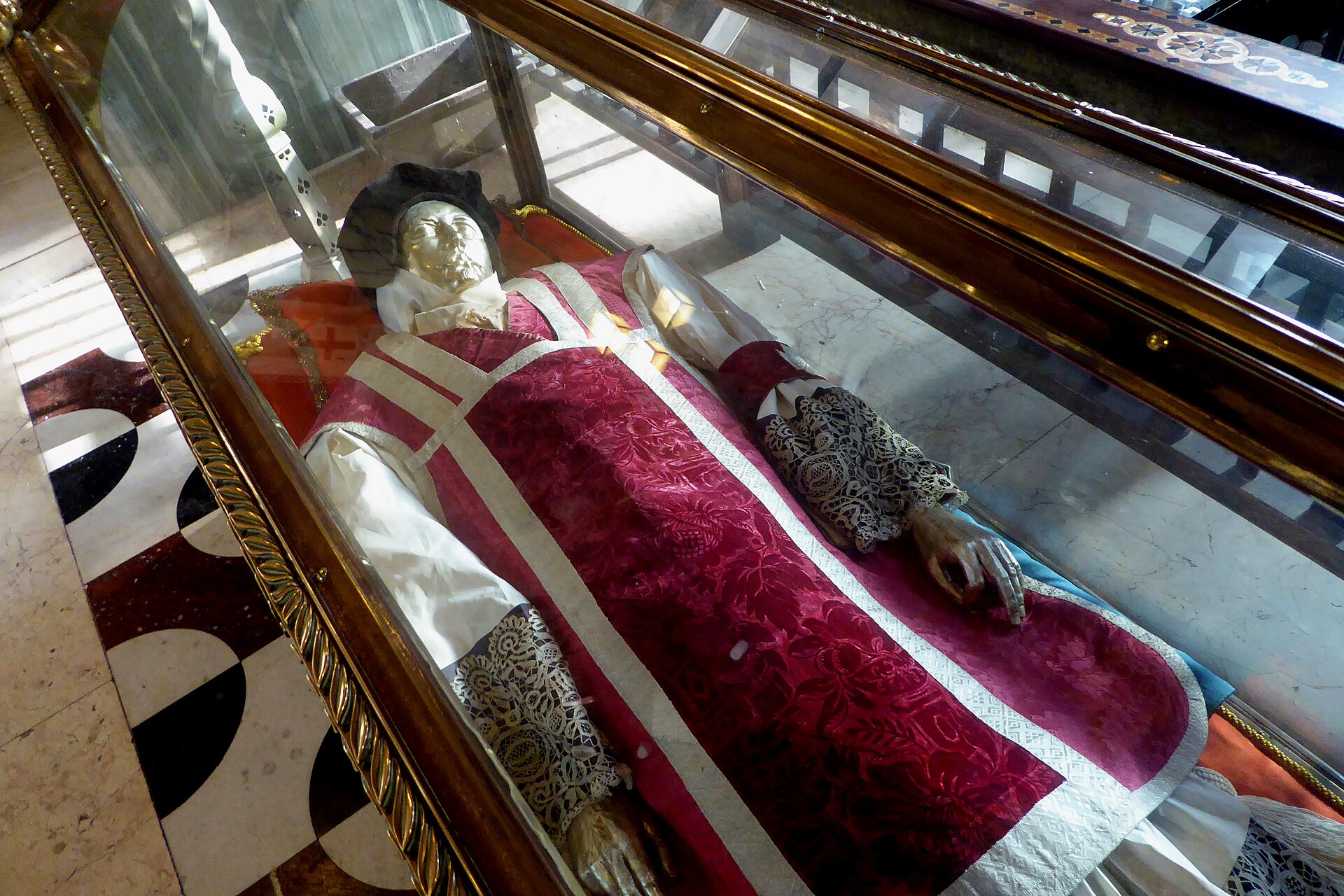
Saint Werburgh passed into eternal life in the year 699 at Trentham, Staffordshire, and was initially buried there. However, due to concerns about Viking raids, her relics were translated to Chester in 875, where a church was built in her honor. It was during this translation, or perhaps a later one, that her body was discovered to be incorrupt, a miraculous sign of her holiness that deeply impressed the faithful. Though the original state of her incorruption has been historically attested, the passage of centuries and various historical events have meant that her body is no longer visibly incorrupt in the manner of some other saints. Today, her relics are enshrined in the magnificent Chester Cathedral, which stands on the site of the ancient monastery she inspired.
The legacy of Saint Werburgh endures as a testament to the power of faith and the transformative potential of monastic life. Canonized by popular acclamation long before formal processes were established, she became the patron saint of Chester and a revered figure throughout Mercia. Pilgrims today can visit Chester Cathedral, a place steeped in her history, where her shrine remains a focal point of devotion. Though her physical incorruption may no longer be manifest, her spiritual incorruptibility, her unwavering commitment to Christ, and her profound impact on early English Christianity continue to inspire countless souls, reminding us of the enduring sanctity of God's chosen servants.
Discovery
The story of Saint Werburgh's incorruptibility begins not at her death in 699, but with a remarkable discovery some years later, a testament to the early medieval belief in divine preservation. Following her repose at Trentham, the community there, in accordance with her wishes, interred her remains. However, fear of Danish incursions prompted the decision to move her body to a safer location, the fortified city of Chester. It was during this translation, traditionally dated to the year 708, that the miraculous state of her preservation was first revealed. When the tomb was opened, the assembled clergy and faithful were met not with the expected skeletal remains, but with a body miraculously untouched by the ravages of decay. The flesh remained supple, the features recognizable, and a sweet, unearthly fragrance was said to emanate from her, filling the air and inspiring awe and reverence among those present. This extraordinary discovery cemented her sanctity in the minds of the people and established her as a powerful intercessor, her incorrupt body serving as a tangible sign of God's favor.
Over the subsequent centuries, the incorrupt body of Saint Werburgh became a focal point of devotion and pilgrimage, though its physical state would be subject to the vicissitudes of history and the changing landscape of religious practice. While the initial discovery in 708 confirmed her incorruption, detailed accounts of further examinations are somewhat sparse, often embedded within hagiographical narratives rather than clinical reports. However, tradition holds that the body maintained its remarkable state for many years, inspiring numerous miracles attributed to her intercession. The shrine at Chester Cathedral, to which her relics were eventually moved, became a prominent destination. During the tumultuous period of the Reformation, the veneration of relics, including incorrupt bodies, came under severe scrutiny. In 1540, during the dissolution of the monasteries, Werburgh's shrine was desecrated, and her relics, including what remained of her incorrupt body, were reportedly dispersed or destroyed. This tragic event marked a profound shift in the physical history of her remains, moving from a publicly venerated, visibly incorrupt body to a more fragmented and symbolically preserved memory.
The journey of Saint Werburgh's relics, post-Reformation, is one of fragmented preservation and symbolic remembrance rather than continuous physical display of an incorrupt body. While the original incorrupt body was likely lost or destroyed during the 16th century, the memory of its miraculous preservation endured. Today, at Chester Cathedral, the site of her former shrine remains a significant historical and spiritual landmark. The existing shrine, though a reconstruction, stands as a powerful reminder of her legacy and the centuries of devotion she inspired. It is not a reliquary housing a visibly incorrupt body, but rather a testament to the historical fact of her veneration and the tradition of her incorruption. The cathedral itself, through its architecture and historical records, serves as the primary custodian of her memory, preserving the narrative of her life, her sanctity, and the extraordinary discovery of her incorrupt body that once captivated the faithful.
While the physical incorruption of Saint Werburgh's body is now a matter of historical record and tradition rather than contemporary observation, the accounts of its initial discovery are replete with remarkable details. The most frequently cited phenomenon was the aforementioned sweet fragrance that emanated from her body upon its exhumation in 708. This "odor of sanctity" was a commonly reported miraculous sign associated with incorrupt saints, believed to be a divine perfume signifying their spiritual purity and heavenly favor. Furthermore, the body was described as being flexible and intact, defying the natural processes of decomposition. These details, though filtered through the lens of medieval hagiography, speak to a profound experience for those who witnessed it – an encounter with something truly extraordinary, a tangible manifestation of divine power that transcended the ordinary boundaries of life and death. The enduring narrative of her incorruption continues to inspire, even in the absence of the physical remains, serving as a powerful symbol of faith's triumph over decay.
Scientific Analysis
The historical accounts concerning the physical state of Saint Werburgh's remains, particularly the claims of incorruption, present a fascinating subject for scientific inquiry. While comprehensive, modern forensic examinations are notably absent in the publicly available record, historical chronicles offer glimpses into observations made over centuries. Early monastic records and chronicles, often compiled by religious individuals, consistently describe a state of preservation that defied typical decomposition. These accounts, while lacking the rigor of contemporary scientific methodology, served as the primary documentation for centuries. For example, during the translation of her relics in 875 AD to escape Viking raids, and again in 1093 AD when her body was moved to Chester, chroniclers noted an unusual integrity of the remains. Specific details regarding the condition of soft tissues, skin, or internal organs are generally sparse in these early texts, often focusing on the overall intactness of the body. Later, during the Reformation, when many monastic sites were dissolved and relics scrutinized, there are no definitive medical reports from physicians or anatomists that formally assessed her remains. The absence of such formal examinations by independent medical professionals or scientists, particularly in the modern era with advanced diagnostic tools, represents a significant gap in understanding the precise nature of her preservation. Without documented examinations by named individuals affiliated with recognized medical or scientific institutions, any claims about specific findings remain within the realm of historical anecdote rather than empirical medical observation.
The scientific remarkable aspect of Saint Werburgh's alleged incorruption lies in its purported resistance to the natural processes of decomposition, especially given the historical context and burial conditions. Normal human decomposition, a complex series of biological and chemical changes, typically begins within hours of death. Factors such as temperature, humidity, oxygen availability, and microbial activity rapidly break down soft tissues. Buried in the ground, as Werburgh would have been initially, the body is exposed to soil microorganisms, insects, and fluctuating environmental conditions that accelerate decay. The prevailing climate in England, characterized by dampness and moderate temperatures, is generally conducive to decomposition rather than preservation. Unless specific embalming techniques were employed, which were not common practice for non-royal individuals in Anglo-Saxon England, or unique environmental conditions were present, a body from the 7th century should have long since skeletonized. The historical accounts, however, suggest a degree of preservation beyond mere skeletal remains. The absence of evidence for deliberate embalming treatments, such as those involving resins, oils, or evisceration, further deepens the scientific mystery. If the accounts of incorruption are accurate, they suggest a deviation from expected taphonomic processes that demands a robust scientific explanation.
Several natural hypotheses have been proposed to explain instances of body preservation, such as saponification (adipocere formation) or mummification. Saponification occurs when fatty tissues in a body are converted into a waxy, soap-like substance (adipocere) in anaerobic, moist environments, often in clay soils. This can preserve the body's contours but typically results in a distinct, waxy texture and appearance, not necessarily the pliable, natural-looking preservation sometimes attributed to incorrupt saints. Mummification, on the other hand, involves the desiccation of tissues in extremely dry or cold conditions, or through deliberate artificial means. Neither of these processes fully aligns with the generalized historical descriptions of Werburgh's state, which often imply a more natural, lifelike preservation rather than a hardened, waxy, or desiccated form. Skeptics often attribute such claims to misinterpretations of natural mummification, adipocere formation, or even deliberate manipulation or substitution of remains over centuries. However, without direct scientific examination, it is impossible to definitively confirm or refute these natural explanations in Werburgh's specific case. The persistent claims of unusual preservation, spanning centuries and multiple translations, suggest a phenomenon that, if true, remains scientifically anomalous.
From a modern scientific perspective, the case of Saint Werburgh represents an intriguing historical anomaly that could greatly benefit from contemporary forensic and anthropological techniques. Non-invasive methods such as high-resolution CT scans or MRI could provide detailed internal anatomical information without disturbing the remains, revealing the state of internal organs and soft tissues. Carbon dating could precisely determine the age of the remains, confirming their authenticity. Advanced tissue analysis, including histological and biochemical examination of any preserved tissues, could identify the specific mechanisms of preservation, such as the presence of particular minerals, unusual microbial activity, or unique environmental factors. DNA analysis could also confirm identity and provide insights into health and diet. Such studies, conducted by an interdisciplinary team of forensic anthropologists, pathologists, chemists, and historians, would move the understanding of such phenomena from the realm of anecdotal history to empirical science. The unanswered questions revolve around the precise nature of the alleged preservation, the specific environmental conditions of her burial sites over time, and the complete absence of any artificial preservation methods. Until such rigorous scientific investigations are permitted and conducted, the historical accounts of Saint Werburgh's incorruption will continue to occupy a unique space at the intersection of faith, history, and unexplained scientific phenomena.
Spiritual Significance
The phenomenon of incorruption, particularly as exemplified by figures like Saint Werburgh, holds a profound and multi-layered significance within Catholic theology, serving as a tangible testament to core doctrines. At its heart, incorruption underscores the sacred dignity of the human body, a vessel created in God's image and destined for glory. Saint Paul's admonition in 1 Corinthians 6:19, that our bodies are temples of the Holy Spirit, finds a powerful visual echo in the preserved remains of a saint. This miraculous preservation, defying natural decay, suggests a divine intervention that honors the sanctity of a life lived in profound union with God, even after death. It is a prefigurement of the resurrection of the body, a central tenet of Christian faith, offering a glimpse into the glorified state promised to the faithful. The Church, in acknowledging such phenomena, interprets them not as mere curiosities but as signs of God's enduring power and His intimate relationship with His saints. It reinforces the communion of saints, reminding us that those who have passed into glory remain part of the living Body of Christ, their earthly remains still capable of bearing witness to divine grace. For Saint Werburgh, whose incorruption was historically attested, this served as a powerful affirmation of her sanctity in an age deeply attuned to such spiritual signs, solidifying her place within the celestial hierarchy and inspiring generations of believers.
Saint Werburgh's unique charism was deeply rooted in the monastic ideal, a spiritual path she embraced despite her royal lineage. Her heroic virtues were primarily manifested in her profound humility, a remarkable trait for a princess born into power, and her unwavering obedience to God's call, even when it meant forsaking worldly expectations. She exemplified a radical form of Christian charity, not merely in almsgiving, but in her dedication to establishing and governing monastic communities, fostering environments where others could also pursue holiness. Her life was a testament to asceticism and a deep interior spirituality, embracing the rigors of monastic life as a means to draw closer to Christ. She contributed significantly to the burgeoning monastic movement in Anglo-Saxon England, following in the footsteps of her great-aunt, Saint Etheldreda. Werburgh's particular way of holiness was characterized by a blend of contemplative prayer and active service, demonstrating that profound spiritual union could be achieved amidst the responsibilities of leadership. Her spiritual legacy is one of self-renunciation for the sake of the Kingdom, a quiet yet powerful witness to the transformative power of divine love, inspiring countless women to embrace the consecrated life and shape the spiritual landscape of early England.
Devotion to Saint Werburgh blossomed rapidly after her death, fueled by the attested incorruption of her body and the miracles attributed to her intercession. Her primary patronage is over the city of Chester, where her relics eventually found their resting place, and she is also invoked for protection against plague and cattle diseases, reflecting the practical concerns of the medieval populace. Throughout the centuries, pilgrims flocked to her shrine, seeking her intercession and experiencing spiritual renewal. While specific novenas or prayers directly associated with her may have evolved over time, the essence of devotion to Saint Werburgh has always centered on prayerful petition and veneration of her holy relics. Today, while her incorrupt body is no longer visibly displayed in its original state, the spiritual legacy persists within Chester Cathedral, which houses her shrine. Visitors to the cathedral can experience a profound sense of history and sanctity, standing in a place where centuries of devotion have converged. The very presence of her tomb, even without the visible incorruption, serves as a powerful reminder of her enduring sanctity and her continued intercession for the faithful, bridging the gap between past devotion and contemporary spiritual experience.
Numerous miracles have been attributed to Saint Werburgh's intercession throughout history, solidifying her reputation as a powerful heavenly advocate. Early accounts speak of healings, particularly of those afflicted with various illnesses, and instances of divine protection. The incorrupt body itself was often viewed as a source of spiritual consolation, its miraculous preservation inspiring awe and strengthening faith in the power of God. One notable miracle associated with her involved the protection of geese, a story that highlights her compassion for all of God's creation and her ability to intercede even in seemingly minor matters. These documented healings and answered prayers served to cement her status as a saint and encouraged further pilgrimage to her shrine. The spiritual power emanating from her relics was not merely a historical phenomenon; for centuries, the faithful approached her tomb with confidence, believing that through her, God would grant their petitions. This tangible connection to the divine, facilitated by her holy remains, offered solace and hope to countless individuals facing life's challenges, making her shrine a beacon of spiritual light and a testament to the enduring efficacy of intercessory prayer.
Saint Werburgh's enduring message for contemporary Catholics and seekers resonates deeply in a world often characterized by materialism and secularism. Her life challenges the notion that true fulfillment lies in worldly power or possessions, demonstrating that profound joy and lasting peace are found in radical dedication to God. In an age where fleeting pleasures often overshadow eternal truths, her example of self-renunciation and spiritual discipline offers a powerful counter-narrative, inviting reflection on what truly constitutes a life well-lived. For modern believers, she serves as a model of courageous faith, reminding us that even in the face of societal expectations, one can choose a path of holiness. Her incorruption, though no longer visibly manifest, continues to serve as a potent symbol, a tangible bridge between the visible and invisible worlds. It whispers of the eternal destiny of the human person, the sanctity of the body, and the ultimate triumph of grace over decay. Her story inspires us to cultivate an interior life, to seek God's will above all else, and to trust in the communion of saints as a source of strength and intercession, proving that the ancient paths of faith remain profoundly relevant for navigating the complexities of modern existence.
AI summary
A plain-language overview generated from this page's source material. Always verify with primary sources.