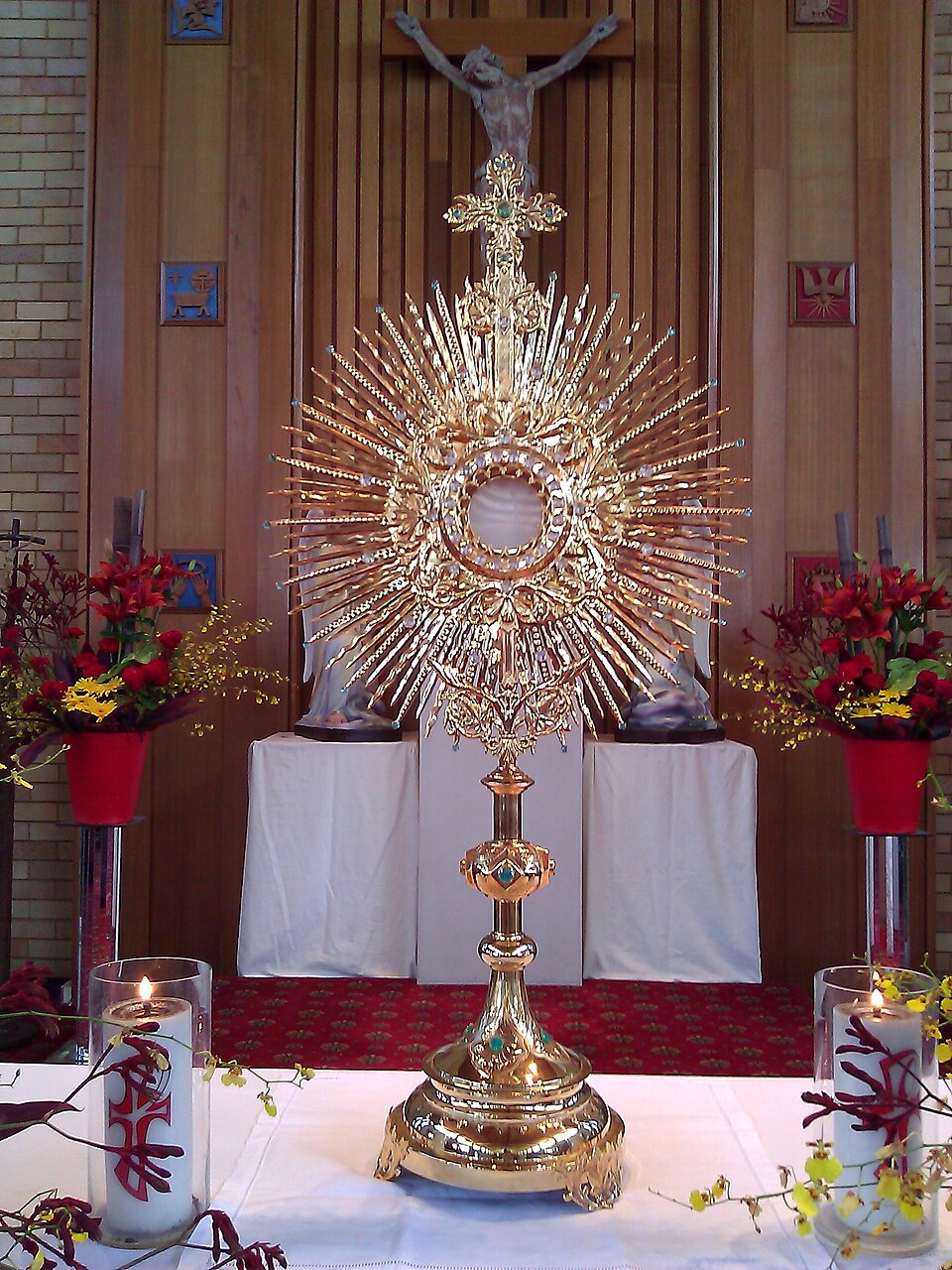
A knight demanded to receive a large Host reserved for the priest rather than the small Host given to laypeople. When the priest complied, the ground beneath the knight began to sink, and the Host turned to blood in his mouth. The knight's handprints are still visible on the altar where he grasped for support.
History
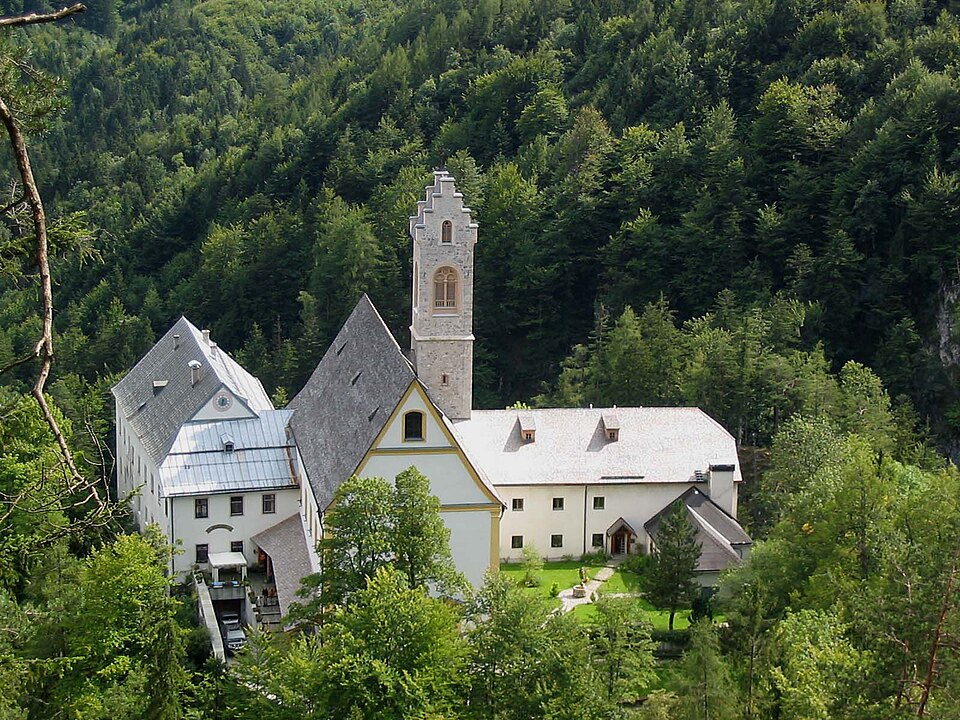
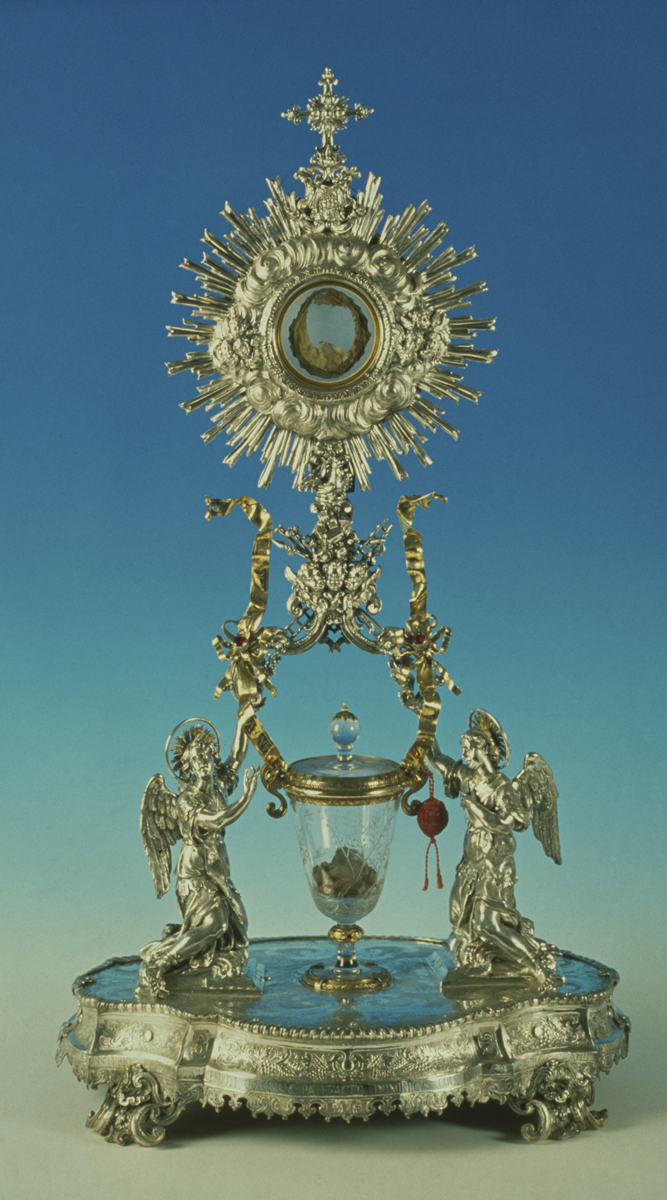
On Holy Thursday, 1384, a knight named Oswald Milser attended Mass at the Church of St. Oswald in Seefeld, Tyrol. Pridefully, he demanded to receive the large Host that was normally reserved for the priest, rather than the smaller Host given to the laity. The priest, intimidated by the knight's status, reluctantly complied. As the large Host was placed in the knight's mouth, the ground beneath him began to sink, as if swallowing him. In terror, the knight grasped the altar for support, leaving handprints that are said to be still visible today. The Host in his mouth turned to blood. The priest quickly retrieved the bleeding Host from the knight's mouth, and the ground stopped sinking. The knight repented and the miracle was declared authentic. The Church of St. Oswald became a major pilgrimage destination, and Emperor Maximilian I later built a magnificent church on the site. The bleeding Host is preserved in a special reliquary.
Scientific Findings
The indentations in the altar attributed to the knight's handprints have been preserved and can still be seen. The bleeding Host was preserved as a relic. The miracle is documented in multiple historical sources from the 14th and 15th centuries.
AI summary
A plain-language overview generated from this page's source material. Always verify with primary sources.