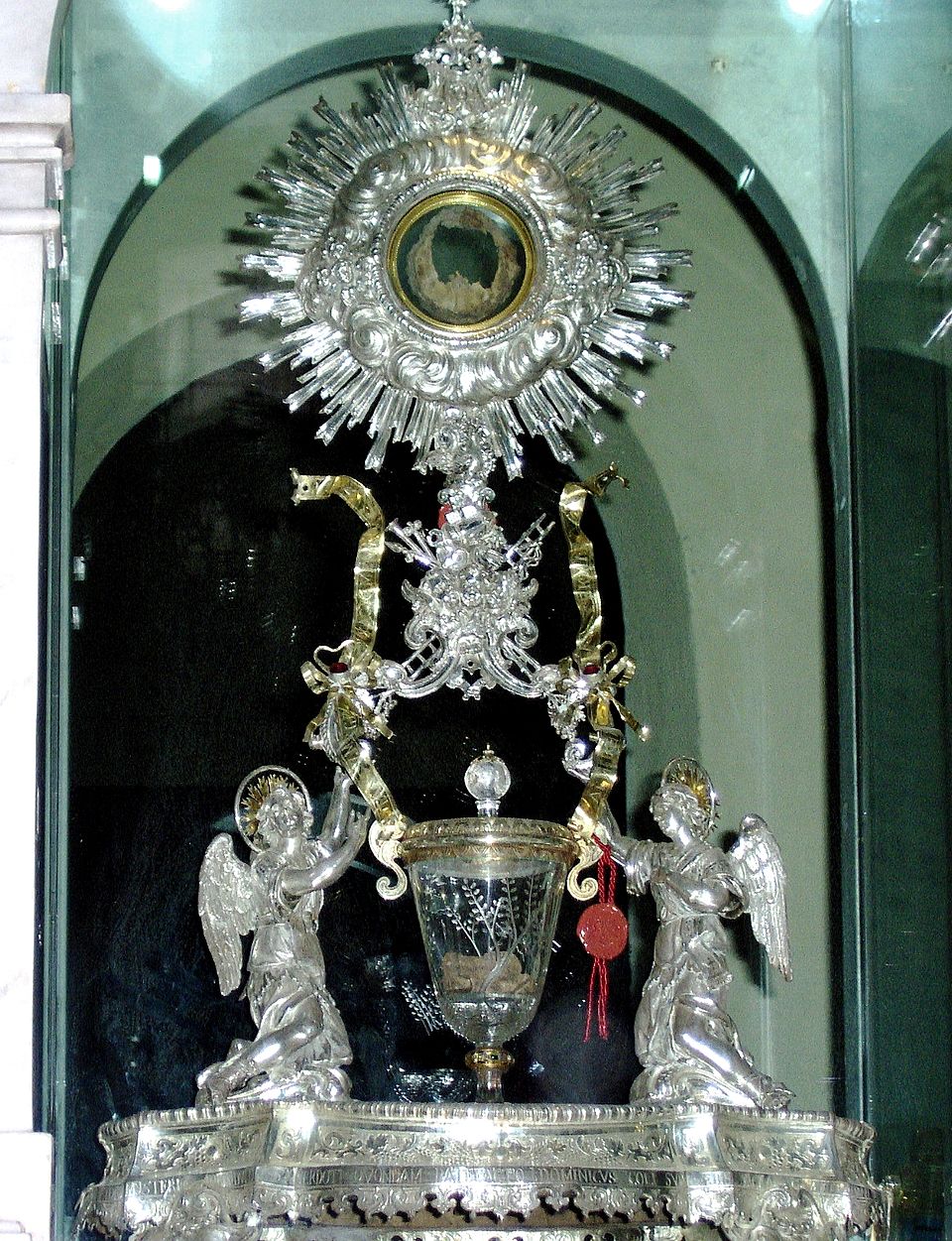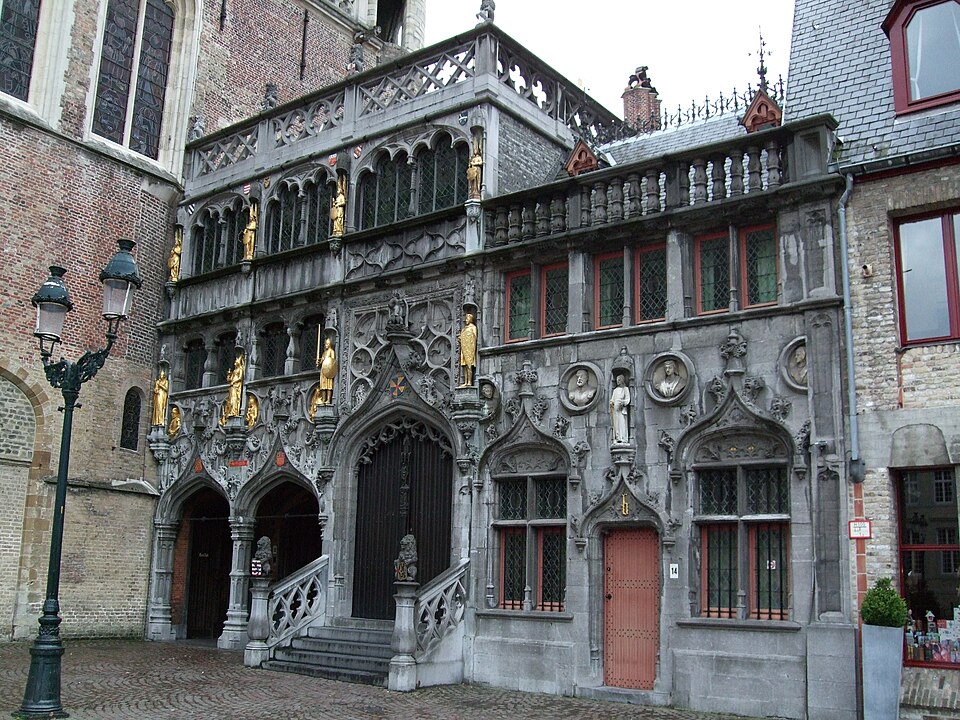
The Basilica of the Holy Blood in Bruges houses a venerated relic believed to contain the blood of Christ, brought from the Holy Land during the Crusades. The relic has been associated with miraculous events, including the blood reportedly liquefying on certain occasions. The annual Procession of the Holy Blood is a UNESCO-recognized tradition.
History
According to tradition, the relic of the Holy Blood was brought to Bruges in 1150 by Derrick of Alsace, Count of Flanders, upon his return from the Second Crusade. The relic — a cloth stained with what is believed to be the blood of Christ, collected by Joseph of Arimathea — was placed in the Basilica of the Holy Blood, a Romanesque chapel in the heart of Bruges. In 1203 and on subsequent occasions, the dried blood in the reliquary reportedly liquefied, drawing enormous crowds of pilgrims. The miracle of liquefaction was reported to occur regularly until 1325, after which it became less frequent. The relic remains one of the most venerated in Belgium. Every year on Ascension Day, the relic is carried through the streets of Bruges in the Procession of the Holy Blood (Heilig Bloedprocessie), a tradition dating back to at least 1303. In 2009, UNESCO inscribed the procession on its Representative List of the Intangible Cultural Heritage of Humanity.
Scientific Findings
The relic has been examined at various points in history. The substance in the reliquary has been identified as containing blood components. The phenomenon of liquefaction, while reported historically, has not been subjected to modern scientific analysis under controlled conditions. The relic's provenance and the historical accounts of its miraculous properties have been extensively documented by historians.
AI summary
A plain-language overview generated from this page's source material. Always verify with primary sources.