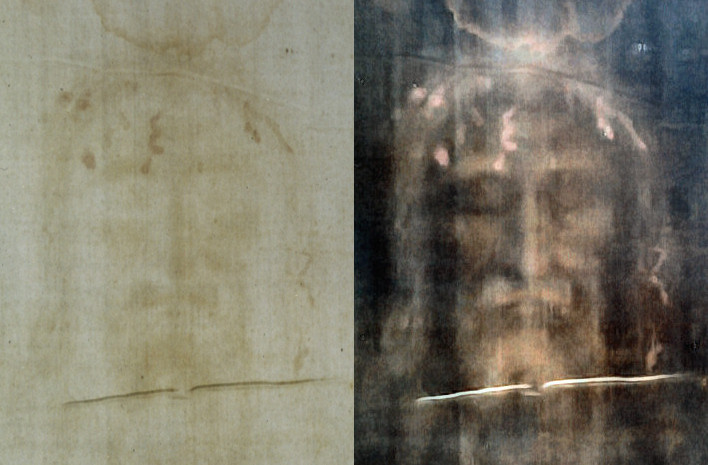
A linen cloth measuring approximately 4.4 by 1.1 meters bearing the faint, yellowish image of a man who appears to have suffered physical trauma consistent with crucifixion. It is the most studied artifact in human history.
History
The first certain historical record dates to 1353-1357 in Lirey, France. Moved to Turin in 1578. Survived a fire in 1532. Radiocarbon dating in 1988 dated it to 1260-1390, though this result is contested by many researchers who point to potential contamination and the sample being from a medieval repair patch.
Scientific Investigation
The image is a surface phenomenon that does not penetrate the fibers. It contains 3D information. Bloodstains are real human blood, type AB. The image formation mechanism remains unknown — it is not a painting, photograph, or scorch. The STURP team in 1978 conducted extensive analysis but could not determine how the image was formed.
Spiritual Significance
For believers, it is the burial cloth of Jesus Christ and a 'mirror of the Gospel.' Pope John Paul II called it 'a challenge to our intelligence.' It provides a tangible connection to the Passion.