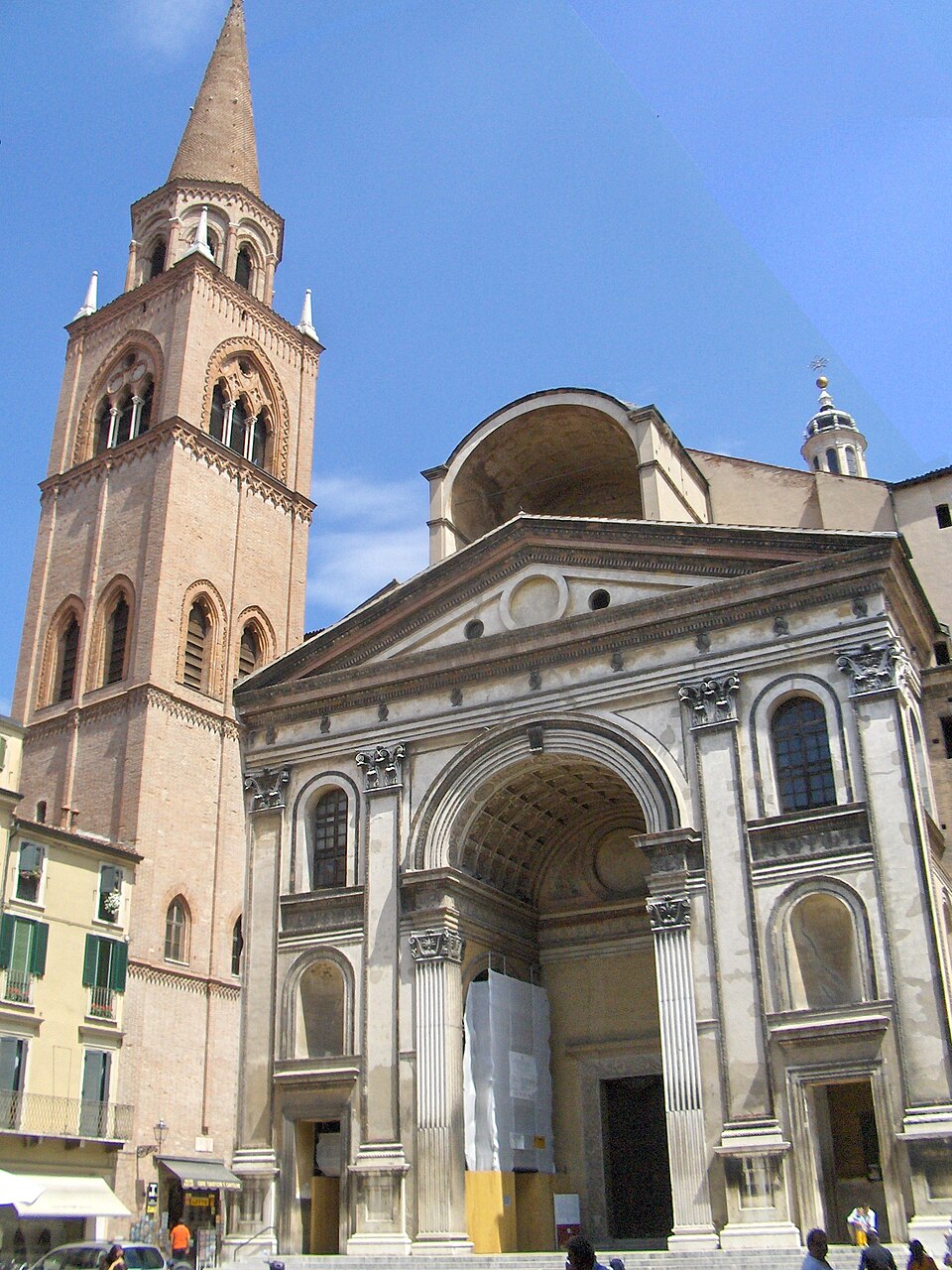
Earth soaked with the blood of Christ, believed to have been collected by Longinus, the Roman centurion who pierced Jesus' side with a lance. It is the principal relic of the Basilica of Sant'Andrea in Mantua.
History
According to tradition, Longinus brought the blood-soaked earth to Mantua, where he buried it before his martyrdom. The relic was lost and rediscovered in 804 AD. Pope Leo III authenticated it in 804, and it has been venerated in Mantua ever since. The current basilica was designed by Leon Battista Alberti in 1472 to house the relic.
Scientific Investigation
The relic consists of earth contained in golden vessels. Scientific analysis has confirmed the presence of organic material consistent with aged blood. The vessels and their contents have been examined during periodic openings of the reliquary.
Spiritual Significance
The Precious Blood of Mantua is one of the most important blood relics in Christendom. It represents the redemptive sacrifice of Christ and has been a major pilgrimage destination since the Middle Ages. The Feast of the Precious Blood is celebrated on July 1.