During the Reconquista, six consecrated Hosts were hidden in a corporal to protect them during battle against the Moors. When the corporal was unwrapped after the battle, the Hosts were found to be stained with blood and fused to the cloth. The bloodstained corporal is preserved in the Basilica of Daroca.
History
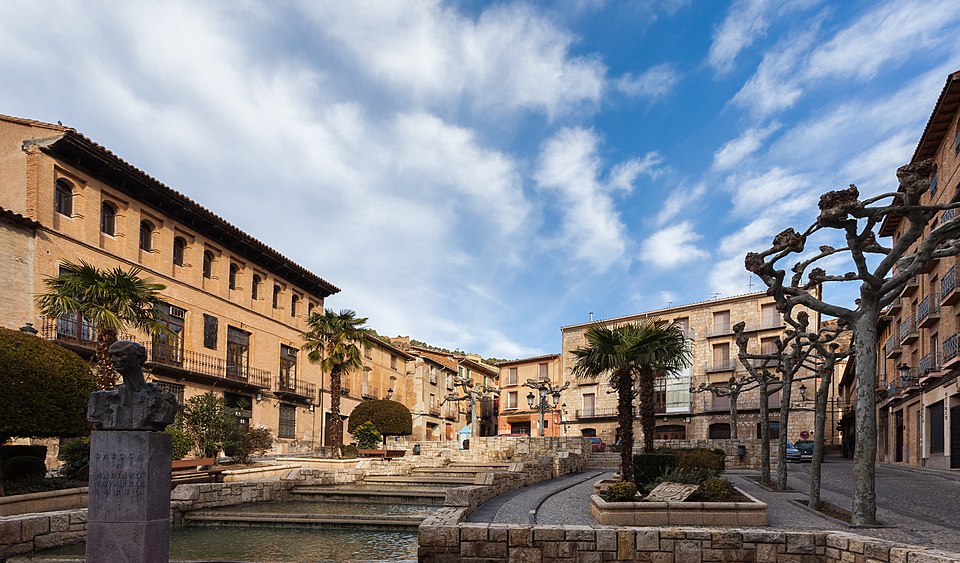
In February 1239, during the Spanish Reconquista, Christian forces were preparing for battle against the Moors near the castle of Chío (Luchente). Before the battle, a military chaplain celebrated Mass and consecrated six Hosts for the commanders of the six participating towns: Daroca, Teruel, Calatayud, and three others. The Hosts were wrapped in a corporal for safekeeping during the fighting. After the Christians won the battle, the chaplain unwrapped the corporal to distribute Communion and discovered that the six Hosts were stained with blood and had become fused to the cloth. A dispute arose among the six towns over which should have the honor of keeping the miraculous relic. According to tradition, the corporal was placed on a mule that was set free to wander, and the mule walked directly to Daroca, settling the dispute. The relic has been preserved in Daroca ever since, first in the Church of San Marcos and later in the Basilica of Santa María de los Sagrados Corporales, built specifically to house it. The miracle is celebrated annually during the Feast of Corpus Christi with elaborate processions.
Scientific Findings
The corporal with the six bloodstained Hosts has been preserved for nearly 800 years. Historical examinations have confirmed the presence of blood on the cloth and Hosts. The fusion of the Hosts to the cloth is considered unusual and has not been replicated under natural conditions.
AI summary
A plain-language overview generated from this page's source material. Always verify with primary sources.