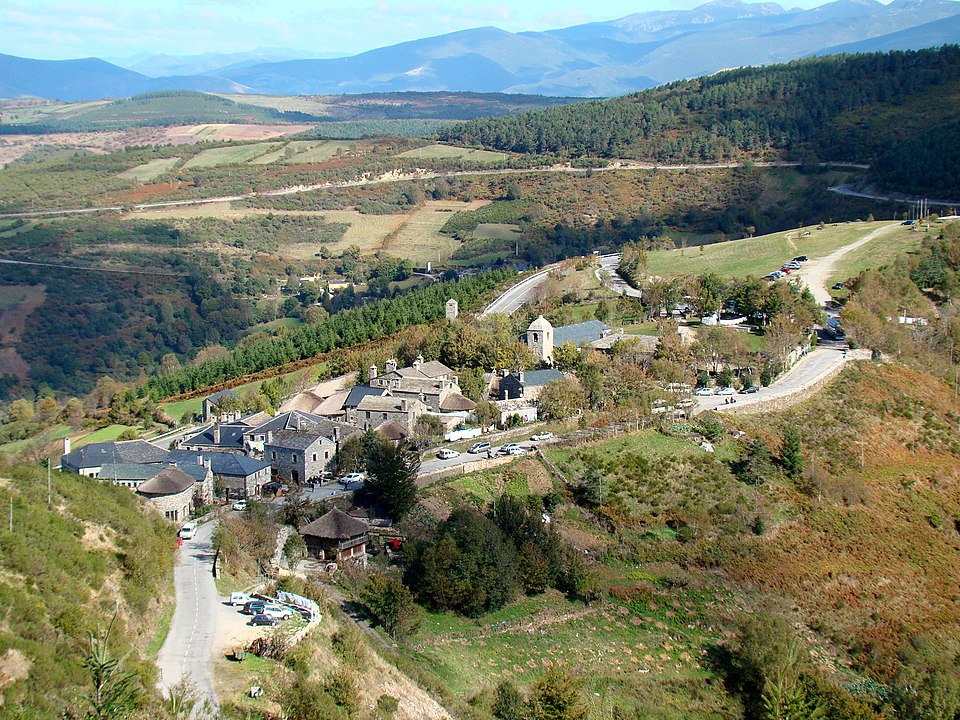
A monk celebrating Mass in a remote mountain church doubted the Real Presence. At the moment of consecration, the bread visibly transformed into flesh and the wine into blood before his eyes. The relics are preserved in the church on the Camino de Santiago pilgrimage route.
History
Around the year 1300, in the remote mountain village of O Cebreiro in Galicia (on the Camino de Santiago pilgrimage route), a Benedictine monk was celebrating Mass during a terrible snowstorm. Only one parishioner, a local farmer named Juan Santín, had braved the storm to attend. The monk, seeing only one simple peasant in attendance, began to doubt whether the bread and wine truly became the Body and Blood of Christ. At the moment of consecration, the bread visibly transformed into flesh and the wine into blood before the monk's eyes. The monk fell to his knees in repentance, and the farmer witnessed the transformation. The relics of the miracle — the flesh and blood — were preserved in the church and have been venerated ever since. Queen Isabella of Castile visited the shrine in 1486 and donated the crystal reliquaries that still hold the relics today. The miracle of O Cebreiro is one of the most beloved stories along the Camino de Santiago, and the church remains an important stop for pilgrims walking the ancient route to Santiago de Compostela.
Scientific Findings
The relics have been preserved in crystal reliquaries donated by Queen Isabella in the 15th century. The flesh and blood have been examined at various points in history. The miracle is extensively documented in historical records and has been continuously venerated for over 700 years. The church and its relics are maintained as an active pilgrimage site.
AI summary
A plain-language overview generated from this page's source material. Always verify with primary sources.