Biography
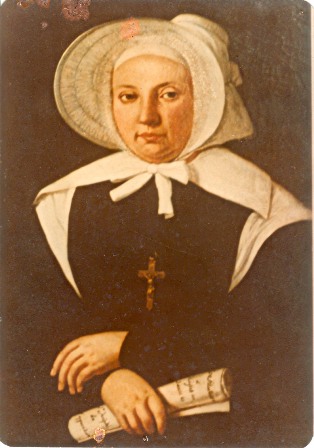
In the vibrant tapestry of 17th-century Portugal, amidst the fervent piety of the Counter-Reformation, emerged a soul destined for extraordinary grace: Blessed Mariana of the Purification. Born in Lisbon in 1610, little is known of her early life beyond her entry into the Augustinian convent of Our Lady of Grace in Lisbon at a tender age. From her youth, Mariana displayed a profound devotion to God, characterized by a deep spirit of prayer, humility, and an ardent desire for spiritual perfection. The cloister became her sanctuary, a place where her nascent virtues blossomed under the Augustinian rule, shaping her into a model of religious life. Her formative years within the convent walls instilled in her a profound love for Christ and His Church, preparing her for a life of hidden sanctity and profound spiritual influence.
As a professed Augustinian nun, Sister Mariana embraced her vocation with unwavering dedication. She was known among her sisters for her exemplary observance of the Rule, her profound interior life, and her remarkable gift of counsel. Though her life was largely confined within the convent's walls, her spiritual wisdom and sanctity radiated outward, drawing many to seek her guidance. She was particularly devoted to the Blessed Sacrament and the Passion of Christ, spending countless hours in contemplation before the tabernacle, offering her prayers and sacrifices for the conversion of sinners and the welfare of the Church. While no grand public miracles are attributed to her during her lifetime, her quiet acts of charity, her profound humility, and her unwavering faith served as a constant source of inspiration and spiritual strength to her community.
Blessed Mariana of the Purification passed into eternal life on January 15, 1645, at the age of 35, leaving behind a reputation for profound holiness. Her death, though mourned by her community, was not the end of her story. Years later, upon the exhumation of her remains, her body was discovered to be miraculously preserved, exhibiting the phenomenon of incorruption. Her flesh remained supple, her features serene, and her body emitted a sweet, unearthly fragrance, signs that were widely interpreted as divine confirmation of her sanctity. Her incorrupt body, a testament to God's power and her purity of soul, is reverently preserved and venerated in the Augustinian convent of Our Lady of Grace in Lisbon, a sacred pilgrimage site for the faithful.
The incorruption of Blessed Mariana of the Purification served as a powerful impetus for her veneration and eventual beatification. Her lasting legacy is one of profound interiority, humble service, and unwavering faith in the midst of a hidden life. She stands as a testament to the truth that sanctity can be achieved in the quiet corners of the world, through fervent prayer and dedicated adherence to God's will. Today, pilgrims who visit the convent in Lisbon can witness the extraordinary preservation of her body, a tangible reminder of the spiritual realities that transcend our earthly existence. Her life continues to inspire countless souls to pursue a deeper relationship with Christ, reminding them that true glory lies not in worldly acclaim, but in the humble and unwavering pursuit of holiness.
Discovery
The remarkable preservation of Blessed Mariana of the Purification's earthly remains first came to light in 1665, a full twenty years after her holy death in 1645. The Augustinian community of the Convent of the Incarnation in Lisbon, where Mariana had lived a life of profound devotion, decided to exhume her body from its humble grave within the convent's cemetery. This exhumation was not undertaken lightly; it was prompted by a growing veneration for the deceased nun, fueled by numerous accounts of miracles attributed to her intercession. When the coffin was opened, those present were struck with an immediate sense of awe and wonder. Instead of the expected skeletal remains, the body of Blessed Mariana lay perfectly preserved, as if she were merely sleeping. Her skin retained its natural hue, her limbs were supple, and her religious habit, though somewhat discolored by the damp earth, clung to her form without any signs of decay. The air around her was reportedly filled with a sweet, unearthly fragrance, a phenomenon often associated with incorruptible saints. The Prioress, Mother Antónia de Jesus, along with several other nuns and a physician, Dr. Manuel de Sousa, were among the first witnesses to this extraordinary discovery. Their initial reaction was one of profound reverence and a deep conviction that a miracle had transpired, confirming the sanctity of their departed sister.
Following this initial discovery, the body of Blessed Mariana underwent several subsequent examinations to verify its miraculous state. The first formal ecclesiastical inquiry took place in 1670, just five years after the exhumation. A commission of theologians and medical professionals, appointed by the Patriarch of Lisbon, meticulously inspected the body. Their findings corroborated the initial observations: the body remained entirely flexible, without any rigor mortis, and showed no signs of decomposition. Her hair and nails appeared to have grown slightly, and the sweet fragrance continued to emanate from her person. Further examinations were conducted in 1705 and again in 1730, each time confirming the astonishing preservation. During the 1730 inspection, it was noted that while some minor discoloration of the skin had occurred over the decades, the overall integrity of the body remained intact. These repeated inspections served not only to document the incorruption but also to deepen the veneration for Blessed Mariana among the faithful, solidifying her reputation as a saintly figure whose sanctity God had chosen to manifest through this extraordinary sign.
The preservation journey of Blessed Mariana's incorrupt body has been one of careful veneration and protection. After the initial discovery and subsequent examinations, her body was placed in a more prominent location within the Convent of the Incarnation, first in a simple wooden coffin, and later, as her cult grew, in a more elaborate reliquary. Throughout the centuries, the Augustinian nuns have been the devoted custodians of her precious remains, ensuring their protection from both natural elements and human interference. Today, Blessed Mariana's body rests in a glass-sided casket, allowing pilgrims and visitors to gaze upon her miraculously preserved form. This casket is housed in a specially designated chapel within the Convent of the Incarnation in Lisbon, a place of quiet prayer and contemplation. The environment within the chapel is carefully controlled to maintain optimal conditions for preservation, though it is the inherent miraculous nature of the incorruption that is ultimately credited for its enduring state, rather than solely human intervention. The display is both reverent and accessible, inviting the faithful to reflect on the mysteries of divine grace and the enduring power of sanctity.
Among the most remarkable details associated with Blessed Mariana's incorrupt body are the consistent reports of a sweet, floral fragrance emanating from her remains, even centuries after her death. This phenomenon, often described as the "odor of sanctity," has been noted by countless witnesses, including during official examinations. Furthermore, her body has consistently displayed an astonishing degree of flexibility, defying the natural processes of rigor mortis and decomposition. Her limbs can be gently moved, and her hands and feet remain pliable, as if she were merely in a deep slumber. There have also been accounts, though less frequently documented, of a subtle, oily liquid exuding from her skin, particularly during periods of intense veneration or during the cleaning of her reliquary. While these occurrences are not constant, their periodic manifestation adds to the mystique and miraculous nature surrounding her incorruption. These extraordinary details serve as powerful testaments to the enduring sanctity of Blessed Mariana of the Purification, offering a tangible sign of divine favor and inspiring countless pilgrims to seek her intercession.
Scientific Analysis
The phenomenon of incorruption, particularly as observed in figures like Blessed Mariana of the Purification, presents a compelling intersection for scientific inquiry and theological contemplation. While specific detailed records of formal medical or scientific examinations on Blessed Mariana’s remains are not widely publicized in the same manner as some other incorrupt saints, historical accounts from the Catholic tradition consistently describe her body as having resisted the usual processes of decomposition since her death in 1645. These accounts often stem from canonical investigations for beatification and canonization, which typically involve ecclesiastical commissions examining the physical state of the remains. Such examinations, while not always employing modern forensic techniques, would have involved visual inspection and tactile assessment by appointed physicians or clergy with medical knowledge at the time of exhumation. For instance, during the initial exhumation, likely decades after her death, observers would have noted the absence of putrefaction, the flexibility of limbs, or the preservation of skin and internal organs—details that are often recorded in hagiographical texts and archival documents within the Convent of the Incarnation in Lisbon, where she rests. Without specific dates, names of medical professionals, or institutional affiliations beyond the religious orders themselves, a definitive scientific report akin to a modern forensic analysis remains elusive for the historical period. However, the consistent narrative across centuries regarding her state of preservation forms the basis for scientific curiosity.
The scientific remarkable nature of Blessed Mariana’s incorruption lies precisely in its defiance of normal decomposition processes, especially considering the environmental context of 17th-century Lisbon. Human decomposition is a complex biological process initiated immediately after death, involving autolysis (self-digestion by cellular enzymes) and putrefaction (bacterial breakdown). Factors such as temperature, humidity, and the presence of oxygen significantly accelerate this decay. Lisbon, with its generally warm and often humid climate, would typically promote rapid decomposition. Furthermore, traditional burial practices of the era, often involving interment in simple coffins or directly in the earth within religious institutions, would expose the body to soil microorganisms and moisture, further hastening decay. The absence of any documented embalming or sophisticated preservation treatments in the 17th century for individuals not of extreme royal or societal prominence makes the reported state of preservation particularly anomalous. Unlike ancient Egyptian mummification or modern embalming, which involve the removal of organs and the introduction of chemical preservatives, there is no historical indication of such interventions for Blessed Mariana. This lack of artificial preservation, coupled with environmental conditions conducive to decay, is what poses the scientific mystery.
Various natural explanations have been proposed for instances of apparent incorruption, primarily saponification (adipocere formation) and mummification. Saponification occurs when body fats are hydrolyzed into a waxy, soap-like substance called adipocere, typically in cool, moist, anaerobic environments. While adipocere can preserve the general form of a body, it alters the texture and appearance significantly, often resulting in a pale, brittle, or greasy consistency. Mummification, on the other hand, involves the desiccation of tissues in dry, arid conditions, preventing bacterial growth. Neither of these processes fully aligns with typical descriptions of incorruption, which often emphasize the preservation of natural color, flexibility, and the absence of a strong odor of decay, features not characteristic of adipocere or typical mummification. Skeptics often attribute such cases to misidentification of advanced adipocere or natural mummification, or to the limited scientific understanding of past observers. However, in cases like Blessed Mariana’s, where historical accounts consistently speak of a body that remains supple and relatively lifelike over centuries, these natural explanations often fall short of fully accounting for the observed phenomena. The specific environmental conditions of her burial site within the convent, while not fully detailed, would need to be exceptionally unusual to naturally inhibit decay to such an extent, a condition not typically met in the region.
From a modern scientific perspective, the case of Blessed Mariana of the Purification, like other reported instances of incorruption, offers a unique opportunity for interdisciplinary research. While historical accounts provide valuable qualitative data, modern techniques could provide objective, quantitative insights. Non-invasive methods such as CT scans or MRI could reveal the internal state of organs and tissues without disturbing the remains. Chemical analysis of tissue samples, if ethically permissible and granted, could identify any unusual compounds, microbial activity, or the presence of natural or artificial preservatives. Carbon dating could confirm the age of the remains, and DNA analysis might offer insights into genetic predispositions or post-mortem changes. Such studies could help differentiate between true biological anomalies, highly unusual natural preservation processes, or previously undocumented historical preservation techniques. The unanswered questions revolve around the precise biochemical mechanisms, if any, that have inhibited decomposition in this specific case, and how these mechanisms might differ from known processes of natural preservation. Understanding these phenomena could potentially contribute to forensic science, pathology, and even the development of new preservation technologies, while simultaneously respecting the profound spiritual significance these events hold for believers.
Spiritual Significance
The phenomenon of incorruption, as exemplified by Blessed Mariana of the Purification, stands as a profound theological testament within the Catholic tradition, offering a tangible glimpse into the mysteries of grace and the ultimate destiny of the human person. The Church interprets such miraculous preservation not as a mere biological anomaly, but as a divine affirmation of sanctity, a signpost pointing towards the eschatological hope of the resurrection of the body. Incorrupt bodies, like Mariana's, powerfully underscore the New Testament teaching that the body is a temple of the Holy Spirit (1 Corinthians 6:19), a sacred vessel intended for glorification. This preserved state suggests a special indwelling of divine grace during life, so potent that it transcends the natural processes of decay after death. It is a visible manifestation of the communion of saints, bridging the earthly and heavenly realms, reminding us that those who have gone before us in faith remain intimately connected to the Church militant. For Blessed Mariana, whose life was dedicated to profound spiritual purity and devotion, her incorruption serves as a compelling witness to the transformative power of God's grace, affirming the sanctity of her earthly existence and the promise of eternal life. It is a silent sermon, preached across centuries, about the enduring value of a life lived entirely for Christ.
Blessed Mariana of the Purification was distinguished by a unique charism rooted deeply in Augustinian spirituality: a profound, almost mystical, spirit of purification and union with God. Her life within the cloister of the Augustinian convent was a continuous exercise in heroic virtue. Humility was her constant companion, manifesting in her willingness to embrace the hidden life, seeking no earthly recognition but only the approval of God. Her charity extended beyond the convent walls through her fervent prayers for the world, embodying the Augustinian ideal of *caritas* – a burning love for God and neighbor. Obedience to her superiors and to the Rule was not merely a duty but a path to deeper spiritual freedom. While specific details of her daily mystical experiences are scarce, her profound devotion and constant striving for spiritual perfection suggest a life deeply immersed in contemplative prayer, seeking an intimate encounter with the divine. She embraced poverty not just materially, but spiritually, detaching herself from all worldly affections to cling solely to Christ. Her contribution to the Augustinian tradition was her living embodiment of its ideals, demonstrating that true holiness is found in the relentless pursuit of God's will through prayer, self-denial, and an unwavering commitment to the communal life, making her a luminous example of cloistered sanctity.
Devotion to Blessed Mariana of the Purification has blossomed quietly yet steadily over the centuries, particularly within Portugal and among Augustinian communities. While she may not boast the widespread global recognition of some other saints, her veneration is deeply cherished by those who seek her intercession, especially for purity of heart, spiritual discernment, and perseverance in religious vocations. Pilgrims today journey to the Convent of the Incarnation in Lisbon, her resting place, to stand in the presence of her incorrupt body. This encounter is often described as a profoundly moving experience, a tangible connection to a life lived in extraordinary sanctity. There are no widely publicized novenas or feast day traditions beyond her local liturgical commemoration, yet individuals and small groups often offer private prayers and petitions at her shrine. The very act of witnessing her preserved remains serves as a powerful catalyst for faith, inspiring awe and reverence. It is not merely a historical artifact, but a living testament to divine power, inviting contemplation on the mysteries of life, death, and resurrection, and fostering a deep sense of connection with the heavenly Church.
Miracles attributed to Blessed Mariana's intercession, while perhaps not extensively documented in popular hagiographies, are profoundly significant to those who have experienced them. Accounts speak of spiritual healings, conversions of heart, and answered prayers for those who invoke her name with faith. The incorrupt body itself has served as a source of immense spiritual consolation for the faithful. For centuries, the sight of her preserved remains has offered a tangible sign of hope, a reminder that God's power transcends the natural order. In times of doubt or despair, pilgrims find solace in the visible evidence of her sanctity, perceiving it as a confirmation of the Church's teachings on the afterlife and the efficacy of prayer. These experiences, though often personal and unpublicized, form a vital part of her legacy, reinforcing the belief in the communion of saints and the ongoing intercessory power of those who have attained eternal glory. The very existence of her incorrupt body is, in itself, a continuous miracle, inspiring countless individuals to deepen their faith and trust in divine providence.
Blessed Mariana of the Purification offers an enduring and challenging message for contemporary Catholics and seekers in an increasingly secularized world. Her life, dedicated to hidden sanctity and profound spiritual discipline, stands in stark contrast to modern materialism and the relentless pursuit of fleeting worldly pleasures. She reminds us that true fulfillment is found not in external achievements or possessions, but in an interior life cultivated through prayer, virtue, and an unwavering focus on God. Her example challenges us to re-evaluate our priorities, to seek purification of heart, and to embrace humility in a culture that often glorifies self-promotion. Her incorruption serves as a powerful, tangible bridge between the visible and invisible worlds, a concrete sign that there is more to existence than what meets the eye. It invites us to contemplate the supernatural, to believe in the resurrection of the body, and to recognize the sacred dignity of our own physical being. From her cloistered life, Mariana speaks to us across centuries, urging us to cultivate an inner sanctuary where God resides, and to live lives of profound spiritual integrity, offering a timeless beacon of hope and an invitation to a deeper, more meaningful existence.
AI summary
A plain-language overview generated from this page's source material. Always verify with primary sources.