Biography
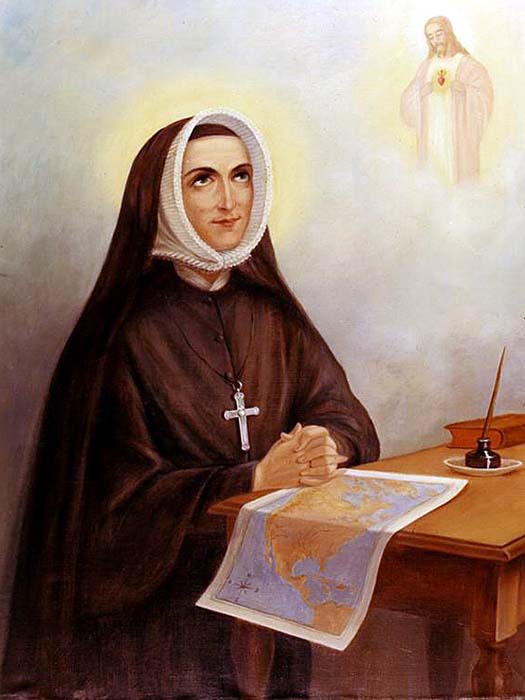
Saint Rose Philippine Duchesne, born in Grenoble, France, on August 29, 1769, was a woman of indomitable spirit and profound faith. Her early life unfolded amidst the turbulent backdrop of the French Revolution, a period that deeply shaped her spiritual journey. From a prominent and wealthy family, she received an excellent education, yet her heart yearned for a life consecrated to God. At the tender age of 18, she entered the Visitation convent at Sainte Marie d'en Haut, near Grenoble, a decision met with initial resistance from her family. However, the revolutionary fervor soon forced the closure of her beloved convent, scattering the community. Undeterred, Philippine, with a handful of companions, attempted to re-establish religious life in the abandoned monastery, enduring poverty and hardship, a testament to her unwavering resolve and deep devotion to the Sacred Heart of Jesus.
Her true vocation crystallized when she met Saint Madeleine Sophie Barat, the foundress of the Society of the Sacred Heart. In 1804, Philippine and her companions joined this nascent order, finding in its charism a perfect alignment with her own fervent desire to serve God and educate the young. For years, she pleaded with Mother Barat to allow her to go to the missions, particularly to the New World, a dream she had cherished since childhood. Finally, in 1818, at the age of 49, her prayers were answered. With four other sisters, she embarked on a perilous journey across the Atlantic, arriving in America to establish the first Sacred Heart convent in St. Charles, Missouri. Facing immense challenges – a harsh frontier environment, language barriers, and cultural differences – she tirelessly worked to found schools for pioneer children and, most notably, for Native American girls of the Potawatomi tribe, whom she deeply loved and served, earning the affectionate title "Quahkahkanumad" (Woman Who Prays Always).
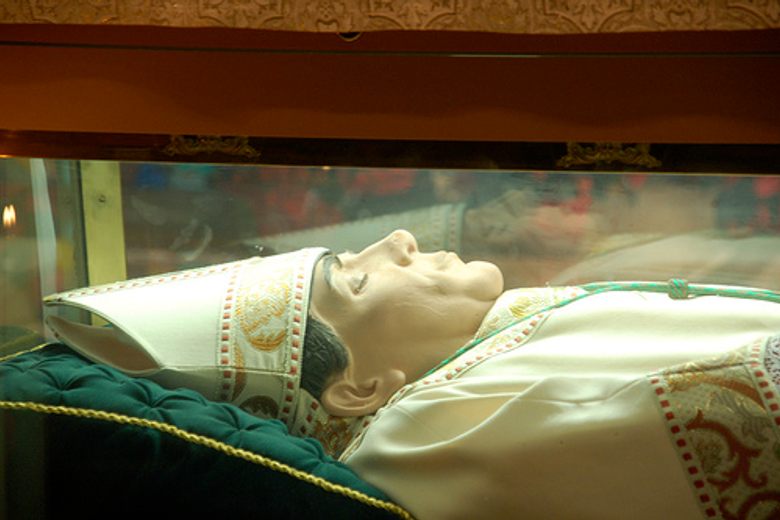
Saint Rose Philippine Duchesne passed away peacefully in St. Charles on November 18, 1852, at the age of 83. Her death was met with deep sorrow by those whose lives she had touched. Years later, in 1909, during the process of her beatification, her body was exhumed and found to be remarkably preserved, a testament to God's favor and a source of profound inspiration for the faithful. Her incorrupt body, a tangible sign of her sanctity, now rests in a glass reliquary at the Shrine of St. Rose Philippine Duchesne in St. Charles, Missouri. Pilgrims from around the world visit this sacred site, drawn by her enduring legacy of faith, perseverance, and missionary zeal.
Her canonization by Pope John Paul II in 1988 solidified her place among the Church's most revered saints. Saint Rose Philippine Duchesne is remembered not only as the pioneer who brought the Society of the Sacred Heart to America but also as a powerful intercessor for educators, missionaries, and those seeking strength in the face of adversity. Her life continues to inspire countless individuals to embrace a radical commitment to Christ and to serve the marginalized, echoing her own unwavering dedication to spreading the love of the Sacred Heart to all corners of the world.
Discovery
The remarkable preservation of this intrepid missionary's earthly remains first came to light during the initial canonical exhumation, a crucial step in the beatification process. On July 1, 1909, nearly 57 years after her passing, a solemn gathering convened at the cemetery of the Academy of the Sacred Heart in St. Charles, Missouri. Presiding over this momentous occasion were Bishop John J. Glennon of St. Louis, accompanied by several priests, physicians, and members of the Religious of the Sacred Heart, the order she had so faithfully served. As the coffin was carefully unearthed and opened, a profound sense of awe permeated the assembly. Despite the passage of more than half a century and burial in a simple wooden coffin, the body of Mother Duchesne was found to be in an astonishing state of preservation. Her habit, though discolored in places, remained largely intact, and her skin, while darkened and somewhat shrunken, still adhered to her bones. The facial features, though altered by time, were recognizably hers, and her hands and feet were remarkably preserved. The immediate reaction was one of profound wonder and reverence, a clear indication to those present of divine favor. The physicians, after a thorough examination, attested to the extraordinary nature of the preservation, noting the absence of significant decomposition typically expected after such a long interment.
Following this initial discovery, the body was carefully transferred to a new, more secure casket and placed in a crypt within the convent chapel. This was not, however, the final resting place, nor the last examination. As the cause for her canonization progressed, further inspections were deemed necessary to meticulously document the state of her remains. On May 19, 1935, another exhumation took place. This time, the body was found to be in a similar, though perhaps slightly more desiccated, condition. The facial features remained discernible, and the hands and feet continued to exhibit remarkable preservation. It was during this examination that a more detailed scientific assessment was conducted, solidifying the initial observations of incorruption. The body was then placed in a bronze casket, a more fitting vessel for such a revered relic. A subsequent, less intrusive examination occurred in 1940, primarily to assess the ongoing condition and prepare for the eventual public veneration. Throughout these decades, the fundamental integrity of her remains persisted, defying the natural processes of decay, a consistent testament to the phenomenon of incorruption.
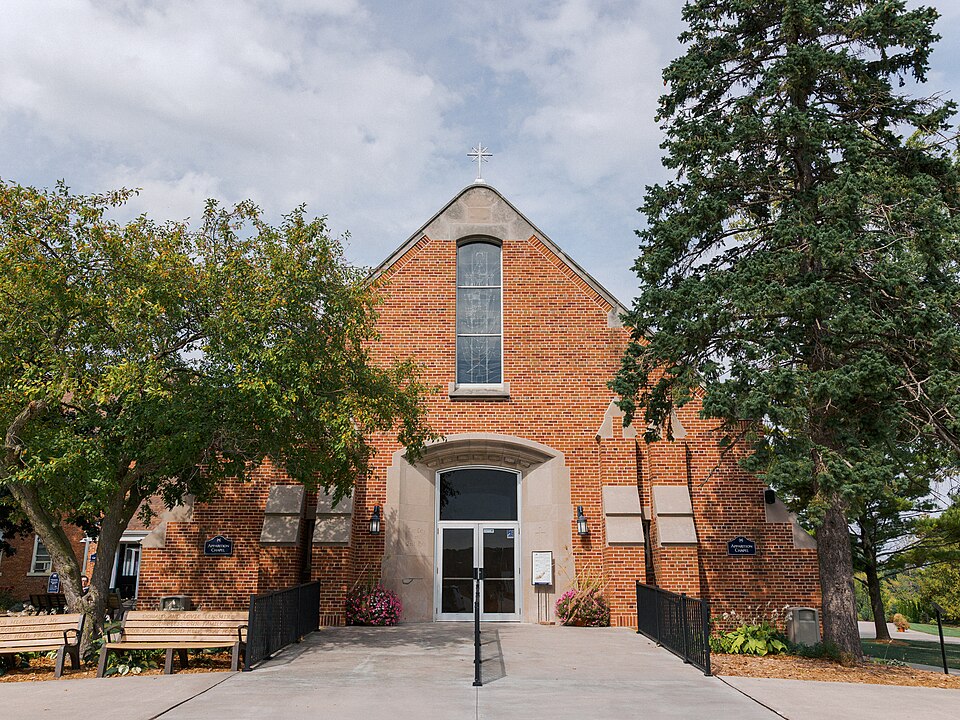
The preservation journey of Saint Rose Philippine Duchesne’s body culminates in its current venerated display. After the various examinations and transfers, her remains were ultimately enshrined in a glass casket, allowing the faithful to gaze upon her preserved form. This casket is housed within the Shrine of St. Rose Philippine Duchesne, located at the Academy of the Sacred Heart in St. Charles, Missouri, the very place where she spent her final years and where her mission flourished. The casket itself is a carefully designed reliquary, ensuring both protection and visibility. The environment within the shrine is meticulously controlled to maintain a stable temperature and humidity, further safeguarding the delicate remains from environmental degradation. While there are no reports of extraordinary phenomena such as sweet fragrance or flexibility associated with her body, the sheer fact of her sustained incorruption, almost 170 years after her death, remains the most profound and remarkable detail. Her body, though naturally shrunken and darkened with time, continues to resist the full effects of putrefaction, a silent, enduring testament to her sanctity and a source of inspiration for countless pilgrims who visit her shrine.
Scientific Analysis
The phenomenon of incorruption, particularly as observed in the remains of Saint Rose Philippine Duchesne, presents a compelling subject for scientific inquiry. Following her death in 1852, her body was interred in a simple wooden coffin. Records indicate that her initial exhumation occurred in 1860, eight years after her passing. At this time, witnesses, including members of the Sacred Heart order, reported finding her body remarkably well-preserved, with pliable skin and discernible features. A more formal examination was conducted in 1909 during the process of her beatification. This examination, overseen by ecclesiastical authorities, involved medical professionals who documented the state of her remains. While specific names of the examining physicians from 1909 are not widely publicized in readily available historical records, the general findings consistently describe a body that had not undergone the expected stages of putrefaction. The body was noted to be intact, with some tissues retaining a degree of flexibility, and the overall appearance was far from skeletal. Subsequent examinations, often associated with reinterments or veneration, have reaffirmed these observations, though detailed forensic reports with specific medical terminology and instrumental analyses from these early periods are not available in the modern scientific sense. The primary documentation stems from eyewitness accounts and official church records, which, while thorough in their context, lack the quantitative and qualitative data expected from contemporary forensic pathology.
The scientific remarkable nature of Saint Rose Philippine Duchesne's incorruption lies in its apparent defiance of typical post-mortem decomposition processes. Under normal circumstances, a body interred in a wooden coffin, particularly in the climate of St. Charles, Missouri, would be expected to undergo complete skeletonization within a few decades, if not sooner. The local environment, characterized by humid summers and cold winters, along with the presence of soil microorganisms, would typically accelerate decay. Factors such as temperature fluctuations, moisture levels, and the activity of insects and bacteria are primary drivers of decomposition. The absence of any documented embalming or significant preservation treatments at the time of her death further deepens the scientific mystery. Embalming, a practice that involves the injection of chemical preservatives into the vascular system, was not widely standardized or as effective in the mid-19th century as it is today, and there is no historical record of such a procedure being performed on her. The initial reports of pliable skin and preserved internal structures, even after eight years, are particularly noteworthy, as these are among the first tissues to degrade through autolysis and putrefaction. The continued state of preservation, albeit with some desiccation over time, challenges conventional understanding of taphonomy, the study of how organisms decay and become fossilized.
Various natural explanations have been proposed for cases of apparent incorruption, including saponification (adipocere formation), mummification, and unusual environmental conditions. Saponification, the transformation of body fat into a waxy, soap-like substance called adipocere, can preserve body contours and some soft tissues, particularly in moist, anaerobic environments. However, adipocere typically results in a firm, brittle consistency, distinct from the reported pliability in early observations of Saint Rose Philippine Duchesne. Mummification, either natural (through extreme dryness or cold) or artificial, involves the desiccation of tissues, which can preserve form but often results in a leathery, shrunken appearance. While her body has certainly undergone some degree of desiccation over the centuries, the initial reports suggest a preservation beyond simple mummification. Skeptics often attribute such phenomena to a combination of favorable environmental factors that slow decomposition, such as dry soil, limited oxygen, or specific soil chemistry. They might also point to the subjective nature of early observations, potentially influenced by religious fervor. However, the consistent reporting of an unusually well-preserved state across multiple exhumations, by various witnesses over decades, suggests that while natural processes may have played a role, they do not fully account for the extent and nature of the preservation described. The absence of specific, detailed scientific analysis from the early periods makes it challenging to definitively rule out all natural explanations, yet the phenomenon remains an outlier in the general understanding of human decomposition.
From a modern scientific perspective, the case of Saint Rose Philippine Duchesne, like other reported instances of incorruption, represents a fascinating opportunity for advanced forensic taphonomic research. If permitted, modern techniques such as computed tomography (CT) scans could provide detailed internal imaging without invasive procedures, revealing the state of internal organs, bone density, and the presence of any foreign materials or unusual tissue structures. Carbon dating could precisely determine the age of the remains and any associated materials. Advanced tissue analysis, including histological examination, proteomics, and DNA analysis, could shed light on the cellular and molecular preservation of tissues, potentially identifying unique biochemical markers or environmental factors that contributed to the phenomenon. For instance, the presence of specific microbial communities or unusual soil mineral compositions could be investigated. The application of these techniques could differentiate between true biological preservation and various forms of natural mummification or adipocere formation. The primary questions that remain unanswered revolve around the precise physiological and biochemical mechanisms that have inhibited decomposition in this specific case, the exact environmental conditions of her burial site over time, and whether any unknown natural factors contributed to this unusual state of preservation. While respecting the spiritual significance attributed to such phenomena, a thorough, non-invasive scientific investigation could offer invaluable insights into the complex processes of human decomposition and preservation, contributing significantly to forensic science and taphonomy.
Spiritual Significance
The phenomenon of incorruption, as exemplified by Saint Rose Philippine Duchesne, holds profound theological significance within Catholic doctrine, serving as a tangible testament to the sanctity of the human body and the enduring power of divine grace. The Church understands the body not merely as a vessel for the soul, but as a temple of the Holy Spirit, as articulated in 1 Corinthians 6:19. When a saint's body remains miraculously preserved after death, it is interpreted as a divine affirmation of this truth, a sign that the individual lived a life so intimately united with God that even their physical remains bear witness to their holiness. This miraculous preservation also powerfully foreshadows the doctrine of the resurrection of the body, a cornerstone of Christian belief. It offers a glimpse, however veiled, of the glorified bodies promised to the faithful at the end of time, reinforcing the hope that our physical selves, redeemed by Christ, will ultimately share in His eternal glory. For Saint Rose Philippine, whose life was a tireless offering of her physical and spiritual energies to God's mission, her incorruption underscores the Church's conviction that her entire being was consecrated to Christ, a living sacrifice pleasing to the Father. It is a visible link in the communion of saints, reminding us that those who have gone before us remain intimately connected to the Church militant, their earthly forms still speaking volumes of their heavenly reward.
Saint Rose Philippine Duchesne’s unique charism was a fiery zeal for the missions and an unyielding perseverance in the face of immense adversity, earning her the moniker "the woman who is always praying" from the Native Americans she served. Her heroic virtues were manifold, but perhaps none shone brighter than her profound humility, which allowed her to embrace a life of hardship and obscurity despite her aristocratic background, and her unwavering obedience to God's will, even when it led her far from her beloved France to the untamed American frontier. Her charity extended to all, especially the marginalized and unevangelized, for whom she tirelessly established schools and ministered to their spiritual and material needs. She practiced a deep, contemplative mysticism, finding solace and strength in prolonged periods of prayer before the Blessed Sacrament, which fueled her active apostolate. Her way of holiness was characterized by a radical self-emptying, a complete surrender to divine providence, and an extraordinary capacity for endurance. She brought the spiritual tradition of the Society of the Sacred Heart, with its emphasis on the Sacred Heart of Jesus as the source of all love and mercy, to the New World, adapting its contemplative spirit to the active demands of frontier life. Her life was a testament to the transformative power of grace, demonstrating how a refined European lady could become a rugged missionary, driven solely by her love for God and souls.
The devotion to Saint Rose Philippine Duchesne has steadily grown since her death, particularly in the United States where her missionary endeavors bore such fruit. She is widely venerated as the patroness of perseverance, courage in adversity, and the missions, especially among those who serve in challenging environments. Her feast day is celebrated on November 18th, a day often marked by special Masses, prayers, and reflections on her life and virtues. While specific novenas dedicated solely to her are less common than for some other saints, her intercession is frequently invoked by those facing difficult circumstances or seeking spiritual fortitude. Pilgrims today journey to her shrine at the Academy of the Sacred Heart in St. Charles, Missouri, where her incorrupt body rests, a place of profound spiritual encounter. The experience of visiting her shrine is often described as deeply moving, a palpable sense of peace and holiness pervading the space. Many come to pray, to touch the reliquary, and to offer petitions, feeling a tangible connection to this remarkable woman whose physical presence, though centuries removed, continues to inspire and console. The sight of her preserved remains serves as a powerful reminder of the continuity of faith and the enduring presence of the saints among us.
Numerous miracles have been attributed to the intercession of Saint Rose Philippine Duchesne, both during her lifetime and after her death, solidifying her reputation as a powerful intercessor. Documented healings from various ailments, often after prayers offered at her tomb or through the use of her relics, have been recorded and meticulously investigated by the Church. Stories of conversions, where individuals experienced profound spiritual awakenings or returned to the faith after invoking her aid, also abound. Beyond dramatic physical cures, countless faithful have reported answered prayers for strength in times of trial, guidance in difficult decisions, and an increase in faith and charity, all attributed to her heavenly advocacy. The incorrupt body itself has been a continuous source of spiritual consolation for the faithful. Its miraculous preservation serves as a visible sign of God's favor and a confirmation of the Church's teaching on the sanctity of life and the communion of saints. For many, gazing upon her incorrupt remains provides a tangible link to the divine, a powerful reassurance that holiness is attainable and that God continues to work wonders through His chosen ones, offering hope and strengthening belief in a world often prone to doubt.
Saint Rose Philippine Duchesne’s enduring message for contemporary Catholics and seekers resonates deeply in our often-materialistic and secularized world. Her life challenges the prevailing notion that comfort and worldly success are the ultimate goals, instead demonstrating the profound joy and fulfillment found in radical self-giving and unwavering commitment to God's will. In an age characterized by instant gratification and spiritual apathy, her heroic perseverance and patient endurance offer a powerful counter-narrative, reminding us that true spiritual growth often requires sacrifice and a willingness to embrace hardship for the sake of the Gospel. People today can learn from her example the importance of a deep prayer life as the foundation for all apostolic work, the necessity of courage in proclaiming the truth, and the transformative power of charity extended to all, regardless of background or belief. Her incorruption serves as a tangible bridge between the visible and invisible worlds, a physical manifestation of heavenly reality breaking into our earthly existence. It reminds us that our earthly pilgrimage has an eternal destiny, and that the saints, though in glory, remain intimately connected to us, interceding on our behalf and inspiring us to strive for holiness, offering a powerful testament to the enduring presence of God’s grace in the human story.
AI summary
A plain-language overview generated from this page's source material. Always verify with primary sources.