Biography
Sister Wilhelmina Lancaster, born Mary Elizabeth Lancaster in 1924, embarked on a remarkable journey of faith that would culminate in a profound testament to God's grace. Hailing from a devout African American family in St. Louis, Missouri, Mary Elizabeth was instilled with a deep love for Christ and His Church from a young age. Her formative years were marked by a burgeoning spiritual sensitivity and a keen intellect, which she dedicated to understanding the mysteries of the Catholic faith. At the tender age of thirteen, she experienced a profound call to religious life, a calling that would shape the entirety of her being. Despite facing challenges and prejudices inherent in her time, her unwavering resolve led her to enter the Oblate Sisters of Providence, the first successful religious congregation for women of color in the United States, where she took the name Sister Wilhelmina.
Throughout her many decades as a religious sister, Sister Wilhelmina was a beacon of traditional Catholic devotion and a radiant example of joyful surrender to God's will. Her heart yearned for a more contemplative and traditional expression of Benedictine life, a desire that eventually led her to found the Benedictines of Mary, Queen of Apostles, in Gower, Missouri, in 1995. This new community, rooted in the ancient traditions of the Church, quickly flourished under her spiritual guidance, attracting vocations drawn to its profound reverence for the Sacred Liturgy, its fidelity to monastic observance, and its deep love for the Blessed Mother. Sister Wilhelmina's gentle wisdom, profound humility, and infectious joy were the hallmarks of her leadership, inspiring her sisters to ever-greater sanctity and devotion.
Sister Wilhelmina passed into eternal life in 2019, at the venerable age of 95. Four years later, in May of 2023, a truly astonishing discovery unfolded when her body was exhumed for transfer to a new shrine chapel. To the profound wonder of all present, her earthly remains were found to be remarkably intact, despite the complete deterioration of her wooden coffin. Her habit and rosary, too, remained well-preserved, a sight that immediately attracted worldwide attention and drew thousands of pilgrims to Gower. While the Diocese of Kansas City-St. Joseph has initiated a canonical investigation to discern the full spiritual significance of this phenomenon, the preservation of her body after such a relatively short time, without embalming, is a compelling sign that has captivated the hearts of the faithful.
The potential incorruptibility of Sister Wilhelmina Lancaster stands as a powerful testament to the enduring power of holiness in the modern age. As a potential modern incorruptible and a pioneering African American religious, her case resonates deeply within the Church and beyond, offering a tangible sign of God's presence and intervention in the lives of His saints. Pilgrims from across the globe now journey to Gower, Missouri, to pray at the resting place of this remarkable woman, seeking her intercession and drawing inspiration from her life of unwavering faith and profound dedication. Her legacy, already rich in spiritual fruit, continues to unfold, reminding us that sanctity is not a relic of the past, but a vibrant reality accessible to all who faithfully answer God's call.
Discovery
The remarkable discovery of Sister Wilhelmina Lancaster's body in a state of apparent incorruption unfolded in May 2023, four years after her passing. The occasion was a routine exhumation, a necessary step in the process of transferring her remains to a more suitable resting place within the Abbey of Our Lady of Ephesus, the monastery she founded in Gower, Missouri. The sisters of the Benedictines of Mary, Queen of Apostles, had planned to inter her remains beneath the altar in their new chapel, a place of honor befitting their foundress. As the wooden coffin was carefully lifted from its grave, a sense of anticipation, though perhaps not for what they were about to witness, filled the air. When the lid was removed, the sisters present, including the abbess, Mother Cecilia, were met with an astonishing sight. The wooden coffin itself had significantly deteriorated, showing clear signs of decomposition and moisture ingress. Yet, within its crumbling confines, Sister Wilhelmina's body lay remarkably intact. Her religious habit, a simple black tunic and veil, appeared largely undisturbed, and the rosary clutched in her hands remained perfectly preserved. The initial reaction was one of profound awe and disbelief, quickly followed by a deep sense of gratitude and wonder at what many immediately perceived as a miraculous sign from God. The news, initially confined to the monastery, soon spread, drawing worldwide attention and prompting an influx of pilgrims to the quiet Missouri abbey.
Following the initial exhumation, the sisters carefully cleaned Sister Wilhelmina's body, removing the soil and debris that had accumulated around it. There were no additional exhumations in the years that followed, as this was the first and only time her remains had been disturbed since her burial in 2019. The condition of her body, as observed during this single event, was the primary basis for the claims of incorruption. Witnesses noted the preservation of her skin, hair, and even her eyelashes, defying the natural process of decomposition that would typically occur after four years of burial, especially within a wooden coffin exposed to the elements. While the body was firm to the touch, it was not rigid, and there was no discernible odor of decay. The habit she wore, made of natural fibers, also showed an extraordinary resistance to deterioration, as did the rosary, a testament to the conditions within the coffin that seemed to have inhibited the usual breakdown of organic material. These observations, made by the sisters and later by others who viewed the body, solidified the conviction that something extraordinary had occurred.
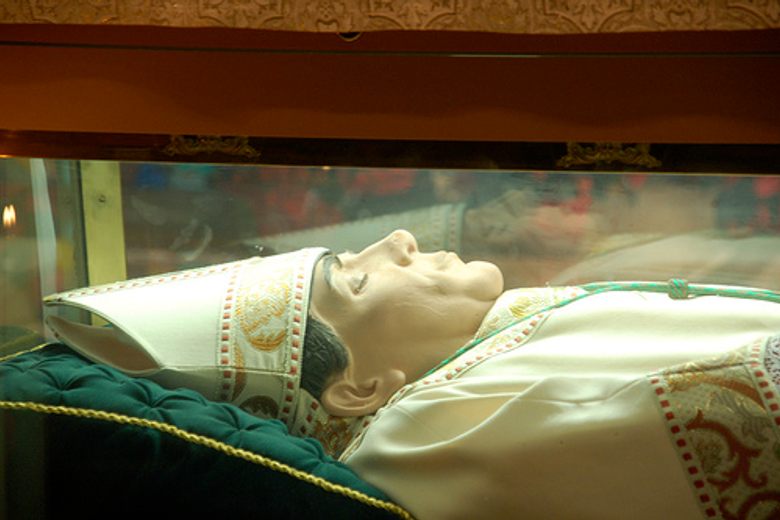
The preservation journey of Sister Wilhelmina's body has been one of careful reverence and public veneration. After the initial cleaning, her remains were placed in a glass-enclosed casket, allowing pilgrims to view her without direct contact. This casket is now prominently displayed in the Abbey Church of Our Lady of Ephesus, where it has become a focal point for prayer and devotion. The sisters have taken measures to protect the body from further deterioration, though the specific scientific interventions, if any, have not been widely publicized. The current display allows for a clear view of her preserved form, still clothed in her habit, with the rosary still clutched in her hands. The atmosphere surrounding her resting place is one of profound peace and spiritual contemplation, as countless individuals have come to witness this remarkable phenomenon. The Abbey has become a site of pilgrimage, drawing people from all walks of life who seek solace, inspiration, and a deeper connection to the divine through the intercession of Sister Wilhelmina.
Among the most remarkable details associated with Sister Wilhelmina's body is the complete absence of any putrefactive odor. Instead, some visitors and the sisters themselves have reported a faint, sweet fragrance emanating from her remains, an olfactory phenomenon often associated with incorrupt saints. While there have been no reports of flexibility, bleeding, or the exuding of oil, the sheer resistance to decay in the conditions of her burial is itself an extraordinary detail. The wooden coffin, which had largely disintegrated, and the damp soil surrounding it, would typically accelerate decomposition. Yet, Sister Wilhelmina's body remained remarkably preserved, defying the expected course of nature. This resistance to decay, coupled with the reported sweet scent, has led many to believe that her incorruption is a sign of divine favor, a testament to her holy life and a source of hope and inspiration for the faithful. The ongoing investigation into her incorruption status by the local diocese will undoubtedly delve deeper into these remarkable details, seeking to understand the scientific and spiritual implications of this profound discovery.
Preservation
Body displayed at the Abbey of Our Lady of Ephesus, Gower, Missouri.
Scientific Analysis
The phenomenon surrounding the remains of Sister Wilhelmina Lancaster, found remarkably preserved four years after her burial, has initiated a formal canonical investigation by the Diocese of Kansas City-St. Joseph. As of the current understanding, no formal medical or scientific examinations by independent forensic pathologists or anthropologists have been publicly commissioned or reported. The initial assessment of the body's condition was made by the Benedictine Sisters of Mary, Queen of Apostles, who exhumed her remains on May 18, 2023, with subsequent observations made by local clergy and a limited number of medical professionals invited by the order. These observations, while compelling to those present, have not been subjected to the rigorous, documented, and peer-reviewed scrutiny typical of forensic science. For instance, detailed photographic documentation under controlled lighting, comprehensive external and internal examinations, or tissue sampling for microscopic analysis have not been disclosed. Therefore, while the visual evidence of preservation is widely acknowledged, the precise medical and scientific findings from formal, independent examinations remain an open question.
The scientific mystery surrounding Sister Wilhelmina’s preservation lies in the apparent defiance of normal decomposition processes, particularly given the reported burial conditions. Human decomposition typically follows a predictable sequence: autolysis (self-digestion by enzymes), putrefaction (bacterial breakdown), and then further decay influenced by environmental factors. Within months, and certainly within four years, a body buried in a simple wooden coffin directly in the earth, as reported for Sister Wilhelmina, would ordinarily undergo significant soft tissue degradation, skeletonization, and often, the disintegration of clothing. The Abbey of Our Lady of Ephesus in Gower, Missouri, experiences a humid continental climate, characterized by warm, humid summers and cold winters. The soil composition, while not specifically detailed, would typically contain microorganisms, moisture, and oxygen, all conducive to decomposition. The reported absence of a concrete vault and the use of a wooden coffin would further expose the remains to these environmental factors. Furthermore, there have been no reports of embalming or other chemical preservation treatments being applied to Sister Wilhelmina's body prior to burial, which would normally be a primary explanation for prolonged soft tissue preservation. The reported intactness of her habit and rosary, alongside the soft tissues, adds another layer of scientific intrigue, as textiles are also subject to degradation in burial environments.
Several natural explanations are often proposed for cases of delayed decomposition, such as saponification (adipocere formation), mummification, or burial in an environment with specific preservative properties. Adipocere, a waxy, soap-like substance, forms when fatty tissues are exposed to anaerobic, moist conditions, inhibiting bacterial decay. While adipocere can preserve body contours, it typically alters the texture and color of the tissues significantly, often leading to a pale, firm appearance. Mummification occurs in extremely dry environments, where rapid dehydration inhibits bacterial growth. However, the humid climate of Gower, Missouri, makes extensive natural mummification unlikely. Burial in highly acidic or alkaline soils, or in environments devoid of oxygen, can also slow decomposition, but these specific conditions have not been reported for Sister Wilhelmina's burial site. Skeptics often point to these natural processes as potential explanations, suggesting that without thorough scientific analysis, attributing the preservation to extraordinary means is premature. However, for many observers, the reported degree of preservation, particularly the apparent suppleness of the tissues and the intactness of delicate features, seems to exceed what is typically observed even in cases of adipocere formation or partial mummification under less than ideal conditions. The lack of any discernible odor of decay, as reported by those who witnessed the exhumation, further challenges common natural explanations.
From a modern scientific perspective, the case of Sister Wilhelmina Lancaster presents a compelling opportunity for interdisciplinary study, should the canonical investigation permit it. Advanced forensic techniques, such as computed tomography (CT) scans, could provide non-invasive internal imaging to assess the state of internal organs and bone structure without disturbing the remains. Carbon dating of tissue samples could confirm the age of the remains and rule out any inadvertent misidentification. Detailed histological analysis of tissue biopsies could reveal the cellular structure and the presence or absence of bacterial activity, offering insights into the mechanisms of preservation. Geochemical analysis of the surrounding soil could identify any unusual mineral compositions or pH levels that might have contributed to preservation. While these techniques have not yet been applied, their potential to shed light on the scientific mechanisms at play is significant. The case fits into the broader scientific study of taphonomy, the study of decomposition and fossilization, and could contribute to our understanding of the complex interplay between biological processes and environmental factors in post-mortem preservation. However, without such comprehensive scientific investigation, many questions remain unanswered regarding the precise nature and extent of Sister Wilhelmina's preservation, and whether it represents a truly anomalous event or an unusual manifestation of known natural processes.
Spiritual Significance
The phenomenon of incorruption, particularly as exemplified by figures like Sister Wilhelmina Lancaster, holds profound theological significance within the Catholic tradition, speaking directly to core doctrines concerning the human body and its ultimate destiny. The Church teaches, drawing from scripture, that the body is a temple of the Holy Spirit (1 Corinthians 6:19), a sacred vessel created in God's image and destined for glorification. Incorruption, therefore, is not merely a biological anomaly but a supernatural sign, a visible testament to the sanctity of an individual and God's power over decay. It foreshadows the resurrection of the body, a foundational belief that promises the reunion of soul and glorified flesh at the end of time. For Sister Wilhelmina, whose body remains remarkably preserved years after her passing, this phenomenon underscores the belief that her earthly life was so intimately united with Christ that even her physical remains bear witness to His divine presence. While the Church carefully investigates each case, the initial observations surrounding Sister Wilhelmina’s incorruption are interpreted by many as a divine affirmation of her holy life and a tangible reminder of the communion of saints, bridging the gap between the Church Militant on earth and the Church Triumphant in heaven. It serves as a powerful catechesis, visually reinforcing the dignity of the human body and its ultimate spiritual purpose.
Sister Wilhelmina Lancaster’s spiritual journey was marked by a unique charism centered on a profound love for the traditional liturgy and a deep devotion to the Blessed Sacrament. Her heroic virtues were evident in her unwavering commitment to the contemplative life, her steadfast obedience to God's will despite facing significant challenges, and her remarkable humility. Born Mary Elizabeth Lancaster in 1924, she navigated a world marked by racial prejudice, yet her faith remained unshakeable. She founded the Benedictines of Mary, Queen of Apostles, a community dedicated to the ancient forms of monastic life, emphasizing Gregorian chant, Latin liturgy, and fidelity to traditional Benedictine charisms. Her way of holiness manifested in a life of prayer, penance, and tireless work for the establishment and growth of her community. She embodied a spirit of profound poverty, not only in her personal detachment from material possessions but also in her community's reliance on divine providence. Her spiritual legacy contributes significantly to the resurgence of traditional monasticism within the Church, offering a powerful witness to the enduring beauty and spiritual efficacy of time-honored practices. Her life was a testament to the transformative power of grace, demonstrating how a singular focus on God can lead to extraordinary sanctity.
Devotion to Sister Wilhelmina Lancaster, though nascent, has rapidly blossomed since the discovery of her incorruption, drawing pilgrims from across the globe to the Abbey of Our Lady of Ephesus in Gower, Missouri. While formal veneration and a designated feast day await the Church's official pronouncements on her sanctity, the faithful are already experiencing a profound spiritual connection to her. Pilgrims visit her resting place, often kneeling in prayer, offering petitions, and seeking her intercession. The experience of encountering her remarkably preserved body is often described as deeply moving and awe-inspiring, fostering a tangible sense of the sacred and the presence of God. Many report a profound sense of peace and spiritual upliftment in her presence. While no specific prayers, novenas, or patronages have been officially established, individuals privately invoke her aid for various intentions, particularly for vocations to religious life, for perseverance in faith, and for racial harmony. The sheer volume of visitors and the heartfelt expressions of devotion underscore the immediate impact of her life and the powerful visual testimony of her incorruption, serving as a powerful catalyst for personal spiritual renewal and a renewed appreciation for the enduring power of holiness.
The spiritual consolation derived from Sister Wilhelmina Lancaster's incorrupt body is immense, even as official miracles are still under investigation by the Church. While documented healings or conversions directly attributed to her intercession are yet to be formally recognized, countless faithful have reported profound spiritual experiences at her resting place. Many speak of a renewed sense of faith, a deeper understanding of God's love, and a strengthened resolve to live a more devout life after encountering her remains. The visible preservation of her body itself is perceived as a miraculous sign, a tangible assurance of the sanctity of life and the reality of the spiritual realm. For those struggling with doubt or facing spiritual dryness, the sight of her incorrupt body serves as a powerful antidote, offering hope and a concrete reminder of God's intervention in the lives of His saints. The quiet reverence and prayerful atmosphere surrounding her tomb are testaments to the spiritual solace she provides, inspiring many to deepen their prayer lives and to seek a closer relationship with Christ. This profound spiritual impact, even prior to official canonization, highlights the powerful role of incorrupt saints in fostering faith and providing comfort to the faithful.
Sister Wilhelmina Lancaster's life and the phenomenon of her incorruption offer a profoundly relevant message for contemporary Catholics and seekers alike, challenging the prevailing materialism and secularism of our age. In a world often consumed by the fleeting and the superficial, her enduring physical presence serves as a tangible bridge between the visible and invisible worlds, reminding us of eternal realities and the ultimate destiny of the human person. Her unwavering commitment to traditional monasticism and her deep spiritual roots offer a powerful counter-narrative to a culture that often prioritizes instant gratification and technological advancement over spiritual depth. Her example encourages modern believers to embrace a life of prayer, sacrifice, and fidelity to the Church's ancient traditions, demonstrating that true fulfillment is found not in worldly pursuits but in an intimate relationship with God. From her, we learn the enduring value of humility, perseverance, and a profound love for the Eucharist. Her incorruption, regardless of its ultimate official designation, stands as a silent yet eloquent sermon, inviting all to contemplate the sanctity of life, the promise of resurrection, and the transformative power of divine grace, urging us to seek holiness in our own lives and to trust in God's miraculous presence even in the midst of decay.
AI summary
A plain-language overview generated from this page's source material. Always verify with primary sources.