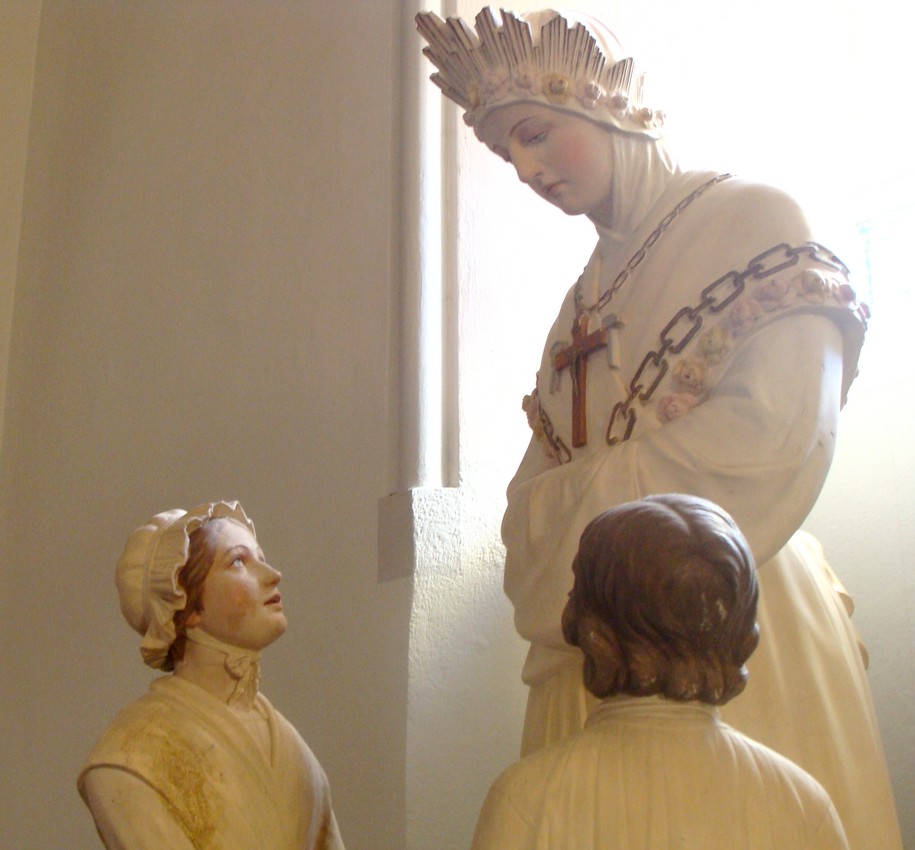
The Blessed Virgin Mary appeared weeping to two young shepherds in the French Alps, delivering a message about the consequences of sin and the importance of prayer and penance.
History
On September 19, 1846, two young cowherds — Melanie Calvat (age 14) and Maximin Giraud (age 11) — were tending cattle on the mountain of La Salette when they saw a brilliant light in a ravine. Within the light, they saw a woman seated with her face in her hands, weeping. She rose and spoke to them in French, then in their local patois when they had difficulty understanding. The apparition lasted about 30 minutes. The local bishop, Philibert de Bruillard, established a commission of inquiry and, after five years of investigation, approved the apparition in 1851. A basilica was built at the site, which became a major pilgrimage destination.
Messages
The weeping Virgin delivered a message of warning about the spiritual state of France and the world. She lamented the profanation of the Lord's Day, blasphemy, and the neglect of prayer. She warned of crop failures and famine as consequences of these sins — prophecies that were fulfilled in the following years with potato blight and wheat failures across France. She also gave each child a personal secret. Her central plea was: 'If my people will not submit, I shall be forced to let fall the arm of my Son.'
Spiritual Significance
La Salette is significant as the first major Marian apparition of the modern era to receive full ecclesiastical approval. The image of the weeping Virgin became a powerful symbol of Mary's maternal sorrow over humanity's sins. The apparition inspired a new religious order — the Missionaries of Our Lady of La Salette — and influenced the broader 19th-century Marian revival that would culminate in the apparitions at Lourdes and the definition of the Immaculate Conception.