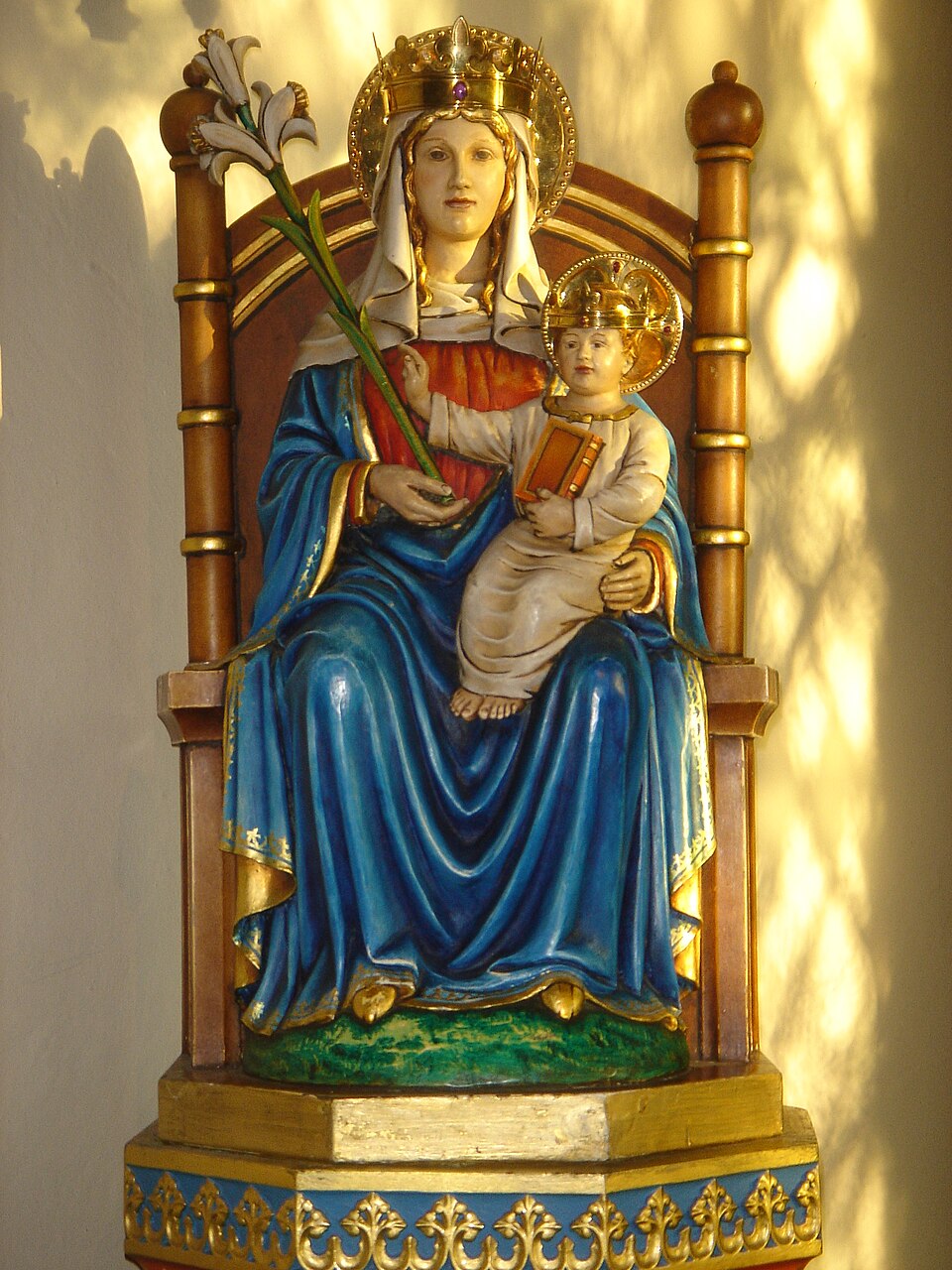
The Blessed Virgin Mary appeared to the Saxon noblewoman Richeldis de Faverches, showing her the house of the Annunciation in Nazareth and asking her to build a replica — creating 'England's Nazareth,' one of the greatest medieval pilgrimage sites in Europe.
History
In 1061, the Blessed Virgin appeared to Richeldis de Faverches, a wealthy Saxon noblewoman, in three visions. Mary transported Richeldis in spirit to the house in Nazareth where the Annunciation took place and asked her to build an exact replica in Walsingham. The Holy House was constructed and became one of the four great pilgrimage sites of medieval Christendom, alongside Jerusalem, Rome, and Santiago de Compostela. Every English king from Henry III to Henry VIII made pilgrimage to Walsingham. The shrine was destroyed during the Dissolution of the Monasteries in 1538, but was restored in the 20th century and is now both an Anglican and Catholic pilgrimage site.
Messages
The Virgin's message was singular and specific: build a replica of the Holy House of Nazareth in England, so that pilgrims could venerate the site of the Annunciation without traveling to the Holy Land. This practical message reflects the medieval understanding of sacred space — that holiness could be replicated and shared across geography.
Spiritual Significance
Walsingham is significant as one of the oldest approved Marian apparitions and the most important medieval Marian shrine in England. Its destruction during the Reformation and subsequent restoration in the 20th century makes it a powerful symbol of Catholic resilience. Uniquely, Walsingham is now shared between Catholic and Anglican traditions, making it an ecumenical pilgrimage site.