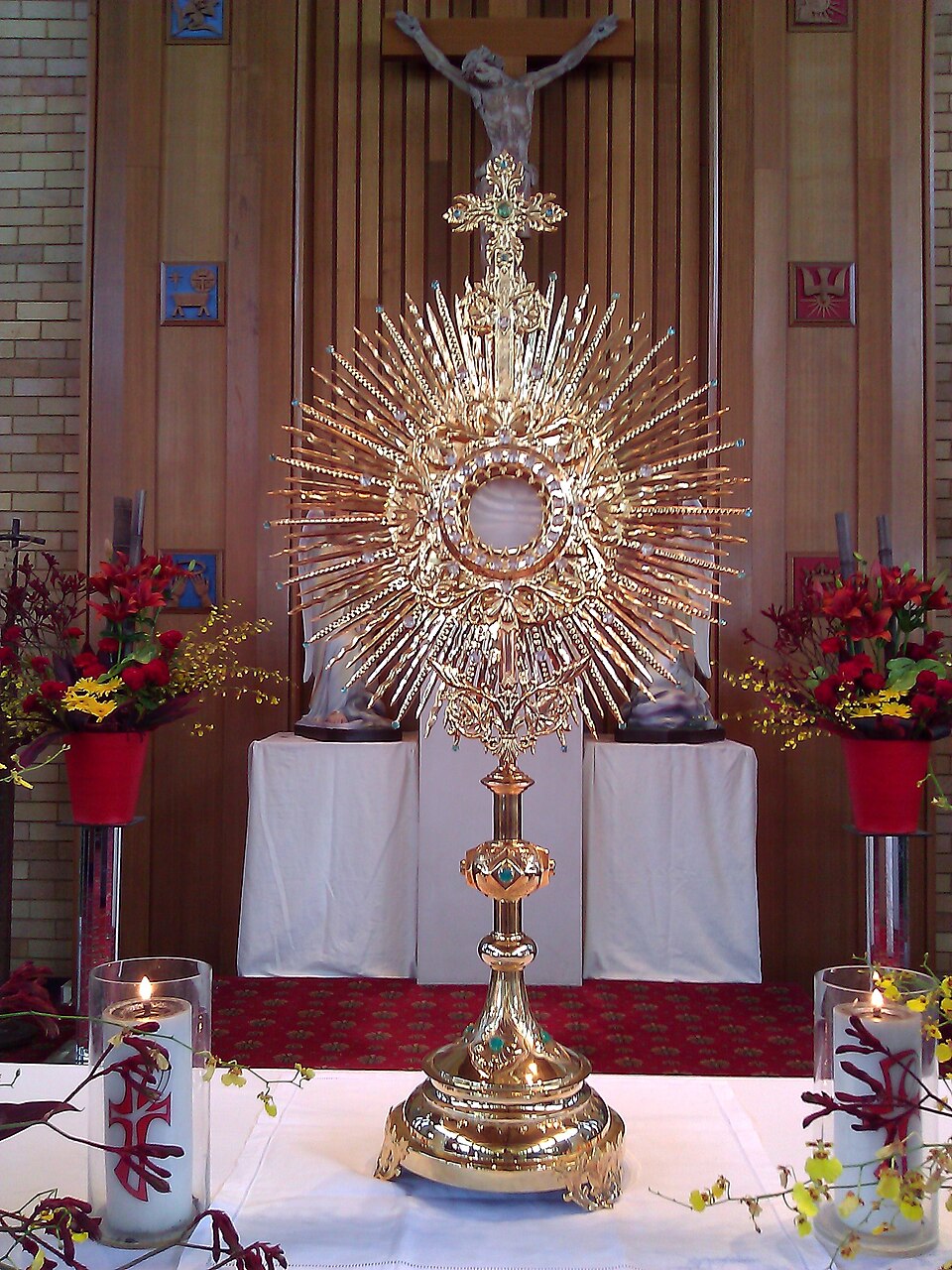
During a devastating flood of the Rhône River, the church was submerged but the consecrated Hosts in the tabernacle were found perfectly dry and intact when the waters receded, despite everything else in the church being soaked and damaged.
History
In November 1433, the Rhône River flooded catastrophically, submerging much of Avignon including the Church of the Holy Cross. The floodwaters rose to a great height within the church, destroying furnishings, soaking vestments, and damaging everything within reach. When the waters finally receded, parishioners and clergy rushed to assess the damage. To their astonishment, when they opened the tabernacle, the consecrated Hosts inside were found perfectly dry and intact, despite the tabernacle itself being waterlogged. Everything else in the church — altar cloths, books, vestments — was soaked and damaged, but the Hosts showed no trace of moisture. The miracle was investigated by Church authorities and declared authentic. It became a powerful testimony to the special nature of the consecrated Eucharist and attracted pilgrims to Avignon.
Scientific Findings
The miracle was documented through witness testimonies and the physical evidence of flood damage throughout the church contrasted with the pristine condition of the Hosts. The selective preservation of the Hosts while everything else was water-damaged was considered inexplicable by natural means.
AI summary
A plain-language overview generated from this page's source material. Always verify with primary sources.