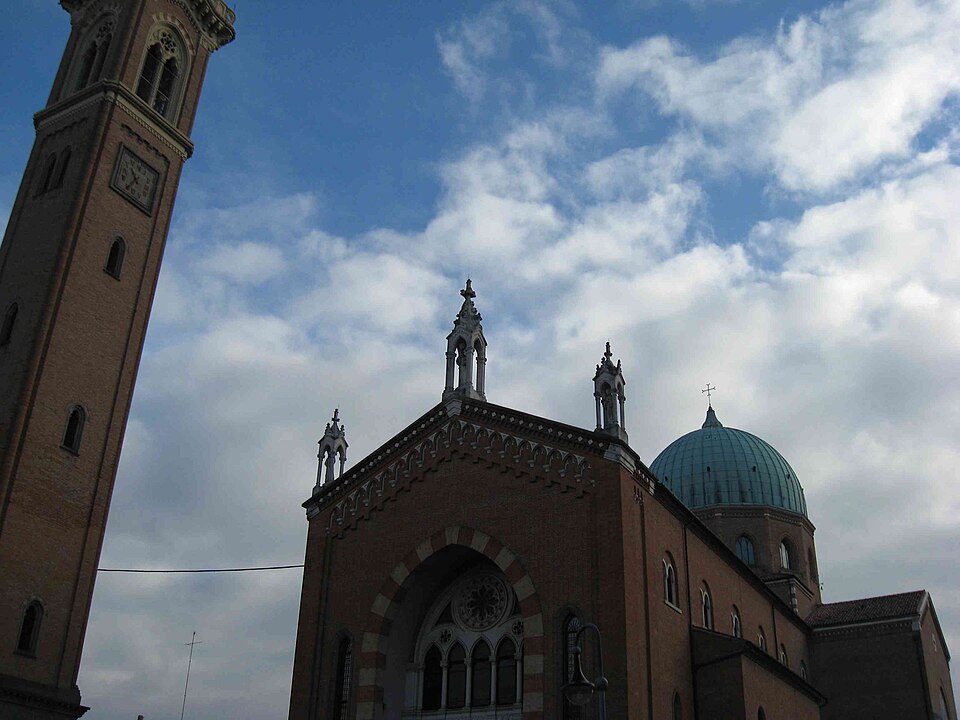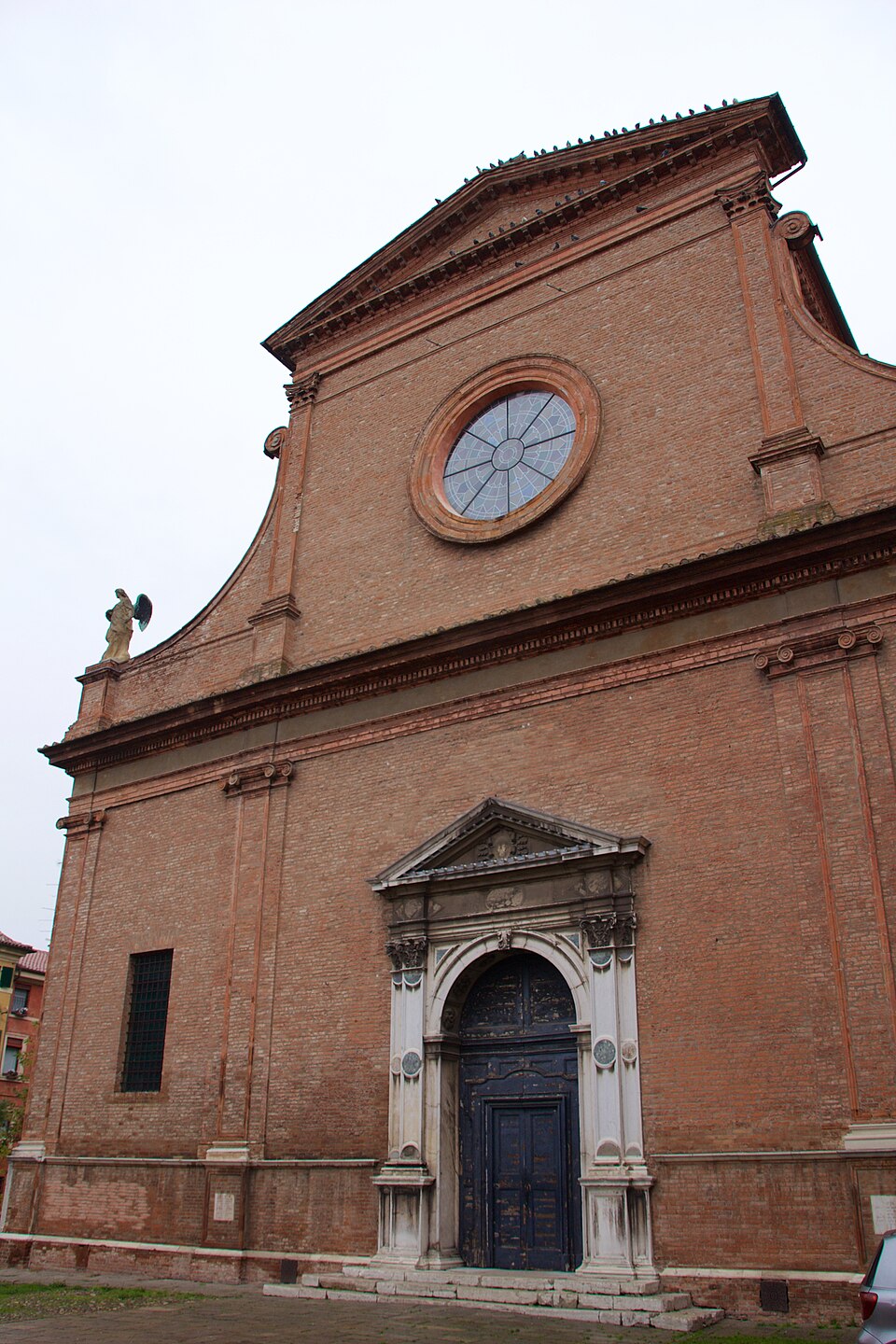
On Easter Sunday 1171, as Father Pietro da Verona broke the consecrated Host during Mass, blood spurted from it with such force that it stained the vault of the small chapel above the altar. The bloodstains on the vault remain visible to this day, preserved behind glass in the Basilica of Santa Maria in Vado.
History
On March 28, 1171 (Easter Sunday), Father Pietro da Verona was celebrating Mass in the small Church of Santa Maria in Vado in Ferrara. At the moment of the fraction — when the priest breaks the consecrated Host — blood spurted from the Host with such force that it sprayed upward and stained the low vault of the chapel directly above the altar. The event was witnessed by numerous parishioners. The news spread rapidly, and the miracle was investigated and approved by the local bishop. Over the following centuries, the small church was expanded into the magnificent Basilica of Santa Maria in Vado to accommodate the growing number of pilgrims. The original vault with the bloodstains was carefully preserved and can still be seen today, enclosed behind protective glass. The basilica became one of Ferrara's most important churches and a major pilgrimage destination.
Scientific Findings
The bloodstains on the vault have been preserved for over 850 years. The stains have been examined at various points in history and confirmed to contain hemoglobin. The pattern of the stains is consistent with blood being projected upward from below, matching the historical account of blood spurting from the broken Host. The remarkable preservation of the stains over such a long period is itself considered extraordinary.
AI summary
A plain-language overview generated from this page's source material. Always verify with primary sources.