St. Anthony of Padua challenged a heretic who denied the Real Presence. The heretic agreed that if his starving mule knelt before the Blessed Sacrament instead of eating, he would believe. The mule, despite being starved for three days, ignored the food and knelt before the Eucharist.
History
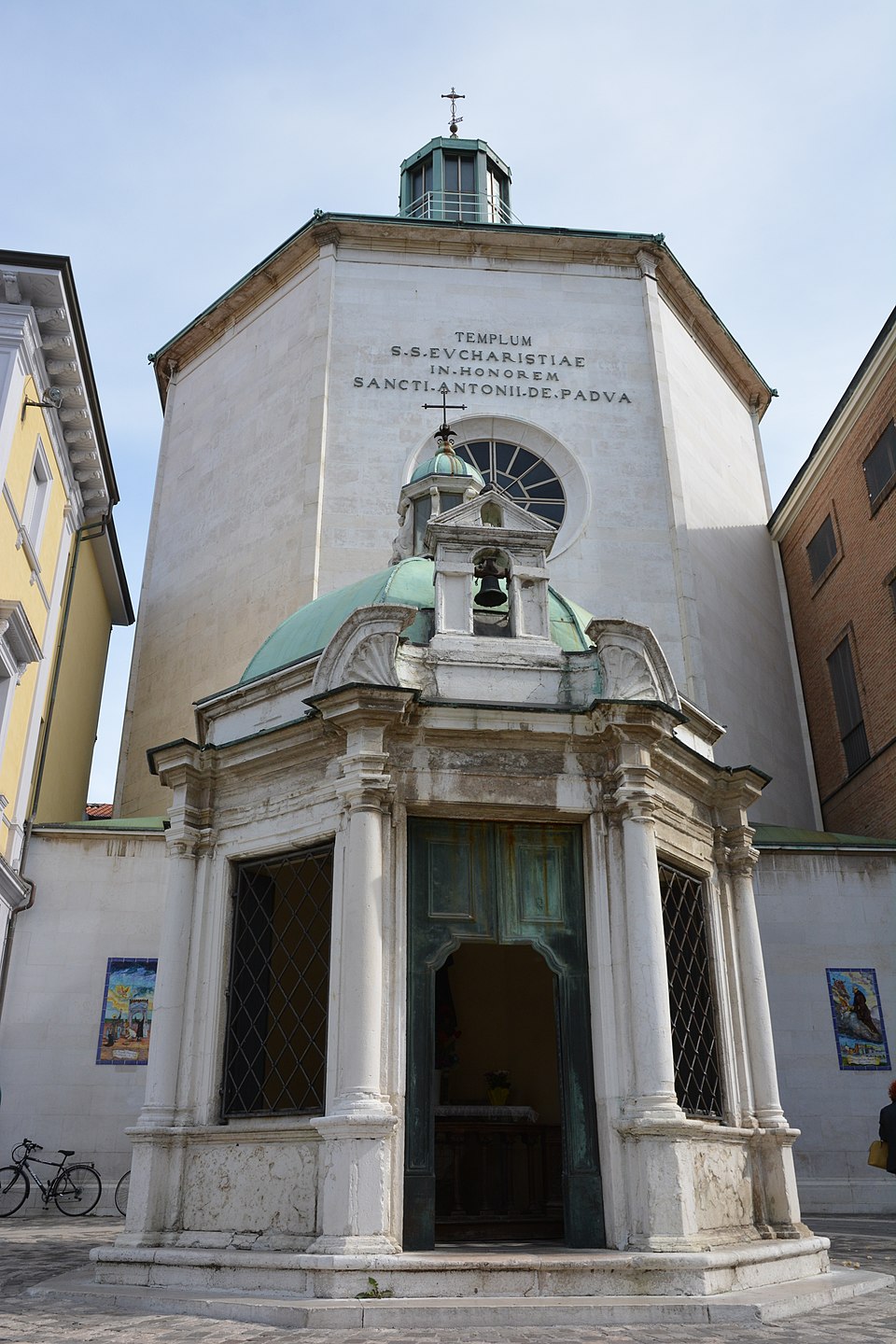
In 1227, St. Anthony of Padua was preaching in Rimini against the Cathar heresy, which denied the Real Presence of Christ in the Eucharist. A prominent heretic named Boniville (or Bonovillo) challenged Anthony, declaring he would only believe in the Real Presence if his mule demonstrated it. The test was arranged: Boniville's mule was starved for three days. Then, in a public square before a large crowd, the mule was presented with a bucket of oats on one side and St. Anthony holding the Blessed Sacrament in a monstrance on the other. Despite its extreme hunger, the mule completely ignored the food, walked directly to St. Anthony, and knelt before the Eucharist. Boniville, true to his word, converted on the spot, and many other heretics followed. The miracle is one of the most famous associated with St. Anthony and is frequently depicted in art. A bas-relief depicting the miracle can be found in the Basilica of St. Anthony in Padua.
Scientific Findings
The miracle is documented in the earliest biographies of St. Anthony of Padua, written within decades of the event. Multiple independent sources corroborate the account. The miracle was witnessed by a large public crowd in Rimini's central square.
AI summary
A plain-language overview generated from this page's source material. Always verify with primary sources.