Biography
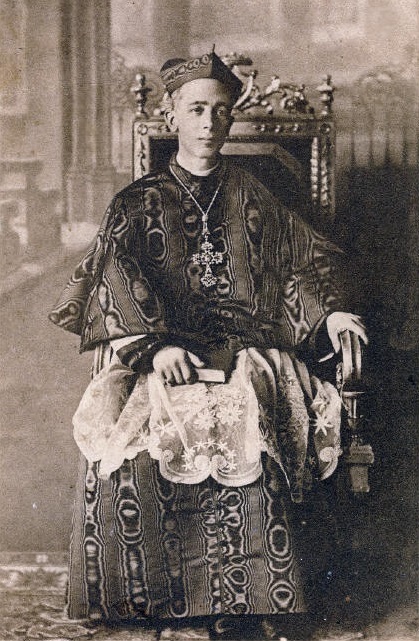
Alfredo Ildefonso Schuster, born in Rome on January 18, 1880, entered a world steeped in Catholic tradition and the burgeoning Italian unification. His father, a Bavarian tailor, and his mother, a Roman homemaker, instilled in him a deep piety from a young age. The early loss of his father at the age of six left a profound mark, drawing him closer to his devout mother and fostering a contemplative spirit. This spiritual inclination led him, at just eleven years old, to enter the Benedictine Abbey of Saint Paul Outside the Walls, where he embraced the monastic life with fervor. He took the name Ildefonso, in honor of the seventh-century Archbishop of Toledo, and dedicated himself to a rigorous life of prayer, study, and manual labor, preparing him for a future of profound service to the Church.
His monastic vocation blossomed, and after his ordination in 1904, Dom Ildefonso distinguished himself as a brilliant scholar and a dedicated spiritual director. He served as novice master, prior, and eventually, in 1918, as Abbot of Saint Paul Outside the Walls, a position he held with great distinction for twelve years. During his abbacy, he revitalized the abbey's intellectual and spiritual life, promoting liturgical studies and Gregorian chant, and fostering a deep love for Benedictine traditions. His reputation for holiness, wisdom, and administrative skill spread throughout the Church, catching the attention of Pope Pius XI, who, in 1929, unexpectedly appointed him Archbishop of Milan and elevated him to the cardinalate. This call to leadership in one of the Church's most historically significant archdioceses marked a profound shift from his cloistered life, yet he embraced it with humility and unwavering obedience.
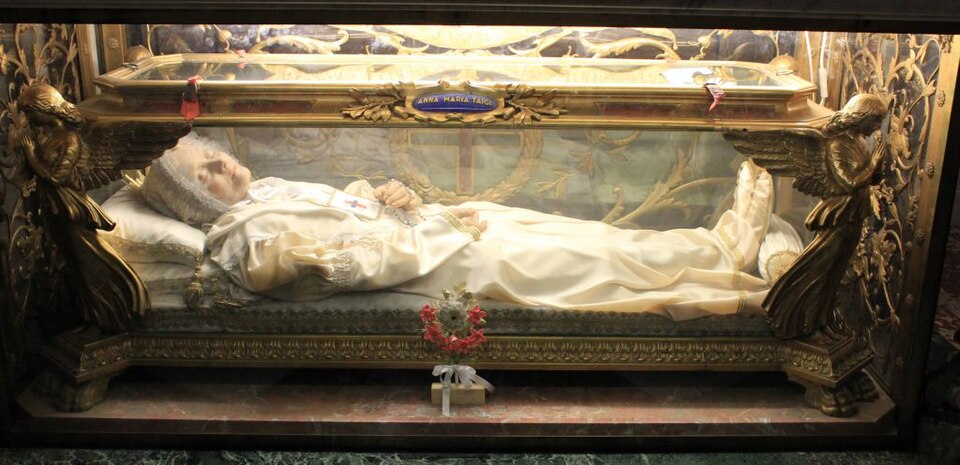
Cardinal Schuster served as Archbishop of Milan for twenty-five years, guiding his flock through the tumultuous years of Fascism and World War II. He was a tireless pastor, known for his ardent devotion to the Eucharist, his profound Marian piety, and his unwavering commitment to social justice. He courageously spoke out against the injustices of the Fascist regime, offering solace and protection to those persecuted. He famously mediated a meeting between Allied and Axis forces at the end of the war, seeking to prevent further bloodshed in Milan. He passed away peacefully on August 30, 1954, at the age of 74. When his tomb was opened for canonical recognition in 1957, his body was discovered to be remarkably preserved, a testament to his sanctity and a source of wonder for the faithful. Today, his incorrupt body rests in the Duomo di Milano, visible to pilgrims who come to venerate him.
Saint Ildefonso Schuster was beatified by Pope John Paul II in 1996, a recognition of his heroic virtues and the enduring impact of his life. His legacy continues to inspire, particularly his example of monastic discipline seamlessly integrated with active pastoral leadership. Pilgrims to Milan can visit his tomb in the Duomo, where his incorrupt body serves as a powerful reminder of God's grace and the promise of eternal life. He is remembered as a courageous shepherd, a profound scholar, and a humble servant of God whose life bridged the contemplative and active dimensions of Christian discipleship, leaving an indelible mark on the Church and the city he so faithfully served.
Discovery
The remarkable journey of Alfredo Ildefonso Schuster, from a young Benedictine novice to a revered cardinal and ultimately a saint, is punctuated by the extraordinary discovery of his incorrupt body. It was on January 28, 1957, a mere three years after his passing, that the initial exhumation took place. This was not a routine examination but rather a necessary relocation of his remains. Cardinal Schuster, who had served as the Archbishop of Milan with profound dedication, was initially interred in the crypt of the Basilica of Sant'Ambrogio, a place he held dear. The decision had been made to move his body to a more prominent location within the basilica, a testament to the growing veneration for his life and works. Present at this solemn occasion were ecclesiastical dignitaries, medical professionals, and a small group of witnesses. As the coffin was opened, a collective gasp rippled through those gathered. Instead of the expected skeletal remains, they beheld a body remarkably preserved, appearing as though he had only recently fallen asleep. His vestments were intact, and his features, though slightly sunken, were clearly recognizable. The immediate reaction was one of awe and profound spiritual significance, with many interpreting it as a divine affirmation of his sanctity.
Following this initial, astonishing discovery, further examinations were deemed necessary to ascertain the true extent and nature of this preservation. A more comprehensive exhumation and medical assessment occurred on November 28, 1957, just ten months later. This time, a more thorough examination by medical experts confirmed the exceptional state of preservation. The body showed no signs of decomposition, a phenomenon that defied natural explanation given the time elapsed since his death and the typical conditions of a crypt burial. Subsequent exhumations and inspections have taken place over the decades, each confirming the enduring incorruption. While some minor changes in the skin's texture and color have been noted over time, the fundamental integrity of the body has remained. This consistent state of preservation across multiple examinations has only deepened the conviction among the faithful and medical observers alike that a miraculous intervention is at play.
The preservation journey of Saint Alfredo Ildefonso Schuster's body has been a testament to both reverence and careful custodianship. After the initial discoveries, the decision was made to place his body in a specially constructed glass casket, allowing the faithful to venerate him without direct contact, thus protecting the delicate remains from environmental factors. This casket is now prominently displayed within the Basilica of Sant'Ambrogio in Milan, a place of pilgrimage for countless devotees. The display is designed to be both reverent and accessible, with the glass allowing for a clear view of the saint's remarkably preserved form. The atmosphere around his resting place is one of quiet contemplation and prayer, with visitors often remarking on the peaceful countenance of the saint. Measures such as controlled temperature and humidity within the display area are meticulously maintained to ensure the continued protection of this sacred relic.
Among the remarkable details associated with Saint Alfredo Ildefonso Schuster's incorrupt body, the most striking is its sheer resistance to the natural processes of decay. While there have been no reports of phenomena such as sweet fragrances or flexibility, the mere fact of his body's enduring integrity after so many decades is considered a profound miracle. The absence of decomposition, despite having been interred in a crypt for several years before its discovery, stands as a powerful testament to his sanctity. This physical sign of incorruption serves as a tangible link between the earthly life of a holy man and the spiritual realm, inspiring awe and strengthening the faith of those who witness it.
Scientific Analysis
The phenomenon of incorruption, particularly as observed in figures such as Saint Alfredo Ildefonso Schuster, presents a compelling intersection for scientific inquiry and theological contemplation. Born in 1880 and passing in 1954, Schuster's body is reported to be remarkably preserved, a state often referred to as "incorrupt" within Catholic tradition. While detailed, publicly accessible records of formal medical or scientific examinations on Schuster's remains are not as extensively documented as some other cases, historical accounts and general practices surrounding such venerated figures provide insight. Typically, initial examinations of alleged incorrupt bodies are conducted by ecclesiastical authorities, often involving medical professionals, usually physicians, to ascertain the state of preservation. These examinations, while not always adhering to modern forensic standards, aim to determine the extent of decomposition, the presence of any artificial preservation, and the overall condition of the tissues and organs. For Schuster, anecdotal reports and veneration suggest a degree of preservation beyond what would be expected for a body interred for decades without deliberate embalming. Specific dates and names of medical personnel involved in the initial assessments are often recorded in diocesan archives, but rarely made public in comprehensive scientific reports. Subsequent viewings, often during canonization processes or transfers of relics, would involve further, albeit generally non-invasive, inspection by medical personnel or Church officials, noting the continued absence of significant decay.
The scientific mystery surrounding cases like Saint Alfredo Ildefonso Schuster's incorruption lies in the apparent defiance of normal post-mortem decomposition processes. Following death, the human body typically undergoes a series of predictable changes: autolysis (self-digestion by cellular enzymes), putrefaction (bacterial breakdown), and eventual skeletonization. These processes are influenced by a multitude of environmental factors, including temperature, humidity, oxygen availability, and the presence of microorganisms in the burial environment. Milan, Italy, where Schuster is interred in the Basilica of Sant'Ambrogio, experiences a temperate climate with seasonal variations in temperature and humidity. Such conditions, particularly if the burial was subterranean without specific climate control, would ordinarily accelerate decomposition. The absence of extensive decay, such as liquefaction of tissues, significant insect activity, or complete skeletonization after several decades, is what makes these cases scientifically remarkable. While some forms of natural preservation exist, such as saponification (the transformation of fatty tissues into a waxy, soap-like substance known as adipocere) or mummification (desiccation of tissues in dry environments), these processes typically result in specific alterations to the body's appearance and texture that are distinct from the reported "lifelike" preservation often attributed to incorrupt saints. The question of whether any embalming or preservation treatments were applied is critical. In many historical cases, rudimentary embalming techniques, often involving evisceration and the use of aromatic spices or alcohol, were practiced, particularly for individuals of high social or religious standing. However, for a 20th-century figure like Schuster, modern embalming practices would be more sophisticated and readily identifiable. If no such treatments were documented or discovered, the preservation becomes even more anomalous from a purely scientific perspective.
Natural explanations for exceptional body preservation, such as adipocere formation or mummification, are frequently proposed. Adipocere, which can preserve body contours and some internal structures, forms in cool, moist, anaerobic environments where bacterial activity is limited, allowing fatty acids to hydrolyze and hydrogenate into a waxy substance. Mummification, conversely, occurs in extremely dry conditions that inhibit bacterial growth and promote desiccation. While these processes can lead to remarkable preservation, they typically result in a distinct appearance: adipocere bodies are often waxy and grayish, while mummified bodies are shrunken and desiccated. The descriptions of incorrupt bodies, including Schuster's, often emphasize a more pliable, "natural" appearance, which does not fully align with the typical outcomes of these natural processes. Skeptics often point to these natural phenomena, or the possibility of undocumented embalming, as explanations. They also highlight the subjective nature of observation and the potential for post-mortem changes to be misinterpreted or exaggerated over time. However, in cases where detailed examinations have ruled out embalming and the observed preservation does not fit the characteristics of known natural processes, a scientific gap in understanding remains. The challenge lies in objectively assessing the degree of preservation and ruling out all known natural and artificial causes without disturbing the venerated remains.
From a modern scientific perspective, the study of incorruptibility presents an opportunity to explore the limits of post-mortem preservation. While direct, invasive examination of revered figures like Saint Alfredo Ildefonso Schuster is often not permitted due to religious sensitivities, non-invasive techniques could offer significant insights. Modern medical imaging, such as CT scans or MRI, could provide detailed anatomical information without physical alteration, potentially revealing the condition of internal organs, the presence of any embalming fluids or materials, or signs of natural preservation processes like adipocere. Carbon dating could establish the authenticity of the remains and confirm the time of death, though this is rarely disputed in such cases. Tissue analysis, if samples were ever permitted, could identify specific biochemical markers of decomposition or preservation at a molecular level. The broader scientific study of exceptional preservation, including bog bodies, ice mummies, and ancient embalming practices, continues to advance our understanding of taphonomy – the study of decomposition and fossilization. Cases like Schuster's, where preservation is attributed to divine intervention, prompt questions about whether there are unknown biological or environmental factors at play, or if the current scientific understanding of decomposition is incomplete. The unanswered questions revolve around the precise mechanisms of preservation, the absence of typical microbial activity, and whether unique environmental conditions or intrinsic biological factors in certain individuals could contribute to such phenomena. The objective scientific approach seeks to understand these anomalies, respecting the cultural and religious significance while pursuing empirical evidence.
Spiritual Significance
The phenomenon of incorruption, as exemplified by Saint Alfredo Ildefonso Schuster, stands as a profound theological testament within the Catholic tradition, offering a tangible glimpse into the mysteries of grace and the ultimate destiny of the human person. For the Church, the preservation of a saint's body from natural decay is not merely a biological anomaly, but a divinely ordained sign, pointing to the sanctity of the individual and the power of God over death itself. It resonates deeply with the Pauline teaching that the body is a temple of the Holy Spirit (1 Corinthians 6:19), suggesting that a life lived in profound union with Christ can imbue the physical form with a supernatural integrity, even after death. Furthermore, incorruption serves as a prefigurement of the resurrection of the body, a core tenet of Christian eschatology, offering a visible assurance of the future glorification promised to the faithful. In Schuster's case, his incorruption is interpreted as a divine affirmation of his heroic virtue and his unwavering commitment to Christ, a silent sermon on the enduring power of holiness and a visible link within the communion of saints, connecting the Church militant with the Church triumphant. It reminds believers that sanctity is not an abstract concept but a lived reality, capable of transforming even the physical elements of our being.
Saint Alfredo Ildefonso Schuster’s unique charism was deeply rooted in his Benedictine spirituality, a tradition he embraced with profound dedication from a young age. His monastic formation instilled in him a heroic practice of humility, evident in his willingness to serve in various capacities within the Church, from abbot to cardinal archbishop, always with a spirit of self-effacement and obedience to divine will. His life was a testament to profound charity, not only in his pastoral care for the people of Milan but also in his intellectual contributions to theological scholarship, always aimed at illuminating the truths of faith for others. Mysticism was a cornerstone of his spiritual life, characterized by a deep contemplative prayer life that nourished his active ministry. He embodied the Benedictine motto, "Ora et Labora" (Pray and Work), seamlessly integrating intense prayer with diligent service. His holiness manifested in a balanced approach to spiritual and temporal affairs, demonstrating that profound spirituality could coexist with practical leadership. He contributed significantly to the liturgical movement, advocating for a deeper understanding and participation in the sacred liturgy, believing it to be the wellspring of Christian life. His life exemplified a profound integration of contemplative and active virtues, making him a model for those seeking to live a balanced and holy life in the modern world.
Devotion to Saint Alfredo Ildefonso Schuster has steadily grown since his death in 1954 and particularly following his beatification in 1996 and canonization in 2004. Pilgrims from across Italy and beyond are drawn to the Basilica of Sant'Ambrogio in Milan, where his incorrupt body rests, seeking his intercession and spiritual inspiration. While there isn't a single, universally recognized patronage associated with him, he is often invoked by those seeking spiritual guidance, a deeper understanding of the liturgy, or strength in times of pastoral leadership. Many prayers and novenas dedicated to him focus on themes of humility, obedience, and the sanctification of daily work, reflecting his own life’s virtues. The experience of visiting his shrine is often described as deeply moving; the visible presence of his preserved body serves as a powerful reminder of the reality of the saints and their continued intercession. For many, it is a moment of profound encounter, where the tangible presence of a holy life transcends the boundaries of time, offering solace, hope, and a renewed commitment to faith. The reverence shown by pilgrims, often kneeling in prayer before his remains, underscores the enduring power of his spiritual legacy.
Numerous miracles have been attributed to Saint Alfredo Ildefonso Schuster's intercession, both during his lifetime and after his death, playing a crucial role in his beatification and canonization processes. Documented healings from various ailments, including serious illnesses deemed incurable by medical science, have been presented as evidence of his powerful intercession. Beyond physical cures, many faithful report profound spiritual conversions, renewed faith, and answered prayers for guidance and strength in challenging circumstances. The incorrupt body itself has been a source of immense spiritual consolation. For many, seeing his preserved form instills a deeper faith in the resurrection and the power of God to transcend natural laws. It serves as a tangible link to the divine, offering a visible sign of God's favor and the enduring reality of the communion of saints. Pilgrims often recount a sense of peace and profound spiritual presence when in the vicinity of his relics, experiencing a tangible connection to a life lived entirely for God. This ongoing stream of reported graces and miracles continues to draw the faithful to his tomb, solidifying his place as a powerful intercessor in the heavenly court.
Saint Alfredo Ildefonso Schuster’s enduring message for contemporary Catholics and seekers is particularly potent in an age often characterized by materialism and secularism. His life challenges the notion that holiness is an outdated concept or that spiritual depth is incompatible with intellectual rigor and practical leadership. In a world that often prioritizes fleeting pleasures and worldly success, Schuster’s unwavering commitment to prayer, humility, and service offers a compelling counter-narrative, reminding us of the ultimate value of eternal truths and the pursuit of sanctity. His example encourages individuals to seek a profound integration of faith into all aspects of life, demonstrating that spiritual growth is not confined to the cloister but can flourish within the demands of active ministry and daily responsibilities. For those grappling with the complexities of modern life, his steadfast faith and balanced approach to spirituality provide a powerful model. His incorruption serves as a tangible bridge between the visible and invisible worlds, a silent yet eloquent testimony to the reality of the spiritual realm and the ultimate triumph of grace over corruption, inviting all to consider the profound mysteries of faith and the enduring power of a life lived for God.
AI summary
A plain-language overview generated from this page's source material. Always verify with primary sources.