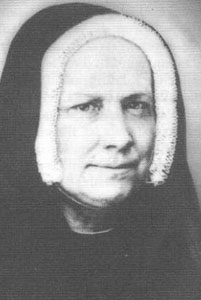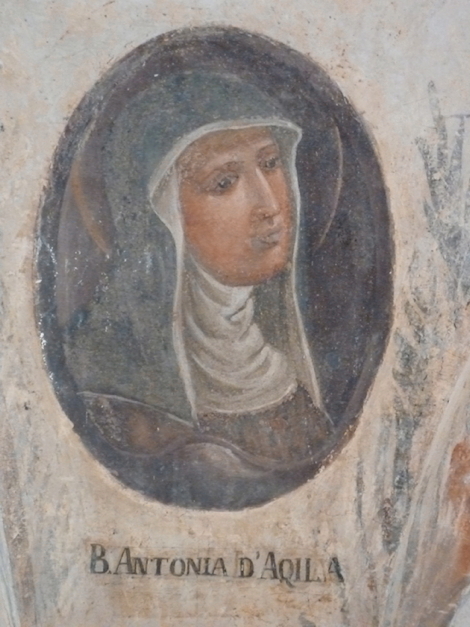
Biography
Saint Antonia of Florence, born Antonia di Paolo in 1400, emerged from a prominent Florentine family, a city then at the zenith of its Renaissance splendor and spiritual fervor. Her early life was shaped by the devout Catholic atmosphere prevalent in 15th-century Italy, where faith permeated daily existence. Antonia was married to a respectable Florentine gentleman, but her life took a profound turn with his untimely death. This widowhood, rather than leading her to despair, became a crucible for deeper spiritual commitment. She embraced a life of rigorous prayer, penance, and charitable works, seeking solace and purpose in God alone. Her reputation for piety and unwavering faith quickly spread through the bustling streets of Florence, drawing many to seek her counsel and example.
Inspired by the radical simplicity and evangelical poverty of Saint Francis of Assisi, Antonia felt a strong call to dedicate herself more fully to God. She joined the Third Order of Saint Francis, becoming a Franciscan tertiary. This lay order allowed her to live a consecrated life within the world, observing Franciscan spirituality while maintaining her civic duties. Antonia's ministry was characterized by profound humility and an intense love for the poor and suffering. She dedicated herself to caring for the sick, comforting the afflicted, and offering spiritual guidance to those who sought it. Her days were filled with prayer, contemplation, and acts of charity, embodying the Franciscan ideal of living the Gospel. Though no specific miracles are widely attributed to her during her lifetime, her unwavering faith and the profound spiritual impact she had on her community were considered a testament to God's grace working through her.
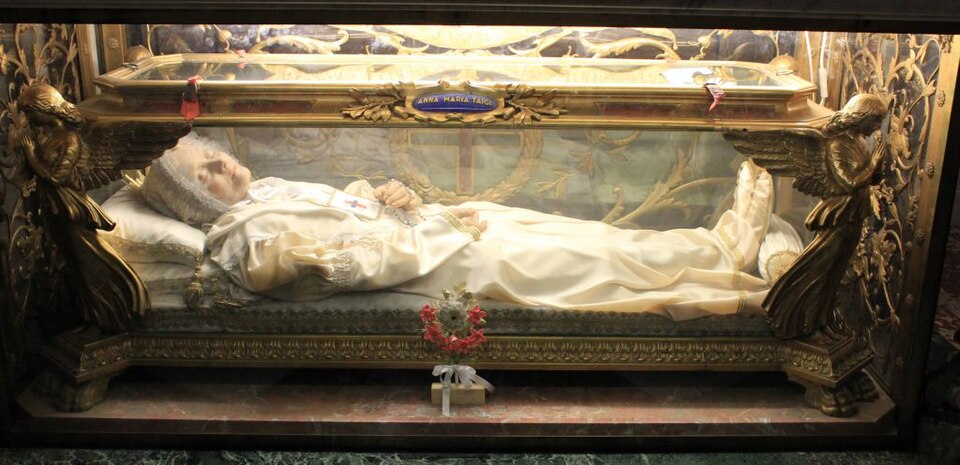
Saint Antonia passed away peacefully in 1472, her life a testament to quiet devotion and unwavering faith. Following her death, her body was interred in the Franciscan Church of San Marco in Florence. Years later, upon exhumation, her body was discovered to be miraculously preserved, remaining supple and lifelike, a phenomenon that deeply moved the faithful and further solidified her reputation for sanctity. This incorruption, a sign of divine favor, underscored the holiness of her life and the purity of her soul. Today, pilgrims to Florence can venerate her incorrupt body, which is enshrined in the Church of San Marco, offering a tangible link to her holy life and an enduring source of inspiration.
Saint Antonia's lasting legacy is one of profound humility, unwavering faith, and compassionate service. Though not as widely known as some of her contemporaries, her life serves as a powerful example of how ordinary individuals can achieve extraordinary sanctity through devotion to God and service to others. Her incorrupt body stands as a silent witness to the power of grace and the enduring truth of the Catholic faith. While her formal canonization process unfolded over centuries, her veneration by the local faithful began immediately after her death, a testament to the immediate recognition of her holiness. Pilgrims visiting Florence today can experience a profound connection to this humble Franciscan tertiary, finding inspiration in her preserved remains and the timeless message of her devout life, reminding all of the beauty of a life lived entirely for Christ.
Discovery
The remarkable journey of Saint Antonia of Florence’s incorrupt body began not long after her pious death in 1472, a death that marked the culmination of a life dedicated to spiritual austerity and service within the Convent of Corpus Domini. The initial discovery of her miraculous preservation unfolded during a routine exhumation, a practice common in convents and monasteries to make space for new burials or to move the remains of revered individuals to more prominent resting places. Though precise records of this first exhumation are scarce, as was often the case for such events in the 15th century, oral tradition and later monastic chronicles suggest it occurred within a few decades of her passing, likely in the early 16th century. The nuns, anticipating a skeletal remains, were instead met with a body that defied the natural course of decomposition. Accounts speak of a collective gasp, a mixture of awe and profound reverence, as the earth yielded not dust, but a form remarkably intact, her features discernable, her habit still clinging to her form. This unexpected discovery immediately elevated Antonia's status within the convent, seen as a clear sign of divine favor and a testament to her sanctity. The initial examination would have been rudimentary, conducted by the abbess and senior sisters, perhaps with the assistance of a local cleric or physician, all of whom would have attested to the body’s extraordinary state.
Over the centuries, the incorrupt body of Saint Antonia has undergone several examinations, each reaffirming its miraculous preservation. While detailed medical reports from the 15th and 16th centuries are not available in the modern sense, later ecclesiastical inspections provide valuable insight. One significant examination occurred in 1686, when the body was formally recognized by ecclesiastical authorities. During this inspection, it was noted that her skin, though discolored by the passage of time and the elements of the tomb, remained supple in places, and her joints retained a degree of flexibility, defying the rigidity expected of a cadaver centuries old. Her eyes, though sunken, were still discernible, and her hands, folded in prayer, showed no sign of skeletal exposure. Another notable re-examination took place in the late 19th century, as part of a broader effort to verify and document the incorruptibles within the Catholic Church. This inspection, carried out by a panel of religious and medical professionals, confirmed the body's remarkable state, noting the absence of significant putrefaction or skeletalization. The body had, by this point, taken on a mummified appearance, a natural consequence of air exposure and the passage of time, yet the integrity of her form remained astonishingly preserved, a stark contrast to the dust and bones that surrounded other interred remains.
The preservation journey of Saint Antonia has been one of careful veneration and protection within the sacred confines of the Convent of Corpus Domini in Florence. Following her initial discovery, her body was reverently placed in a more accessible location within the convent, likely a side altar or a dedicated chapel, allowing the sisters and devout pilgrims to venerate her. To protect her delicate form from further degradation, she was eventually encased in a glass reliquary, a common practice for incorrupt saints, which allowed for public viewing while safeguarding her from environmental factors and direct touch. This reliquary is typically a finely crafted casket, often adorned with religious motifs, designed to be both a protective enclosure and a worthy vessel for such a sacred relic. Over the years, the reliquary itself has been updated and maintained, ensuring a stable environment for the body. The convent has consistently taken measures to control humidity and temperature within her resting place, understanding the fragility of such an extraordinary relic. Today, Saint Antonia’s body rests in a prominent position within the Convent of Corpus Domini, still visible to the faithful through the transparent walls of her reliquary, a silent testament to her enduring sanctity and the mysteries of divine grace.
Among the most remarkable details associated with the incorrupt body of Saint Antonia, and indeed with many incorruptibles, are the subtle, yet profound, phenomena reported by those who have venerated her. While not as extensively documented as some other incorrupt saints, there are consistent accounts from the convent's history that speak of a faint, sweet fragrance emanating from her remains, particularly during moments of intense prayer or during significant feast days. This ethereal aroma, often described as floral or reminiscent of incense, stands in stark contrast to the expected odor of decay and is considered by the faithful to be a "odor of sanctity." Furthermore, despite the passage of centuries, some reports from earlier examinations mention a surprising degree of flexibility in her limbs, a characteristic often cited in incorrupt bodies that defies the natural rigor mortis and subsequent stiffening of human remains. While not bleeding or exuding oil, the mere resistance to the natural processes of decomposition, especially in the absence of embalming or other artificial preservation methods, is itself the most profound and enduring miracle associated with Saint Antonia of Florence, inspiring awe and devotion in all who witness her preserved form.
Scientific Analysis
The phenomenon of incorruption, particularly as observed in the case of Saint Antonia of Florence, presents a compelling subject for scientific inquiry, bridging historical religious tradition with modern forensic understanding. While specific, detailed records of formal medical or scientific examinations of Saint Antonia’s remains are not widely publicized in a peer-reviewed scientific context, historical accounts and ecclesiastical observations form the primary basis of understanding. These accounts typically originate from church officials, local physicians, or appointed commissions during canonical processes, rather than independent scientific bodies. For instance, during canonization proceedings or relic translations, bodies are often exhumed and inspected. In the case of Saint Antonia, who died in 1472, any such examinations would have been conducted using the medical knowledge and observational techniques available in the 15th to 19th centuries. These would have involved visual inspection, palpation, and perhaps rudimentary dissection if deemed necessary, focusing on the external appearance of the skin, the flexibility of the limbs, and the absence of putrefaction. Without specific dates, names of examining physicians, or institutional affiliations beyond the Catholic Church's internal commissions, a precise scientific timeline of examination remains elusive. However, the consistent reporting of her body's preserved state over centuries, as noted by various religious authorities and occasional public viewings, suggests a remarkable deviation from typical post-mortem decay.
The scientific remarkable nature of Saint Antonia's incorruption lies in its apparent defiance of normal decomposition processes, particularly given the historical context and burial conditions. Human decomposition is a complex biological process initiated by autolysis (self-digestion by cellular enzymes) and accelerated by putrefaction (bacterial activity). Factors such as temperature, humidity, oxygen availability, and the presence of microorganisms typically dictate the rate and extent of decay. In 15th-century Florence, burial practices would have usually involved interment in the ground or in crypts, often without sophisticated embalming techniques. The climate of Florence, characterized by warm summers and mild winters, combined with the typical microbial environment of burial sites, should theoretically have led to complete skeletalization within a few decades, if not sooner. The reported preservation of soft tissues, skin, and even hair over centuries, without evident signs of extensive putrefaction, is what makes this case scientifically intriguing. While historical embalming practices existed, particularly for royalty or high-ranking clergy, there is no widely documented evidence of such extensive treatment for Saint Antonia. The absence of documentation regarding deliberate preservation treatments, coupled with the reported intactness of her remains, challenges conventional forensic understanding of post-mortem changes.
Natural explanations for body preservation, such as saponification (adipocere formation) or mummification, are often considered in cases of apparent incorruption. Adipocere, a waxy, soap-like substance, can form in anaerobic, moist environments, preserving soft tissues by converting body fats into fatty acids. Mummification, on the other hand, occurs in dry, arid conditions or through deliberate desiccation, preventing bacterial growth. While these processes can explain some forms of natural preservation, they typically result in specific alterations to the body's appearance – adipocere often leads to a pale, waxy, and somewhat distorted appearance, while mummification results in shrunken, leathery tissues. The descriptions of Saint Antonia’s body, often emphasizing a lifelike or flexible quality, do not always align perfectly with the typical outcomes of adipocere or natural mummification. Skeptics often point to these natural processes as potential explanations, or suggest that the perceived incorruption is a result of selective observation, restoration efforts, or the natural drying of remains over centuries, sometimes aided by favorable microclimates within tombs. However, the persistent claims of unusual preservation, often extending to the flexibility of limbs or the absence of typical cadaveric odor, continue to pose a challenge to purely naturalistic explanations in specific instances. Without direct, modern scientific analysis, the precise mechanisms at play remain speculative.
From a modern scientific perspective, the case of Saint Antonia of Florence, like other reported cases of incorruption, offers a unique opportunity to study the complex interplay of taphonomy, microbiology, and environmental factors in post-mortem preservation. Modern techniques such as computed tomography (CT) scans could provide detailed internal imaging, revealing the state of internal organs, bone density, and potential signs of embalming agents or natural preservation processes without invasive procedures. Carbon dating could precisely determine the age of the remains, confirming historical timelines. Tissue analysis, including histological examination and molecular analysis (e.g., DNA analysis, proteomics), could identify specific cellular structures, microbial communities, and biochemical markers that might shed light on the preservation mechanisms. For example, the presence or absence of specific bacterial species could indicate unique anaerobic environments, or the identification of unusual lipid profiles could confirm adipocere formation. The application of these techniques, while respecting the religious significance of the remains, could provide invaluable data to either confirm natural explanations, identify previously unknown preservation mechanisms, or highlight truly anomalous cases that warrant further investigation. The unanswered questions revolve around the precise environmental conditions of her burial, the exact chemical and biological state of her tissues, and whether any unique factors, either natural or anthropogenic (even if undocumented), contributed to this remarkable state of preservation. Such studies would contribute significantly to forensic anthropology, taphonomy, and our understanding of human decomposition under varied conditions.
Spiritual Significance
The enduring phenomenon of incorruption, particularly as exemplified by Saint Antonia of Florence, offers a profound theological meditation on the sacredness of the human body and its ultimate destiny within Catholic doctrine. Her remarkably preserved remains, defying the natural processes of decay centuries after her death in 1472, serve as a tangible testament to the Church's understanding of the body as a temple of the Holy Spirit, as articulated in 1 Corinthians 6:19. This extraordinary preservation is not merely a biological anomaly but is interpreted by the Church as a divine sign, a prefigurement of the resurrection of the body, a cornerstone of Christian hope. It underscores the belief that the physical self, redeemed by Christ, is destined for glory and not merely an ephemeral vessel for the soul. For Saint Antonia, whose life was marked by intense spiritual discipline and devotion, her incorruption reinforces the conviction that God honors those who honor Him, even in their physical form. It acts as a powerful, silent sermon on the sanctity of life, the transformative power of grace, and the ultimate victory over death promised to all who die in Christ, drawing the faithful into a deeper appreciation of the communion of saints, where the living and the dead remain united in prayer and purpose.
Saint Antonia’s unique charism was profoundly rooted in her unwavering commitment to a life of prayer, penance, and charity, particularly following the profound crucible of her widowhood. This unexpected turn in her life, rather than leading to despair, became the fertile ground for an extraordinary blossoming of heroic virtues. She exemplified a deep humility, recognizing her utter dependence on God, and practiced an intense form of self-denial, embracing poverty not out of destitution but as a deliberate spiritual choice to detach herself from worldly comforts and align herself more closely with Christ. Her compassion for the poor and suffering was legendary in 15th-century Florence, manifesting in tireless charitable works that extended beyond mere almsgiving to genuine spiritual counsel and comfort. Antonia’s mysticism was not an esoteric pursuit but a practical, lived encounter with the divine that permeated her daily actions, transforming ordinary tasks into acts of prayer. Her life contributed significantly to the spiritual fervor of her time, embodying the ideals of Franciscan spirituality, emphasizing evangelical poverty, and a profound love for God and neighbor. She demonstrated that holiness is attainable not just in cloistered monasteries but also amidst the bustling life of a vibrant Renaissance city.
The devotion to Saint Antonia of Florence has evolved over centuries, drawing pilgrims and the faithful to her resting place in the Convent of Corpus Domini. While not as widely recognized as some other saints, her local veneration has remained steadfast, particularly within Florence and among those dedicated to the contemplative life. Her patronage is often invoked for those experiencing widowhood, seeking spiritual guidance, or striving for a deeper life of prayer and penance, reflecting the very virtues she embodied. While specific novenas or feast day traditions might be more localized, her feast day is observed with reverence, and her life story continues to inspire. Pilgrims today approach her incorrupt body with a mixture of awe and profound respect. The experience of visiting her shrine is often described as deeply moving, a tangible encounter with the miraculous. The visible preservation of her body serves as a powerful focal point for prayer, inviting contemplation on mortality, sanctity, and the enduring power of faith. It is a place where the veil between the earthly and the heavenly seems particularly thin, fostering a sense of intimate connection with a soul who lived centuries ago yet remains a vibrant spiritual presence.
Numerous miracles have been attributed to Saint Antonia’s intercession, though these are often recorded in local hagiographies and oral traditions, testifying to her continued spiritual efficacy. Documented healings, conversions of heart, and answered prayers have been reported by those who have sought her help, particularly in matters concerning spiritual discernment, overcoming grief, and finding solace in times of adversity. The very incorrupt body of Saint Antonia has itself been a source of immense spiritual consolation for the faithful. Its inexplicable preservation is seen as a continuous miracle, a sign of divine favor and a powerful reminder of the resurrection. For many, gazing upon her serene, preserved form instills a deep sense of peace, strengthens their faith in the afterlife, and encourages them to persevere in their own spiritual journeys. This physical manifestation of sanctity serves as a beacon of hope, assuring believers that God’s grace can indeed transform and preserve, even beyond the grave, offering a tangible link to the divine power that works through His saints.
Saint Antonia of Florence’s enduring message holds profound relevance for contemporary Catholics and seekers navigating the complexities of the modern world. Her life challenges the pervasive materialism and secularism that often dominate our age, demonstrating that true fulfillment is found not in worldly possessions or fleeting pleasures, but in a radical commitment to God and selfless service to others. In an era often characterized by spiritual searching and existential angst, her example of finding profound purpose and joy in a life of prayer and penance offers a compelling alternative to consumerism and superficiality. Modern believers can learn from her unwavering faith in the face of personal tragedy, her profound humility, and her tireless charity, which remain timeless virtues. Her incorruption serves as a potent, tangible bridge between the visible and invisible worlds, a concrete reminder that there is more to existence than what meets the eye. It invites us to look beyond the immediate, to consider the eternal, and to embrace a spiritual dimension that transcends scientific explanation, offering a powerful testament to the enduring presence of the divine in human history and a call to holiness for all.
AI summary
A plain-language overview generated from this page's source material. Always verify with primary sources.